Day: November 30, 2022

  • Creating Your First WordPress Website? Here’s What You Should Know!

    Creating Your First WordPress Website? Here’s What You Should Know!

    Setting Up Your First WordPress Site? Here’s What You Need to Know!

    You feel a bit overwhelmed if you’re seeking to create your first WordPress website. Don’t get confused by all the jargon and technical phrases. In this blog article, I’ll guide you through everything you need to know to set up your first website fast and effortlessly. Continue reading to find out more!

    Domain name: Picking the perfect one

    Choosing the ideal domain name for your website is a critical step that should not be taken lightly. Domain names are critical to your SEO (Search Engine Optimization) efforts, and picking one that is difficult to remember or write out may lead to much aggravation.

    When choosing a domain name, aim to choose something relevant to your area and easy to remember. Choose something that does not sound too difficult to recall.

    For example, if you’re in a coffee company and chose coffeecoffeecoffee.com as your URL, you will lose many clients. We recommend that you choose a domain name that is short, easy to remember, and relevant to your company.

    Hosting: Where to house your site

    Now that you’ve decided on a domain name, you’ll need to choose a hosting company to house your website. Hosting firms (also known as web hosts or servers) are businesses that provide space for your website’s contents to be stored.

    We recommend looking for a dependable hosting business with a strong reputation. We recommend looking for hosting services with a 99.9% uptime guarantee, which means your site will be available 24 hours a day, seven days a week.

    A few good recommendations are as below:

    Bluehost is the world’s leading WordPress hosting provider. Even on their most basic shared hosting package, Bluehost provides some of the fastest WordPress hosting accessible. Furthermore, they provide one-click WordPress installations, making launching a blog on Bluehost simple.

    Because of their speed, A2 Hosting is another fantastic alternative. A2 Hosting provides up to 20X quicker loading times than competitors, making it ideal for WordPress blogs. A2 Hosting also provides free migration services, making the transition from your existing host to A2 Hosting simple.

    Another popular option among WordPress users is WP Engine. WP Engine provides managed WordPress hosting, making it simple to manage your hosting environment. Their managed hosting includes automated backups, regular virus scans, and updates. Furthermore, WP Engine was designed particularly for WordPress and has been optimized from the start.

    Blog

    Themes: Finding the right look

    Setting up a website is rarely the end of the process. You must first set up the site, but you must also make it appear attractive. Themes are an important aspect of this process, and selecting the correct one may be difficult. How do you choose the proper theme? What characteristics do you want in WordPress themes?

    Research the theme:  Before you choose a theme, be sure you know what to search for. Examine the theme’s characteristics, such as the layout and functionality. Check if it is responsive, which means it will appear excellent on smaller devices such as tablets and smartphones. Also, ensure that it can support many plugins and other sorts of applications.

    Read the reviews:

    The reviews will give you an idea of how good the theme is and how well it has been welcomed by other users. Check the reviews posted by previous customers who purchased the theme to see whether they had trouble with it.

    If the theme doesn’t have many reviews, it might indicate it’s a new product. Some new themes may contain bugs that need to be ironed out. However, if they’re popular enough, the creators should have rectified any concerns as soon as possible.

    Ask for help:  If you need assistance selecting the proper theme, don’t hesitate to contact a developer. The developer should be able to provide recommendations depending on the requirements of your site.

    Compare prices: Before you choose a theme, make sure you understand the various price alternatives. Some themes need a one-time purchase, while others require an annual membership. Some themes are less expensive yet offer fewer features. Make sure you read the product description thoroughly to ensure you understand all of the features and restrictions.

    Plugins: Adding functionality

    Plugins provide the functionality to your site, allowing you to improve the overall user experience. Plugins enable you to add elements that attract visitors to your sites, such as contact forms and galleries. Several plugins are available with varying characteristics, and selecting the perfect one might be difficult. What features should WordPress plugins have?

    Because there are so many WordPress plugins, it can be tough to pick the ideal one for your website. Here are some pointers to help you find the proper plugin:

    Choose the right features: Before selecting a plugin, ensure you’re aware of all the capabilities it provides. Some plugins provide very basic site functionality, while others provide substantial capabilities. You should ensure that the plugin you select includes the functionality you want.

    Consider compatibility:  Plugins are frequently intended to function with certain versions of WordPress; therefore, ensure that the plugin is compatible with your version of WordPress. This eliminates any compatibility concerns.

    Keep your plugins updated:  Plugins are always being developed and updated with new functionality. When a new version is made available, be sure to update your plugin as soon as possible to take advantage of the new features.

    Security:  Hackers frequently attack plugins as their primary target. Plugins can be hacked, which means someone could obtain access to your website through flaws in the plugin. Keep your plugins up to date and on the lookout for security alerts.

    Pages and posts: Creating content

    You’ll need to produce content for your website once it’s up and running. A website is made up of pages and articles containing most of the website’s content. The numerous capabilities available with posts and pages enable you to contribute a wide range of information to your website.

    Before you begin developing content, you must first determine which pages are required. What pages do visitors anticipate seeing when they visit your website? Visitors frequently anticipate sections such as About and Contact. These pages include information that visitors require; thus they should be prioritized.

    Pages are commonly used for material that does not update frequently. For example, a page detailing your company’s history may not require frequent updates.

    Posts are usually reserved for larger pieces of information, such as a blog or a news story. Posts can be constantly updated, and your viewers may anticipate frequent updates. Pages and articles may be readily modified and updated using the built-in editor in WordPress, allowing you to generate and edit material rapidly.

    Security and backups:

    A website without security is like a house with no door locks. Hackers might steal important information from your website or infect it with malware. Even though WordPress includes a robust security structure, it is necessary to take additional precautions to safeguard your website.

    Maintain the most recent versions of WordPress and plugins. This will safeguard your website from vulnerabilities.

    Another crucial security element is backups. Backups enable you to recover your website if it is hacked or infected with malware. Make a backup of your website at all times. If something goes wrong, you may quickly restore your backup.

    Conclusion:

    So, now that you’ve opted to install WordPress, you might wonder whether that’s it. Regrettably, the answer is no! Once your site is up and running, you should apply security measures, improve site speed, update your site regularly, and create backups. A lot of stuff is outside the scope of this paper. I’d love to hear from you if you have any further tips and ideas to offer. Have a wonderful day and keep reading!


    References:

    https://blog.hubspot.com/marketing/wordpress-website

    https://wpmudev.com/blog/a-wordpress-tutorial-for-beginners-create-your-first-site-in-10-steps/


    The post Creating Your First WordPress Website? Here’s What You Should Know! appeared first on https://gqcentral.co.uk
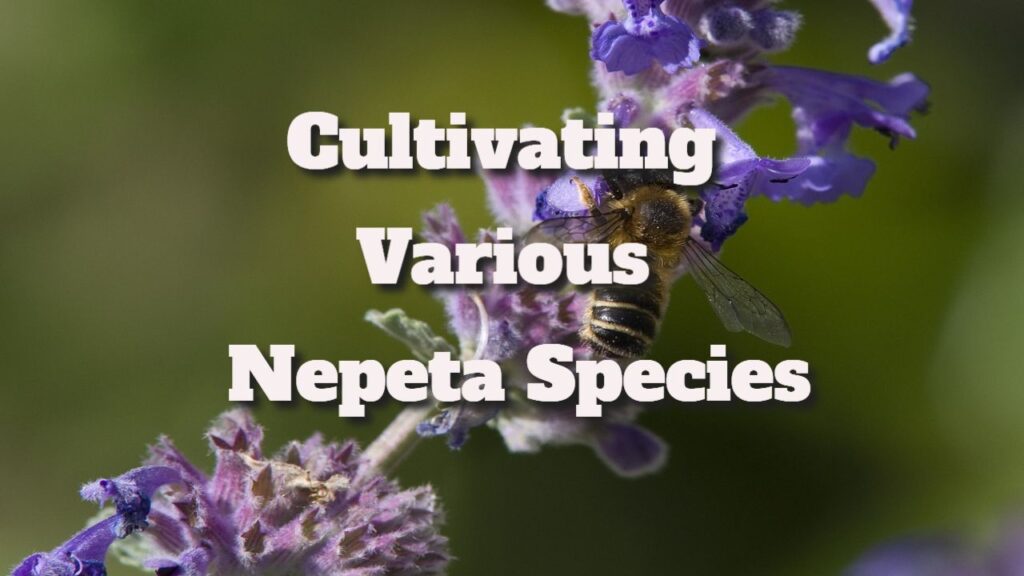

  • Catnip Plant Varieties: Cultivating Various Nepeta Species

    Catnip Plant Varieties: Cultivating Various Nepeta Species

    Catnip Plant Varieties: Cultivating Various Nepeta Species

    Catnip Plant Varieties: Cultivating Various Nepeta Species: Catnip is a member of the mint family and is beloved among feline companions. Catnip comes in various types that are easy to grow, vigorous, and appealing.

    In case you’re wondering, these plants will entice your feline companions. Crushing the leaves releases nepetalactone, a cat-loving chemical.

    Contact with the plant makes the cat happy and provides several photo opportunities as you watch “Fluffy” frolic.

    Varieties of Catnip, The most common type of catnip is Nepeta cataria, sometimes known as actual catnip.

    Other Nepeta species exist, each with its blossom colour and aroma.

    catnip species

    ahm articles

    Catnip plants are native to Europe and Asia, but they have become naturalised in various parts of North America.

    Catnip and its cousin, catmint, have interbred, resulting in several variants of the original species.

    The following are the five most prevalent species:

    True catmint (Nepeta cataria) reaches a height of one foot and bears white to purple flowers.

    The tall Greek catmint (Nepeta parnassica) is 112 feet tall with pale pink blooms (1.5 m).

    Camphor catmint (Nepeta camphorata) grows to 3 feet (1.5 m) in height and has white blooms with purple patterns.

    Lemon catmint (Nepeta citriodora)- A 1-metre-tall plant with white and purple flowers.

    Persian catmint (Nepeta mussinii) has lavender flowers and grows to 15 inches (38 cm).

    The majority of catnip cultivars have grey-green, heart-shaped leaves with fine hairs. All have the characteristic square stem of the mint family.

    Other Nepeta species are available for bold gardeners or cat lovers.

    Giant catmint can reach heights of over 3 feet.

    The flowers are purplish blue and come in several varieties, including ‘Blue Beauty.’ The blossoms of ‘Caucasian Nepeta’ are massive and magnificent, while Faassen’s Catmint forms a thick clump of massive, blue-green leaves.

    Catmint plants are grown in countries such as Japan, China, Pakistan, the Himalayas, Crete, Portugal, Spain, and others.

    Almost every country appears to have some variation of the herb growing.

    Most of them demand the same dry, hot circumstances as common catnip, but some, such as Kashmir Nepeta, Six Hills Giant, and Japanese catnip, prefer moist, well-drained soils and can bloom in partial shade.

    Learn more about the plants that grow in conjunction with catnip.

    Catnip resembles other mints in appearance, but it also contains the aromatic oils for which the mint family is famous.

    Catnip is, therefore, an ideal garden companion plant.

    According to several studies, putting these oils on your fruit and vegetable plants can help keep them healthy and pest-free. Using catnip as a pest control agent is a natural way to keep insects at bay while protecting your landscape.

    Catnip as an Insect and Plant Companion If you’ve ever seen a cat circle a catnip plant, you know how strong the allure is. Catnip is not only great for a kitty-friendly garden, but it also repels several common pests.

    Chard, for example, is one of catnip’s many friends. The plant’s herbal oils keep flea beetles away from the veggies, preventing harm caused by their feeding.

    Catnip can be grown alongside other plants that benefit from its strong aroma. Many insects are repulsed by catnip’s beneficial oils, including:

    Ants and Aphids Weevils that consume cabbage Aphids on potatoes Japanese beetles Flea-eating beetles Cockroaches Weevils Bugs should be eliminated.

    That’s a long list for a plant that’s easy to colonise. Catnip, a vegetable garden companion plant, can help protect crops from pest damage without the use of toxic chemicals.

    The following plants can be grown using catnip:

    Chard (Swiss) (Swiss) Squash, beets, broccoli, cauliflower, and potatoes are all root vegetables. The herb’s pungent perfume appears to prevent mice and voles, two common vegetable garden pests.

    As a Plant Companion, Catnip may quickly become invasive and spread throughout a bed.

    Plant the herb in a pot and bury it among catnip companion plants to avoid this.

    Of course, the herb attracts cats, but the blossoms attract honeybees. You can apply catnip as a border if you don’t want cats in your garden.

    Cats will be so distracted by the plant’s enticing aroma that they will avoid the soft soil near your plants and go elsewhere to relieve themselves.

    As a bonus, you may watch a cat frolic among the fragrant foliage and flowers.

    Leaf and bud catnip

    There will be numerous photo chances!

    Catnip can be grown from seeds, cuttings, or cuttings. It proliferates and has little disease and pest problems.

    Plant catnip in well-drained soil near plants that need protection for pest management.

    Catnip grows lanky, so prune young plants early to achieve a thicker, bushier shape.

    To use the plant at home, cut the stems and hang them upside down in a dry place.

    Once the herb leaves have dried, remove them from the stems.

    Crush the leaves and sprinkle them on doorways, windowsills, and anyplace else small bug invaders might enter the house.

    The odour can linger up to a week and keeps various pests away from your home.

    What else is catnip helpful for besides making cats happy?

    The name, or nearly so, says it all. Catnip is a common herb that can be grown in a garden or in the wild.

    You can profit from the catnip for yourself and your feline buddies if you know how to use it.

    Catnip for Cats, also known as Nepeta cataria, is a mint-family herb traditionally used to treat cats.

    One common misunderstanding is that all cats respond to catnip. Only about two-thirds of cats lick, rub catnip toys, roll in the herb, or drool in response to catnip.

    Even feral cats are affected by catnip. Catnip can be fed to cats as a fresh plant in a container or in a bed outside.

    If you put it in a container, make it big enough and heavy enough to keep a curious cat from knocking it over.

    To limit access, wrap toys in dried catnip leaves and store them covered and out of reach when not used.

    Other ways to use catnip Catnip isn’t just for cats.

    If you grow the herb, you have various options and may wonder what to do with the leftover catnip from making cat toys.

    Nepetalactone, a molecule found in catnip, is an insecticide.

    It can keep mosquitoes, spiders, ticks, cockroaches, and other bugs away from your home.

    You can deter certain pests by planting catnip between vegetable rows as a gardener.

    According to one study, growing catnip with cabbage vegetables reduced flea beetle infestations.

    Catnip can even keep rabbits and deer away from your vegetable garden. Catnip may have medicinal properties for humans, but before using it as a food supplement, see your doctor.

    Tea from dried catnip leaves and flowers has been used for centuries to cure stomach disorders, fever and flu symptoms, insomnia, and stress.

    It is perfect for ill children because it calms and helps with gastrointestinal issues.

    The post Catnip Plant Varieties: Cultivating Various Nepeta Species appeared first on https://gqcentral.co.uk
  • Fun Facts Naperville Illinois

    Fun Facts Naperville Illinois

    Naperville Riverwalk

    This location is known as Naperville’s crown jewel. A magnificent and quiet setting can be found on the banks of the Dupage River. It has 1.75 miles of walled walkways, fountains, bridges, gathering and event locations, outdoor sculptures and artwork, recreational features, and memorials. The Naperville Riverwalk was built in 1981 to commemorate the city’s 150th anniversary. To the east is Fredenhagen Park, with its characteristic clock tower and Exchange Club Memories fountain.

    In the centre, you’ll find the Dandelion Fountain, the Rowing Boat Quarry, and the eye-catching Bell Tower. Centennial Beach is located further west, with water depths varying from zero to fifteen feet.

    FUN FACT:

    It is classified as a beach rather than a swimming pool by the Illinois Department of Public Health. The water is chlorinated, recirculated, and manually cleaned to remove impurities, but it is not filtered as in a traditional swimming pool. To the west are Centennial Park’s inline skating/skateboarding facilities and the Jaycee Playground.

    The Naperville Riverwalk is one of several unique and free types of entertainment in the area.
    With about 1.75 miles of walled walks that pass by calm scenery, fountains, parks, artwork, and the DuPage River, the Riverwalk provides a soothing experience.

    “I enjoy the Riverwalk – there is an upper brick, lower concrete walk or jog you can go down the river, which I do most days – there are plants, flowers, fish, ducks, kayakers, different families, water fountains, covered bridges, occasional snakes, frogs, and even a heron or two to observe.” Jenna Wilson’s

    Great place for sundowners or sunsets – bikes are not permitted – it is light, so you can even walk at dusk – lots of people of all ages, babies in strollers, on the trail – early morning and peaceful – there is a new playground west of the quarry – clean restrooms, access to many restaurants – paddle boats and kayaks can be rented from May to September –

    It is also possible to climb Carillon and see the surrounding area from above during specific weekend hours.

    The Historic District of Naperville

    The Naperville Historic District in downtown Naperville is a fantastic recreation area.
    The most significant historic site is the Naper Settlement. The Naperville Historic District is a collection of 613 buildings on the National Register of Historic Places in Naperville’s oldest eastern part. This historical museum exhibits renovated historic structures transported from several Naperville neighbourhoods. The grounds around the Naper Settlement are exceedingly beautiful and offer numerous recreation opportunities.

    The Park District of Naperville

    The Naperville Park District manages and provides recreational and leisure activities to residents of Naperville and the surrounding region. A vote established the district in 1966.
    In 2007, the Park District was in charge of more than 10 square kilometres of open space, which included approximately 130 parks and four sports facilities.

    The Park District also manages Springbrook and Naperbrook golf courses. The Park District is also in charge of the Naperville Riverwalk, which was built to mark the 150th anniversary of Joseph Naper’s first settlement in 1981. The Park District also oversees Centennial Beach and Centennial Park, two skateboard and in-line skating parks at the Frontier Sports Complex and Centennial Park, Commissioners Park, which opened in 2006 and included Naperville’s first official cricket field, the Alfred Rubin Riverwalk Community Center, and the West Street Community Garden Plots. Knoch Knolls Park has a short mountain biking track and a nine-hole Frisbee golf course and is located south of Ring Road and 95th Street.

    Naperville Quarry Lake

    Quarry Lake has boating and fishing opportunities during the season. The river footbridges are beautiful. Moser Tower is another must-see attraction. Overall, a visit to Naperville’s historic district will be immensely entertaining.

    The Millennium Carillon and the Moser Tower

    Naperville was designated a White House Millennium Community in 1999 due to the construction of the Moser Tower and the Millennium Carillon. The tower is a bell tower in Riverwalk Park, north of Aurora Avenue, at the foot of Rotary Hill. The carillon has 72 bells and is one of only four carillons worldwide with a six-octave range.
    It was dedicated on June 29, 2000, as part of a more significant Independence Day celebration that included performances by the Naperville Municipal Band, the Naperville Men’s Glee Club, and the Festival Chorus. The carillon can be played either manually or automatically.
    The majority of the bells are rung manually. However, half of them are rung by a computerised system at specific times of the day.

    The carillon is currently in use and can be seen after performances.
    FACT: The Naperville City Council debated finance issues for the tower’s construction in the fall of 2005. (and have not been resolved to date).

    The Precast/Pretensioned Concrete Institute recognised the tower’s design as the best-suited solution.

    Where Are the Municipalities of Naperville?

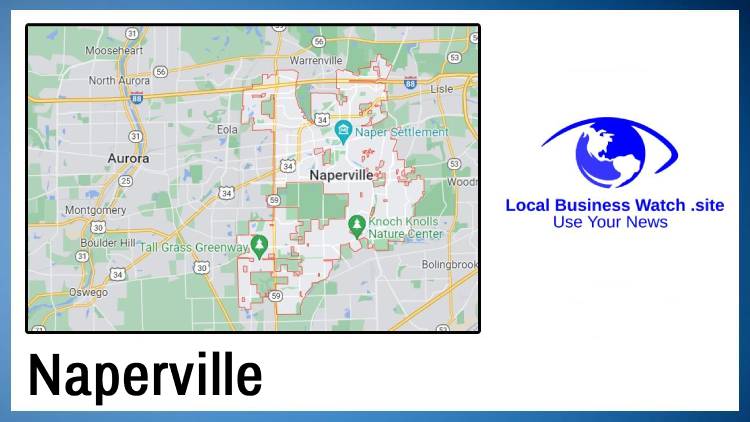
    Naperville is made up of six municipalities spread over two counties. Winfield Township contains the northwest half of Dupage County, Milton Township contains the northeast half, Naperville Township contains the west central area, and Lisle Township contains the east central piece.

    Wheatland Township covers the southwest of Will County, while DuPage Township covers the southeast. Lisle Township has the most population in Naperville, followed by Naperville Township.

    Naperville North Central College

    North Central College is situated on a 23.9-acre campus on Chicago Avenue in Naperville, Illinois.
    It has been located in Naperville since 1870, founded in 1861 by a forerunner congregation of the United Methodist Church.

    The Naperville satellite campus of Northern Illinois University

    The satellite campus of Northern Illinois University on Diehl Road offers numerous degree programmes in 10,500 square feet, whereas DePaul University’s satellite campus is on Warrenville Road. The College of DuPage Naperville Regional Center is located on Rickett Drive.

    State University has also built a satellite campus on West 95th Street in Naperville, while Northwestern College has a facility on North Mill Street.
    The University of Illinois at Urbana-Champaign opened a Business & Industrial Services campus in Naperville in 2007.

    Primary and secondary education in Naperville

    Naperville is served by two public primary and secondary school systems (along with several private, parochial schools, including public schools in neighbouring Aurora and Lisle).
    Illinois school districts are awarded numbers based on their district.

    FACT: In 1972, the elementary and secondary school districts amalgamated to form Naperville Community Unit School District 203, which encompasses downtown Naperville (as well as portions of the neighbouring cities of Lisle and Bolingbrook).

    District 203’s current school buildings were built between 1928 (Ellsworth) and 2010. (Ann Reid Early Childhood Education Center).

    The district administers two high schools, Naperville Central High School and Naperville North High School, four middle schools, and thirteen elementary schools inside the city limits of Naperville. In addition, Lisle has one primary school and one high school.
    As a result of district consolidation, Indian Prairie School District 204 (IPSD) was established in 1972.

    Naperville Health Care Systems

    Edward Hospital, Good Samaritan Hospital in Downers Grove, Central DuPage Hospital in Winfield, and two other hospitals in adjacent Aurora serve Naperville. Edward Hospital and others have attempted to build a new hospital in Naperville for many years, but their proposal has been rejected. As a result, Naperville is the only large Illinois city with only one hospital. Edward Hospital is now attempting to open a hospital near Plainfield to lessen commuting time for Naperville residents.

    Streets and Highways in Naperville

    The automobile is the primary form of mobility in Naperville, as it is in most American suburbs. The Ronald Reagan Memorial Tollway (I-88’s toll segment) is located near the northern city limits of Naperville, with three exits at IL 59, Winfield Road (near Warrenville), and Naperville Road. I-55 runs through Bolingbrook and Romeoville, about 5 miles south of town. To get to Naperville from I-55, use the Weber Road exit and head north.

    Route 34 Ogden Avenue approaches Naperville from the west at Illinois Route 59 from Oswego and Aurora at an east-northwest/west-southwest angle. US 34 Ogden Ave turns north at Rickert Drive and runs under the BNSF Railroad bridge before turning east at North Aurora Road/Raymond Dr US 34 Ogden Avenue leaves the city’s eastern outskirts at Naper Boulevard and heads to Lisle and Downers Grove.

    Illinois Route 59 runs north and south through the city, entering from Plainfield to the south (south of 111th Street) and Warrenville to the north (north of 111th Street) (at I-88).
    Route 59 establishes Aurora’s western limit from US 34 Ogden Avenue to the BNSF railroad bridge.

    East-west streets include 111th St (Hassert Blvd), 95th St (Knoch Knolls Rd), 87th St, Aurora Ave, North Aurora Rd, Diehl Rd, Rickert Dr, Royce Rd, Bailey Rd, and Hobson Rd.
    Major north-south roadways include Raymond Dr, Book Rd, River Rd, West St, Naperville-Plainfield Rd, Modaff Rd, Washington St, Naper Blvd (Naperville Rd), and Wehrli Rd.

    Naperville’s east-west numbered streets follow the same grid as Chicago’s from 75th Street south.

    If 75th Street extended east from its junction with Illinois Route 83 in Willowbrook, it would become the same 75th Street as in the Chicago metropolitan area.

    However, the older area of Naperville has a second number grid that runs north of the BNSF rails from downtown Main and Benton to 15th Avenue through 4th and 5th Avenues.
    The numbers in the older system increase from south to north from downtown, but the numbers in the other grids increase from north to south. There is also a geographical naming system, with streets to the west and north establishing the ancient city limits.

    Roadways are called for the city they lead to, such as Naper/Plainfield Road, Aurora Avenue, and Chicago Avenue (in neighbouring Lisle it becomes Maple Ave. before becoming 55th Street in Downers Grove).

    Rail links in Naperville

    In 1864, the first rail connection to Chicago was created. Today, three BNSF Railway tracks run through the northern part of Naperville, while Metra and Amtrak offer passenger service. Amtrak services that travel through Naperville include the Illinois Zephyr, California Zephyr, and Southwest Chief. A third Metra stop for the STAR line is proposed at Wolfs Crossing.

    The Naperville Transit System

    Pace has been contracted to provide shuttle bus service to Metra stations and local lunch service.
    There are further bus lines connecting Naperville, Aurora (Westfield Fox Valley Mall), and Wheaton (serving College of DuPage).
    Airports Near Naperville

    Chicago OHare Airport, like other localities in this section of Illinois, is your best bet. Chicago Midway Airport is roughly 45 and 40 kilometres from Naperville, respectively, while the private Naper Aero Club Field (LL-10) is located on the city’s western fringes. The Lima Flying Squadron calls this field home.

    The post Fun Facts Naperville Illinois appeared first on https://gqcentral.co.uk