Year: 2025

  • Acupuncture: Your Essential Guide to Stress and Anxiety Relief

    Acupuncture: Your Essential Guide to Stress and Anxiety Relief

    Acupuncture is a holistic healing method that many people turn to in their quest for relief from the overwhelming burden of stress and anxiety. This time-honored practice involves the precise insertion of ultra-fine, sterile needles into specific points on the body, designed to activate the body’s inherent healing mechanisms. The goal is to foster a deep sense of calm and relaxation, which numerous individuals find invaluable in their overall wellness journey.

    Discover the Profound Benefits of Acupuncture for Effective Stress and Anxiety Relief

    Stress and anxiety represent significant challenges in contemporary Australian life, impacting countless individuals across diverse demographics. When these feelings become persistent and impede daily activities, it is entirely reasonable to seek out effective strategies to regain mastery over your mental health and overall wellbeing. For many Australians, integrating acupuncture into their holistic health practices has become an essential component of their journey toward comprehensive wellness.

    Based on the principles of Traditional Chinese Medicine (TCM), acupuncture is designed to facilitate the unobstructed flow of energy, known as Qi, throughout the body. Recent scientific investigations indicate that stimulating select acupuncture points may positively influence the nervous system, thereby regulating the body’s natural responses to stress, often referred to as the ‘fight or flight’ response.

    Incorporate Acupuncture Into Your Holistic Wellness Approach

    It is beneficial to view acupuncture as an integral element within a comprehensive wellness framework. A skilled practitioner often recommends it as a crucial part of a holistic strategy for achieving optimal health and wellbeing.

    This holistic approach typically involves collaboration with your general practitioner (GP) or a mental health professional, along with implementing positive lifestyle modifications. Key lifestyle adjustments may include:

    • Engaging in regular physical activity to elevate mood and enhance energy levels.

    • Prioritizing restorative sleep and utilizing relaxation techniques to improve overall health.

    • Adopting a balanced diet rich in essential nutrients to nurture mental health and emotional stability.

    Acupuncture is frequently integrated with a variety of health strategies. The primary goal is not merely to alleviate symptoms but to strengthen your body’s inherent systems, thereby enhancing resilience against stress.

    To elucidate these essential concepts, the following table summarizes the critical components of acupuncture’s role in promoting health.

    Essential Principles for Understanding the Health Benefits of Acupuncture

    Concept

    Brief Explanation

    Traditional Chinese Medicine (TCM)

    A holistic health system that views the body as an interconnected whole, emphasizing the interrelation between physical and emotional wellbeing.

    Qi (pronounced ‘chee’)

    The vital energy or life force that circulates through the body along meridians, essential for maintaining optimal health.

    Acupuncture Points

    Specific locations on the body where Qi can be accessed and manipulated to promote health and enhance bodily functionality.

    Nervous System Regulation

    Modern research highlights how acupuncture may help soothe the body’s stress response, contributing to overall emotional balance.

    Understanding these foundational principles simplifies the comprehension of how a personalized treatment plan unfolds in practice.

    What to Anticipate During Your Acupuncture Treatment Experience

    Your initial acupuncture session begins with an extensive discussion. A qualified practitioner will dedicate time to understanding your specific health concerns and objectives before initiating any treatment.

    Once you feel at ease, fine needles will be gently inserted at strategically selected points on your body. Following this, you can relax in a tranquil environment, allowing the treatment’s effects to unfold naturally.

    In addition to the acupuncture process itself, your practitioner may introduce complementary therapies. For instance, insights into Chinese herbal medicine can offer a broader understanding of nurturing health from this ancient perspective. This integrated approach ensures that your care is tailored to your unique needs, supporting you on your journey toward enhanced wellbeing.

    Exploring the Widespread Influence of Stress Across Australia

    A peaceful Australian landscape, symbolising the search for calm amidst stress

    It is widely acknowledged that stress and anxiety are prevalent aspects of daily life for many Australians. The delicate balance of work, family, and personal commitments can accumulate, prompting individuals to seek effective strategies to manage their overall wellbeing. Recognizing the prevalence of these feelings underscores the growing interest in supportive therapies like acupuncture.

    The statistics reveal a concerning trend. According to the Australian Bureau of Statistics (ABS) report from 2017–18, approximately 25% of Australians reported experiencing high or very high levels of stress. Notably, women reported higher levels (28.5%) compared to men (21.6%), highlighting the widespread need for effective support mechanisms.

    Understanding the Link Between Mental Stress and Physical Symptoms

    The sensation of feeling ‘stressed out’ rarely exists solely in the mind. Chronic stress often manifests physically, which frequently prompts individuals to seek assistance.

    The Australian Psychological Society (APS) indicates that 72% of Australians experiencing heightened stress levels also exhibit physical symptoms. This statistic serves as a reminder of the intricate relationship between our mental and physical health. For more insights into the impacts of stress, visit healthinflow.com.au.

    Common physical manifestations associated with ongoing stress include:

    • Persistent fatigue or a feeling of being drained of energy.

    • Frequent headaches or migraines that disrupt daily activities.

    • Tightness in muscles, particularly in the neck and shoulders, leading to discomfort and pain.

    When these physical symptoms become a regular part of life, it naturally compels individuals to seek effective solutions.

    Recognizing the connection between emotional states and physical sensations is a crucial step in addressing holistic health. This understanding clarifies why a comprehensive approach to wellness, incorporating practices like acupuncture for stress and anxiety, can yield beneficial outcomes.

    The increasing necessity for effective stress management has sparked interest in various supportive therapies. More individuals are exploring practices that complement their existing healthcare routines and address both the psychological and physical dimensions of stress.

    Traditional Chinese Medicine Perspectives on Achieving Emotional Balance

    Viewing emotional wellbeing through the lens of Traditional Chinese Medicine (TCM) offers a distinctive perspective compared to conventional Western medicine. Rather than concentrating solely on brain chemistry, TCM adopts a holistic view, recognizing the body as an interconnected system where emotions and physical health are two interrelated aspects of the same reality.

    Central to this philosophy is the concept of Qi (pronounced ‘chee’), which signifies the body’s vital energy or life force. This energy is intended to flow harmoniously through designated pathways known as meridians. When your Qi moves freely, you typically experience a sense of balance and overall wellness.

    However, factors such as prolonged stress, overthinking, or sudden traumatic events can obstruct this flow, leading to stagnation. TCM often correlates this disruption with feelings we associate with stress, irritability, or anxiety.

    How Do Your Organs Influence Your Emotional Wellbeing and Mental Health?

    Within TCM, specific organ systems are regarded as foundational for particular emotions. This perspective extends beyond the physical organs described in anatomy textbooks; it encompasses broader functional networks that influence both physical and emotional health.

    When addressing issues related to stress and anxiety, two organ systems typically draw attention:

    • The Liver System: This system plays a crucial role in ensuring the smooth flow of Qi throughout the body. When Liver Qi becomes stagnant—often due to frustration or unresolved stress—it can manifest as irritability and tension headaches.

    • The Heart System: In TCM, the Heart is regarded as the home of the mind and spirit, referred to as the ‘Shen’. An imbalance within this system can trigger feelings of anxiety, restlessness, and sleep disturbances, resulting in poor sleep quality.

    From this traditional viewpoint, addressing emotional imbalance is not about suppressing feelings; it is about identifying where the Qi is blocked and applying acupuncture to restore its free flow.

    Grasping these core principles clarifies why practitioners select specific acupuncture points. They utilize distinct diagnostic methods to identify these patterns within your body. For a deeper understanding of how this diagnostic process functions, refer to our guide on TCM diagnostic methods.

    What Does Modern Research Reveal About Acupuncture and Effective Anxiety Management?

    While Traditional Chinese Medicine offers a rich, time-honored framework for emotional health, contemporary science is beginning to catch up. Researchers are investigating how acupuncture may influence the body’s stress responses, providing an additional perspective on its effectiveness.

    When reviewing scientific literature, it is evident that the language used is often cautious and measured. Research typically focuses on elucidating how acupuncture operates rather than making absolute claims. The consensus suggests that acupuncture may serve as a valuable component of a comprehensive plan for managing anxiety symptoms, particularly in studies that compare it to placebo or control groups.

    Growing Evidence Supporting Acupuncture’s Effectiveness in Treating Anxiety

    Recent high-quality reviews are beginning to unveil encouraging trends. The Acupuncture Evidence Project, a comprehensive review of scientific literature, identified moderate evidence supporting acupuncture’s effectiveness in treating anxiety, categorizing it as having an ‘Evidence of Potential Positive Effect’.

    Out of 1,135 clinical studies reviewed on this topic, 13 were identified as high-quality studies, reporting positive outcomes for acupuncture compared to control groups. An Australian-focused review indicated that 11 of these 13 studies demonstrated statistically significant reductions in anxiety symptoms. If you wish to delve deeper into the data, our Evidence Based Acupuncture website offers valuable insights.

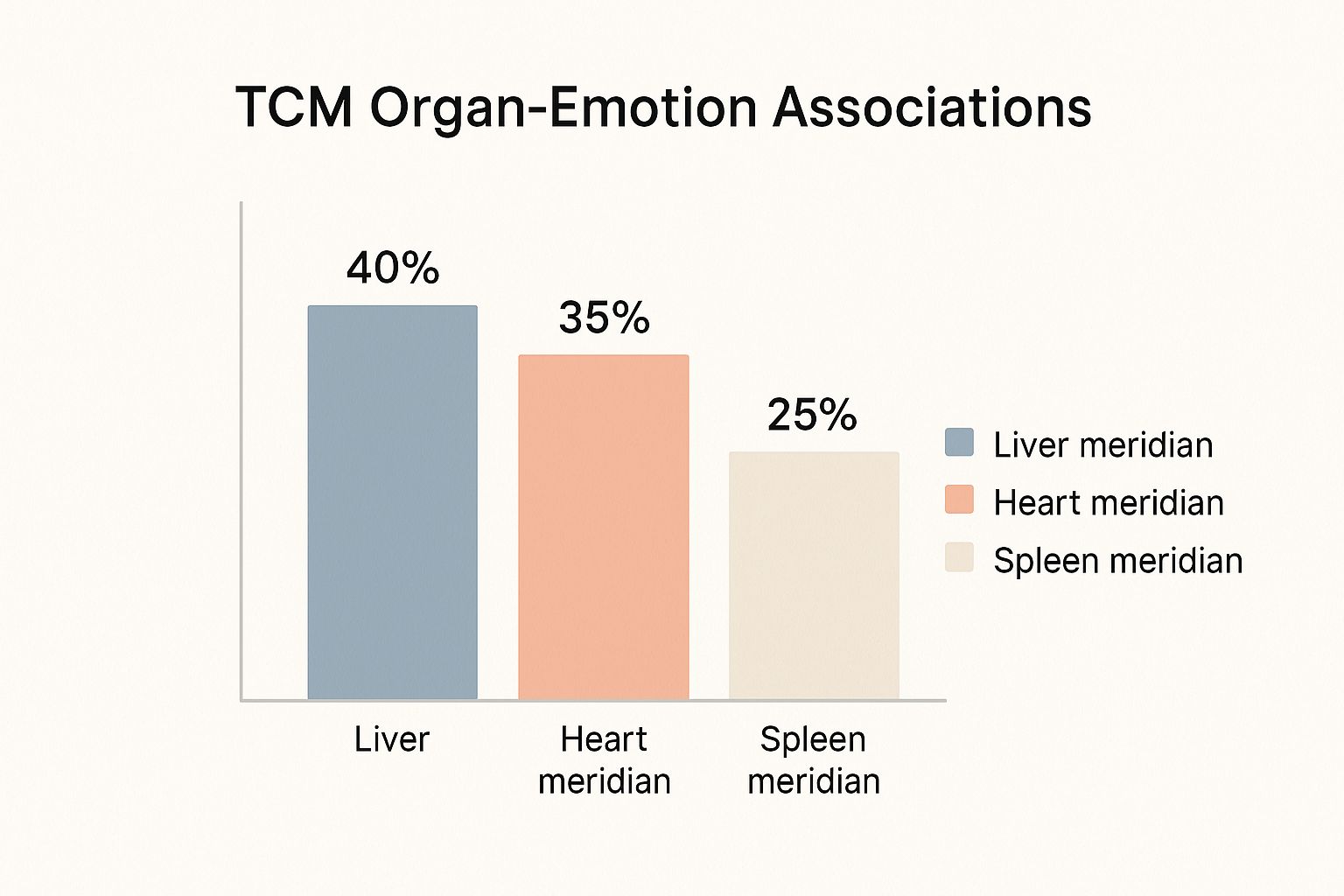
    The infographic below illustrates which organ-meridian systems are most frequently targeted in clinical practice when addressing stress and emotional imbalances.

    Infographic showing the percentage of focus on different meridians in acupuncture for stress and anxiety: Liver meridian at 40%, Heart meridian at 35%, and Spleen meridian at 25%.

    As illustrated, the focus is heavily placed on the meridians traditionally associated with processing emotions, managing stress, and achieving mental clarity.

    It is essential to remember that scientific understanding is continually evolving. The research we currently have is promising, yet it represents just a fraction of an ongoing, broader conversation. For practitioners, this evidence guides us in making informed, balanced decisions when creating supportive care plans for our clients.

    What Should You Expect During Your Acupuncture Appointment Experience?

    Stepping into your first acupuncture appointment may evoke feelings of uncertainty; however, the process is designed to be calming, professional, and centered on your needs. We adhere to a clear, step-by-step protocol to ensure you feel relaxed and supported from the very moment you arrive.

    Your initial session begins with a thorough discussion with our registered practitioner. This is where we explore your health history, the specifics of your stress and anxiety symptoms, and your desired outcomes. This comprehensive conversation is crucial for crafting a personalized treatment plan that aligns with your unique needs.

    After our discussion, you will be invited to recline comfortably on a treatment table. The practitioner will then gently insert ultra-fine, sterile, single-use needles into selected acupuncture points on your body.

    Understanding the Acupuncture Treatment Process

    Once the needles are accurately positioned, your primary role is to relax. Most clients lie quietly in a serene setting for approximately 20 to 30 minutes.

    What should you anticipate feeling? Typically, the sensation is mild. Many individuals report experiencing a dull ache or a slight tingling sensation at the needle insertion point, which often fades quickly, leading to an overall feeling of relaxation.

    The number of needles and their specific placement are determined by the discussions we had during your initial consultation. When applying acupuncture for stress and anxiety, we select points well-known for their ability to soothe the mind and regulate the body’s responses to external pressures.

    At JG Alternative Healthcare, our practitioner is registered with the AHPRA, ensuring you receive both professional and safe care tailored to your needs.

    If you are eager to discover how this process can benefit you, beginning your journey is simple. You can schedule your first consultation by checking our Melbourne acupuncture clinic appointments online.

    Addressing Common Questions About Acupuncture for Stress Management

    It is completely natural to have questions when considering a new approach to your health. Let’s delve into some of the most frequently asked questions regarding the use of acupuncture to manage stress and anxiety.

    Does Acupuncture Cause Pain or Discomfort?

    For most individuals, the answer is no. Acupuncture needles are exceptionally fine—approximately the same thickness as a human hair. They differ significantly from the needles used for injections or blood tests.

    You may feel a brief prick or a gentle ache upon needle insertion, but this sensation typically dissipates within seconds. After the needles are properly positioned, many clients describe sensations of profound relaxation and calm.

    How Many Acupuncture Sessions Are Generally Required?

    This question is highly individual, as each person’s body and circumstances differ. The number of sessions you may require depends on various factors, including the duration of your symptoms and your overall health condition.

    During our initial consultation, we will discuss your situation in detail. From this discussion, I will recommend a treatment plan tailored to your specific needs, and we will consistently monitor your progress throughout your healing journey.

    Can Acupuncture Be Combined with Other Treatments and Therapies?

    Absolutely. Acupuncture can effectively complement other forms of care. Many individuals find that it enhances the treatments they are currently receiving from their GP, psychologist, or other healthcare professionals.

    The key point is to maintain clear communication. Always inform your health team about all therapies you are engaging in. This ensures that your care remains safe, coordinated, and works synergistically for your benefit.

    Is Acupuncture Considered Safe and Reliable?

    When performed by a registered and qualified practitioner, acupuncture is classified as low-risk. In Australia, acupuncturists must be registered with the Australian Health Practitioner Regulation Agency (AHPRA).

    This registration assures that your practitioner adheres to stringent national standards for safety, hygiene, and professional conduct. It also confirms that only sterile, single-use needles are utilized during treatments, minimizing any potential risk.

    Why Is Acupuncture Gaining Popularity for Anxiety Management Across Australia?

    Anxiety has emerged as the most prevalent mental health condition in Australia, affecting approximately 14% of the population each year. Given such a significant number of individuals impacted, there is a growing demand for supportive, evidence-based options. Some studies indicate that acupuncture may alleviate anxiety symptoms, often with fewer side effects compared to traditional treatments. For a deeper understanding of the research surrounding acupuncture and anxiety, click here.

    The objective of acupuncture is not to replace conventional medical treatments but to serve as a supportive partner in conjunction with them. It represents one piece of a larger puzzle in managing your overall wellbeing and mental health.

    We hope these responses provide clarity on how acupuncture may fit into your health strategy.

    Are you ready to explore how our registered practitioner can assist you? Connect with JG Alternative Healthcare today.
    Melbourne Acupuncture Clinic – Book an Appointment at Moonee Ponds or South Morang at https://jghealthcare.com.au

    The Article: Acupuncture for Stress and Anxiety: A Clear Guide first appeared on https://writebuff.com

    The Article Acupuncture for Stress and Anxiety: Your Essential Guide Was Found On https://limitsofstrategy.com

  • Weight Management Supplements: The Ultimate Resource Guide

    Weight Management Supplements: The Ultimate Resource Guide

    Comprehensive Guide to Effective Weight Management Supplements

    Understanding Weight Management Supplements: Their Purpose and Mechanisms

    Various weight management supplements on a modern table, with green tea extract capsules in foreground.

    Weight management supplements are specifically formulated products designed to aid individuals in achieving their weight loss or maintenance goals effectively. These supplements often contain a combination of diverse ingredients that work synergistically to enhance metabolic rates, reduce appetite, and boost energy levels. By providing this support, these products enable individuals to manage their caloric intake more efficiently, facilitating healthier lifestyle choices. The most prevalent types of these supplements include:

    • Fat Burners
    • Appetite suppressants
    • Fat Blockers
    • Meal Replacements
    • Thermogenics
    • Protein Powders
    • Fiber Supplements
    • Green Tea Extract

    These diverse supplements target various physiological mechanisms, promoting a holistic approach to weight management that encourages overall health, vitality, and well-being.

    Maximizing Weight Management: How Supplements Facilitate Success

    Supplements can play a pivotal role in weight management by enhancing metabolic activities, curbing hunger pangs, and elevating energy levels. This multi-dimensional approach allows individuals to maintain an essential caloric deficit, which is crucial for successful weight loss. For example, thermogenic supplements can elevate the body’s core temperature, leading to increased calorie expenditure. At the same time, appetite suppressants can effectively reduce cravings, empowering individuals to stick to their dietary goals more effectively and consistently.

    Incorporating these supplements into a broader lifestyle strategy that includes balanced nutrition and regular physical activity can significantly amplify their effectiveness. This comprehensive approach ensures that individuals utilize supplements as valuable tools, rather than sole solutions, in their journey towards enhanced health and improved well-being.

    Evaluating the Safety and Effectiveness of Weight Management Supplements

    When contemplating the use of weight management supplements, it is essential to critically assess their safety and overall effectiveness. Not every supplement is beneficial or safe for every individual, underscoring the importance of informed decision-making. To ensure safety, consider the following recommendations:

    • Consult with a healthcare professional before initiating any supplement regimen.
    • Thoroughly research the ingredients and their potential side effects.
    • Select supplements from reputable brands that provide transparent and accurate labeling.
    • Steer clear of products that make exaggerated claims or seem unrealistic.

    By adhering to these guidelines, individuals can better navigate the complex landscape of weight management supplements and identify options that genuinely support their health aspirations and objectives.

    Essential Ingredients to Seek in Weight Management Supplements

    Natural ingredients like green tea extract and Garcinia Cambogia in glass jars on a rustic wooden table.

    Identifying the Most Effective Ingredients for Weight Management

    Numerous ingredients are commonly recognized for their efficacy in weight management. Research supports their positive effects in facilitating weight loss and maintenance. Here are some key components frequently found in these supplements:

    • Green Tea Extract: Rich in antioxidants, this ingredient may enhance fat oxidation processes.
    • Caffeine: Renowned for boosting energy expenditure and improving athletic performance.
    • Conjugated Linoleic Acid (CLA): This compound may help reduce body fat and promote lean muscle growth.
    • Glucomannan: A natural fiber that aids in inducing feelings of fullness.
    • Forskolin: Derived from mint plants, this ingredient is believed to support fat loss mechanisms.
    • Raspberry Ketones: Thought to assist in fat breakdown and increase metabolic rates.
    • Chromium: May aid in regulating blood sugar levels and controlling appetite.
    • Yohimbine: Often considered for its potential to promote fat burning.

    These ingredients can synergistically enhance weight management, making it essential to understand how each contributes to achieving overall health and fitness goals.

    Understanding How Key Ingredients Contribute to Weight Management

    The mechanisms through which ingredients in weight management supplements operate can vary significantly. Some ingredients work by increasing thermogenesis, which accelerates calorie burn, while others, such as fiber supplements, may block fat absorption, and appetite suppressants focus on diminishing hunger signals.

    For instance, green tea extract boosts metabolism by enhancing both fat oxidation and thermogenic activity. Caffeine, a well-known stimulant, elevates energy levels and promotes fat burning during physical activities. Conversely, glucomannan expands in the stomach, creating a fullness sensation that can help reduce the risk of overeating.

    Understanding these mechanisms empowers individuals to select supplements that align most effectively with their personal health and weight management goals.

    Recognizing Potential Side Effects of Weight Management Supplements

    Person experiencing side effects from supplements, consulting healthcare professional in clinic.

    Despite the potential advantages of weight management supplements, some ingredients may lead to adverse reactions. It is vital to be aware of these risks to make informed choices. Common side effects may include feelings of jitteriness, increased heart rate, digestive issues, and insomnia, particularly with stimulants like caffeine.

    For individuals considering the use of weight management supplements, it is important to:

    • Begin with lower dosages to assess tolerance levels effectively.
    • Monitor for any adverse reactions, especially when introducing new ingredients.
    • Consult a healthcare professional if persistent side effects occur.
    • Exercise caution when combining multiple supplements, as this could amplify potential side effects.

    Being aware of these possible side effects enables individuals to make safer and more effective decisions regarding their weight management journey.

    Selecting the Most Suitable Supplement for Your Unique Needs

    Choosing the ideal weight management supplement necessitates thorough consideration of various factors. First and foremost, understanding your health objectives is critical. Are you seeking to lose weight, maintain it, or build muscle? Identifying your specific goals will guide your supplement selection process effectively and efficiently.

    Additionally, be mindful of any potential allergies or sensitivities you may have, as well as any existing medical conditions. Consulting with a healthcare provider can yield personalized recommendations based on your unique circumstances. They can help evaluate the benefits and risks of different supplements, ensuring your choice aligns with your comprehensive health strategy.

    Lastly, consider the quality and reputation of the supplement brand. Opting for products that have undergone third-party testing can further enhance your confidence in their safety and efficacy.

    Insights from Experts on the Role of Supplements in Weight Management

    Expert Recommendations on Supplement Use for Weight Management

    Experts typically advocate for a cautious approach when utilizing supplements for weight management. While these products can provide valuable assistance, they should never replace a balanced diet and regular physical activity. Many professionals emphasize that the foundation of successful weight management lies in adopting healthy lifestyle habits.

    Nutritionists frequently highlight the significance of whole foods that are rich in nutrients over processed supplements. For example, a registered dietitian observes that clients who focus on a diverse intake of fruits, vegetables, whole grains, and lean proteins often achieve more sustainable results compared to those who primarily depend on supplements.

    Furthermore, experts suggest that supplements can act as complementary aids rather than the primary solution. They can enhance efforts in specific areas, such as boosting energy levels or curbing cravings, but consistent dietary adjustments and physical activity are indispensable for long-term success.

    Integrating Supplements into a Healthy Lifestyle: Practical Steps

    Effectively integrating supplements into a healthy lifestyle involves aligning their use with nutritious eating habits and regular physical activity. Supplements should enhance your health journey without overshadowing the fundamental principles of balanced nutrition and consistent movement.

    To achieve this, consider actionable steps such as establishing specific health goals and selecting supplements that correspond with these objectives. For instance, if your aim is to enhance workout performance, options like caffeine or branched-chain amino acids (BCAAs) could be appropriate choices.

    Additionally, maintaining a consistent routine is vital. Taking your supplements at the same time each day fosters reliability. This approach reinforces your commitment to healthy habits while maximizing the benefits of the supplements. Keeping a food journal to track your intake and supplement use can also provide insights into their impact on your overall progress.

    Long-Term Effects of Using Weight Management Supplements

    The long-term effects of weight management supplements can vary widely among individuals, influenced by factors such as the ingredients used and personal health characteristics. While some users may experience sustained weight loss and improved metabolic health, others might encounter challenges or diminishing returns.

    Experts caution that prolonged reliance on supplements without addressing foundational lifestyle factors can lead to dependency. An individual may struggle to maintain their weight once they stop using supplements, as they may not have established long-term healthy eating habits.

    To mitigate potential negative outcomes, it is crucial to approach weight management support holistically. Implementing gradual dietary changes and consistent physical activity alongside any supplement regimen can foster lasting results and enhance overall well-being.

    Exploring the Varieties of Weight Management Supplements

    Understanding Thermogenic Fat Burners and Their Role

    Thermogenic fat burners are designed to elevate the body’s metabolic rate, assisting in the burning of additional calories. These supplements often contain stimulating ingredients such as caffeine or green tea extract, which can enhance energy expenditure. The most popular thermogenic products typically include:

    • Green Tea Extract
    • Caffeine Anhydrous
    • Synephrine
    • Ginseng
    • Capsaicin
    • Forskolin
    • Raspberry Ketones
    • Yohimbine

    These products can prove effective when incorporated into a comprehensive weight management plan that includes healthy eating practices and regular physical activity.

    Exploring the Mechanisms of Appetite Suppressants

    Appetite suppressants function by reducing feelings of hunger and cravings, facilitating adherence to a calorie-controlled diet. These supplements typically influence the body’s hunger signals, resulting in decreased food consumption over time.

    Common mechanisms include:

    • Increasing levels of satiety hormones.
    • Blocking hunger signals in the brain.
    • Enhancing feelings of fullness after meals.
    • Delaying gastric emptying, prolonging the sensation of fullness.

    While appetite suppressants can be beneficial, it is essential to use them judiciously. Over-relying on these supplements may fail to address the underlying causes of overeating, such as emotional triggers or habitual behaviors.

    Understanding Fat Blockers and Their Mechanisms

    Fat blockers work by inhibiting the absorption of dietary fat, thereby reducing total caloric intake from food consumption. These supplements can be particularly useful for individuals struggling with high-fat diets.

    However, there are potential drawbacks to using fat blockers, including:

    • Possible digestive side effects, such as gas or diarrhea.
    • Reduced absorption of fat-soluble vitamins.
    • Increased urgency for bowel movements.
    • Limited weight loss effects if not combined with dietary changes.

    It is important to approach fat blockers cautiously and ensure they are part of a balanced strategy for weight management that includes nutrient-dense foods and consistent exercise.

    Choosing the Right Supplement for Your Unique Needs

    Evaluating Key Factors Before Purchasing Supplements

    Before selecting a weight management supplement, several critical factors should be thoroughly evaluated. First and foremost, clearly defining your health objectives is essential. Whether your goal is to lose weight, gain muscle, or maintain your current weight will significantly influence your supplement selection process.

    Additionally, consider any existing medical conditions, as many supplements can interact with prescribed medications or exacerbate health issues. For example, individuals with hypertension should avoid stimulants such as caffeine, while those with digestive concerns may need to avoid fiber-heavy supplements.

    Finally, it is crucial to scrutinize the ingredients and potential allergens listed on the label. Seek products with transparent ingredient profiles and preferably those that have undergone third-party testing to ensure quality and safety.

    Interpreting and Understanding Supplement Labels

    Understanding supplement labels is vital for making informed choices. They contain essential information regarding ingredients, dosages, and possible allergens. Start by examining the ingredient list; prioritize products with well-researched components over proprietary blends, which may obscure the precise amounts of each ingredient.

    Pay close attention to the serving size and recommended dosage. Some supplements suggest taking multiple servings throughout the day, while others may require just one. Grasping the recommended dosages ensures you consume the appropriate amount for effectiveness and minimizes the risk of potential side effects.

    Finally, watch for any added fillers or artificial ingredients that might not align with your health objectives. Quality supplements should prioritize efficacy, and understanding the label is essential for finding those that meet your personal standards.

    Finding Reliable Supplement Information Sources

    Trustworthy information about supplements can be obtained from reputable sources, helping individuals make well-informed decisions. Scientific research published in peer-reviewed journals, health organizations, and qualified health professionals provide invaluable insights into the safety and effectiveness of weight management supplements.

    Websites affiliated with reputable health institutions, such as the World Health Organization or the National Institutes of Health, often contain extensive information regarding various supplements, including their potential benefits and risks.

    Additionally, consulting with qualified healthcare providers can offer personalized guidance, addressing specific inquiries and concerns regarding supplement use. Utilizing these resources ensures that individuals access the most accurate and relevant information available.

    Assessing the Effectiveness of Supplements: Key Factors

    To evaluate the effectiveness of supplements, consider several key factors. First, scrutinize the clinical evidence backing the claims made by the product. Many reputable brands will reference studies or trials that demonstrate their supplement’s efficacy.

    User testimonials can also provide insights into the real-world effectiveness of a supplement. While individual experiences may differ, consistent positive feedback can serve as a strong indicator of a product’s potential benefits.

    Lastly, monitor any noticeable changes in your health or performance after consistent supplement use. Keeping a journal to document your progress can help identify patterns and confirm whether the supplement is contributing to your weight management goals.

    Research-Backed Benefits of Supplements for Weight Management

    Insights from Research on Weight Loss and Supplements

    Research surrounding weight management supplements is extensive, with numerous studies highlighting positive outcomes in weight loss, while others underscore the critical role of diet and exercise. For instance, a review of various studies indicates that green tea extract can facilitate modest weight loss when combined with a low-calorie diet, while caffeine has shown promising potential in enhancing fat oxidation during physical exercise.

    However, many studies suggest that sustainable weight loss is best achieved through lifestyle modifications rather than relying solely on supplements. A holistic approach that integrates dietary changes, physical activity, and appropriate supplement use tends to yield the most effective and enduring results.

    Real-life examples of individuals who have successfully utilized supplements alongside a healthy lifestyle highlight the synergistic effects these products can provide when properly integrated.

    Enhancing Exercise Performance with Supplements

    Certain supplements can significantly boost exercise performance by increasing energy levels, reducing fatigue, or enhancing muscle function. Ingredients such as caffeine and beta-alanine are popular for their ability to enhance endurance and lower perceived exertion during workouts.

    To effectively leverage supplements for improved workout performance, consider the following actionable steps:

    • Consume pre-workout supplements approximately 30 minutes before exercising to maximize energy levels.
    • Incorporate protein powders post-workout to facilitate muscle recovery.
    • Stay hydrated and contemplate electrolyte supplements during extended physical activities.
    • Monitor your body’s responses to different supplements to determine what works best for you.

    By strategically incorporating supplements into your exercise regimen, you can enhance your performance and overall workout experience.

    Exploring Health Benefits Beyond Weight Loss

    In addition to aiding weight loss, some supplements may offer further health benefits, such as improved cardiovascular health or better blood sugar control. For example, omega-3 fatty acids are widely recognized for their heart-healthy properties, potentially lowering the risk of heart disease while supporting weight management efforts.

    Similarly, fiber supplements not only assist in weight management by promoting satiety but can also enhance digestive health and help regulate blood sugar levels.

    Expert analysis suggests that choosing supplements with established health benefits beyond weight loss can promote a more holistic approach to overall well-being. This perspective emphasizes that weight management is intertwined with overall health, encouraging individuals to consider the broader implications of their supplement choices.

    Debunking Common Myths and Misconceptions About Weight Management Supplements

    Do Supplements Work Independently of Diet and Exercise?

    Supplements alone do not provide a miraculous solution for weight management; they yield the best results when combined with healthy eating habits and regular physical activity. Relying solely on supplements can lead to disappointment and potentially encourage unhealthy behaviors.

    The dangers of depending exclusively on supplements include neglecting important dietary practices and physical activity, which are essential components of lasting weight management. Individuals who commit to enhancing their diet and exercise routines often achieve greater success compared to those who believe supplements can substitute for these foundational habits.

    Are All Supplements Safe and Effective?

    Not every weight management supplement is safe or effective. The industry lacks consistent regulation, and some products may contain harmful substances or insufficient amounts of active ingredients. To identify potentially hazardous supplements, look for:

    • Products lacking clear ingredient transparency.
    • Claims that appear too good to be true.
    • Brands with questionable backgrounds or minimal consumer feedback.
    • Supplement companies that do not provide third-party testing results.

    By remaining vigilant and well-informed, individuals can avoid unsafe products and make choices that prioritize their health and wellness.

    Can Supplements Replace a Healthy Lifestyle?

    Supplements cannot replace a healthy lifestyle, which encompasses well-rounded nutrition, consistent physical activity, and adequate sleep. Ignoring these foundational aspects of wellness can lead to temporary fixes without achieving long-term success.

    The long-term consequences of neglecting a healthy lifestyle may include weight regain, heightened health risks, and a cycle of dependency on supplements. A balanced approach that emphasizes nutrition, movement, and mental well-being, combined with the responsible use of supplements, creates the most sustainable path to health.

    Best Practices for Optimizing the Effectiveness of Weight Management Supplements

    Ensuring Safe and Effective Supplement Use

    To use supplements safely and effectively, it is crucial to adhere to recommended dosages and be aware of potential interactions with other medications or supplements. Consulting with a healthcare provider can facilitate the establishment of a personalized supplement regimen that aligns with your health objectives.

    Best practices for supplement use include:

    • Starting with lower dosages to assess your body’s response.
    • Maintaining a consistent routine to enhance effectiveness.
    • Avoiding the temptation to combine multiple supplements without guidance.
    • Staying informed about new research and product developments.

    These strategies can help ensure that you maximize the benefits of your chosen weight management supplements.

    Integrating Supplements with a Nutritious Diet and Exercise Plan

    Combining supplements with a well-rounded diet and regular physical activity can significantly enhance their effectiveness in achieving weight management goals. Supplements should serve as a complementary addition to a balanced lifestyle rather than as a standalone solution.

    To create synergy, focus on nutrient-dense foods that can amplify the effects of your supplements. For instance, consuming protein-rich foods can enhance the benefits of protein supplements, while integrating fiber can work effectively with appetite suppressants.

    Engaging in consistent physical activity not only boosts the weight loss effects of supplements but also supports overall health and wellness. Finding an enjoyable exercise routine will make it easier to stay committed to your health journey.

    Monitoring Progress and Adjusting Strategies Effectively

    Tracking your progress is a crucial aspect of effectively achieving and maintaining your weight management goals. Maintaining detailed records of your supplement usage, dietary choices, and physical activities can help pinpoint what works best for you.

    Be open to adjusting your approach based on your experiences. If you notice diminishing results with a specific supplement, consider whether changes in your diet or exercise regimen could help align better with your objectives. Consulting with healthcare providers or nutritionists can provide additional insights and personalized recommendations tailored to your unique situation.

    Flexibility and a willingness to adapt will empower you to discover the most effective pathway to achieving your weight management objectives.

    Frequently Asked Questions (FAQs) About Weight Management Supplements

    Which supplements are most effective for weight management?

    The most effective supplements for weight management include those containing scientifically validated ingredients, such as green tea extract, caffeine, and CLA, particularly when paired with a balanced diet and exercise for optimal results.

    How long does it take for weight management supplements to show results?

    The effectiveness of weight management supplements can vary based on individual factors and adherence to a healthy lifestyle. Many users observe changes within a few weeks; however, long-term results depend on consistent use and healthy habits.

    Are weight management supplements safe for use?

    Weight management supplements can be safe when selected carefully, but it is crucial to consult with a healthcare provider to ensure they align with your health status and objectives.

    Should I modify my diet if I take supplements?

    Yes, while supplements can assist with weight management, they should complement a healthy diet. A holistic approach that combines nutrition, exercise, and supplements yields the best outcomes.

    Is it feasible to lose weight solely by taking supplements?

    Relying exclusively on supplements for weight loss is unadvisable. They are most effective when used alongside a healthy diet and regular physical activity for sustainable weight management.

    What should I look for in a weight management supplement?

    Seek supplements with transparent ingredient lists, scientific support for their claims, and reputable brands. Consulting with a healthcare provider can also guide your selection process effectively.

    Are there side effects associated with weight management supplements?

    Yes, some individuals may experience side effects such as digestive issues or increased heart rate. It is vital to monitor your body’s reactions and consult a healthcare professional if necessary.

    How can I incorporate supplements into my daily routine?

    Integrate supplements by establishing a consistent routine, taking them at the same time each day, and pairing them with balanced meals and regular physical activity for enhanced effectiveness.

    What are the best practices for using weight management supplements?

    Best practices include adhering to recommended dosages, consulting with healthcare providers, monitoring your body’s response, and combining supplements with a nutritious diet and exercise for optimal results.

    Can weight management supplements assist me in maintaining my weight long-term?

    Weight management supplements can aid in long-term weight maintenance; however, they should be part of a broader strategy that incorporates healthy eating, regular exercise, and lifestyle changes to ensure lasting success.

    Connect with us on Facebook!

    The Article Supplements to Aid Weight Management: Universal Guide appeared first on https://athleticsupplement.com

    The Article Weight Management Supplements: Your Universal Guide Was Found On https://limitsofstrategy.com

  • Human VA Assistance: Maximize Efficiency in Deadline Meetings

    Human VA Assistance: Maximize Efficiency in Deadline Meetings

    Master Deadline Management: Your Comprehensive Guide to Success

    Key Strategies for Effective Deadline Management

    A diverse team in a modern office setting collaboratively managing deadlines with task boards and digital calendars.

    To successfully manage deadlines, it is crucial to understand and implement fundamental principles that not only facilitate timely task completion but also uphold high standards of quality. Mastering these principles is essential for achieving success in various industries and projects. Below is a detailed list of key principles to keep in mind:

    • Clarity: Ensure that every team member is fully aware of their roles and the specific deadlines attached to their responsibilities, thereby eliminating confusion.
    • Prioritisation: Focus on identifying critical tasks that must be accomplished first to meet subsequent deadlines effectively.
    • Realism: Set achievable deadlines that take into account available resources and the current workload to avoid overwhelming team members.
    • Flexibility: Be open to adjusting deadlines as unforeseen circumstances arise, thus preserving the integrity of the project.
    • Accountability: Promote a culture of responsibility where each team member takes ownership of their assigned tasks, ensuring commitment.
    • Communication: Maintain open lines of communication to address any issues that may arise early in the process, fostering collaboration.
    • Monitoring: Regularly evaluate progress against established deadlines to promptly identify potential delays and take corrective actions.

    By thoroughly understanding and applying these principles, teams can adeptly navigate the complexities associated with deadline management, ultimately leading to enhanced productivity and superior project outcomes.

    The Transformative Role of Human Virtual Assistants in Deadline Planning

    Human Virtual Assistants (VAs) are instrumental in enhancing both the planning and execution phases of deadline management. Their support can revolutionise project management by streamlining processes and significantly boosting efficiency. Here are several impactful ways in which human VAs contribute:

    To begin with, they excel in scheduling tasks effectively. By aligning deadlines with the availability of team members, VAs ensure that workloads are manageable and deadlines remain realistic. This proactive approach to scheduling significantly reduces the chances of last-minute rushes, allowing teams to operate more calmly and productively.

    Additionally, human VAs are exceptional facilitators of communication. Acting as crucial liaisons between team members, they ensure that everyone is kept informed about task progress and any alterations to deadlines. This continuous flow of information helps maintain alignment and accountability across the team, resulting in smoother operations and enhanced collaboration.

    Moreover, human VAs play a pivotal role in managing documentation. They meticulously track project milestones and deadlines, providing valuable insights into completed tasks and outstanding items. Such thorough documentation ensures that nothing is overlooked and that all aspects of the project are accounted for, contributing to overall project success.

    Finally, they provide essential reminders regarding upcoming deadlines, keeping the entire team focused on their commitments. This comprehensive support not only ensures that deadlines are met but often surpassed, which directly contributes to the overall success of projects.

    Top Tools and Technologies for Efficient Deadline Tracking

    In the modern workplace, a variety of tools and technologies can facilitate effective deadline tracking and enhance overall productivity. Selecting the right tools can profoundly influence how tasks are managed and deadlines adhered to. Here are some noteworthy tools to consider:

    1. Trello: This intuitive project management tool employs a card-based system that allows for visual tracking of tasks and deadlines. Users can effortlessly drag and drop tasks between columns as they progress through various stages of completion.

    2. Asana: A versatile platform designed to help teams efficiently manage projects and tasks. It features deadline reminders and progress tracking, making it easy to visualise workflows and adjust timelines as necessary to stay on track.

    3. Monday.com: A highly customisable project management tool that empowers teams to set deadlines, allocate resources, and visually track progress. Its adaptability makes it suitable for various industries and project types.

    4. ClickUp: An all-in-one productivity platform that combines project management, time tracking, and goal setting. Its robust features allow teams to monitor deadlines effectively and prevent any task from being overlooked.

    5. Google Calendar: A simple yet powerful tool for scheduling deadlines and appointments. With features that enable setting reminders, sharing calendars, and integrating with other tools, it continues to be a foundational resource for effective deadline management.

    By utilising these tools, teams can streamline the deadline tracking process and foster collaboration and accountability among members, ensuring tasks are completed on time and to a high standard.

    Expert Insights on Achieving Deadline Success with Human VA Support

    A professional workspace with a human virtual assistant, schedules, and screens showing expert advice on meeting deadlines.

    Enhancing Deadline Adherence Through Human VA Support

    Human VAs can significantly improve adherence to deadlines by providing customised support that accommodates the unique dynamics of each team. Their multifaceted contributions lead to increased productivity and efficiency in project execution.

    One key method through which human VAs enhance deadline adherence is by implementing personalised scheduling. They assess team members’ workloads and availability, allowing for the establishment of realistic deadlines that consider individual capacities. This tailored approach minimises the risk of burnout and ensures timely task completion.

    Furthermore, human VAs streamline the task management process. By breaking larger projects into smaller, manageable tasks with specific deadlines, they assist team members in maintaining focus and clarity. This method fosters a sense of accomplishment as smaller milestones are achieved, thereby generating momentum toward the final deadline.

    In addition, human VAs are essential for reminding team members of their commitments. By sending timely reminders and updates, they keep deadlines at the forefront of everyone’s mind, reducing the likelihood of oversight. Their proactive communication helps teams remain on track and accountable for their responsibilities.

    Real-world examples highlight the effectiveness of this support. In a recent digital marketing campaign project, a human VA played a key role in reorganising deadlines after assessing team workload, leading to a remarkable 30% increase in on-time task completion rates.

    Maximising Human VA Contributions: Best Practices

    To effectively leverage the capabilities of human VA assistance, it is crucial to implement best practices that maximise their contributions to meeting deadlines. By following these actionable steps, teams can ensure a seamless integration of VAs into their workflow:

    • Define Roles Clearly: Clearly outline the tasks and responsibilities assigned to the VA to avoid overlap and confusion.
    • Set Up Regular Check-Ins: Schedule weekly or bi-weekly meetings to discuss progress and address any obstacles that may arise.
    • Utilise Collaboration Tools: Encourage VAs to employ project management and communication tools that enhance visibility and streamline processes.
    • Provide Comprehensive Training: Equip VAs with the necessary knowledge about company processes and culture to align their work with team objectives.
    • Encourage Feedback: Foster an environment where team members can provide feedback on the VA’s contributions, allowing for continuous improvement.
    • Establish Clear Deadlines: Collaborate with VAs to set specific, measurable deadlines for tasks to enhance accountability.
    • Emphasise Communication: Maintain open lines of communication to ensure that any issues are addressed promptly.

    Implementing these best practices can significantly improve the efficiency and effectiveness of human VA assistance, leading to enhanced deadline management overall and ensuring that projects are successfully completed.

    Case Studies Showcasing Effective Deadline Management

    A tech startup office with a digital dashboard showing deadlines, VAs monitoring, and team celebrating reduced missed deadlines.

    Exploring case studies of successful deadline management reveals valuable insights into effective strategies that can be implemented across various sectors. One notable example features a tech startup that faced significant challenges in meeting product launch deadlines.

    This startup adopted a robust project management system that integrated human VA support. The VAs were tasked with tracking deadlines and providing regular updates, which empowered the team to stay informed about their project’s status. This proactive approach resulted in a remarkable 40% reduction in missed deadlines within just three months.

    Another compelling case involves a marketing agency that struggled with managing multiple client deadlines simultaneously. By incorporating human VAs, the agency was able to delegate administrative tasks such as scheduling, follow-ups, and reminder communications. As a direct result, the agency experienced a 25% increase in on-time project completions, along with significantly improved client satisfaction ratings.

    These case studies underscore the transformative potential of combining human VA assistance with effective deadline management practices. By analysing and adapting these strategies, organisations can position themselves for greater success in consistently meeting their deadlines.

    Effective Communication Strategies for Deadline Management

    Communicating Deadlines Clearly to Your Team

    Clear communication regarding deadlines is vital for ensuring that all team members are aligned and aware of their responsibilities. To communicate deadlines effectively, consider the following methods:

    First, employ a centralised project management tool that is accessible to everyone. This ensures that all deadlines are visible to team members and reduces the chances of miscommunication. Tools like Asana or Trello allow for easy updates and visibility, enhancing overall transparency.

    Second, hold kickoff meetings at the start of a project to discuss deadlines in detail. This provides team members the opportunity to ask questions and clarify expectations, fostering a shared understanding of timelines and responsibilities.

    Another effective strategy is to utilise visual aids, such as Gantt charts or timelines, that illustrate the project’s deadlines visually. This can help team members see how their tasks fit within the larger context of the project, enhancing overall comprehension and alignment.

    Regular status updates are also essential for keeping deadlines front of mind. Consider sending weekly or bi-weekly email reminders or updates via your chosen project management tool. This proactive communication ensures that deadlines remain a priority and allows for adjustments if necessary.

    Finally, encourage an open-door policy where team members feel comfortable discussing any challenges or concerns related to meeting deadlines. This supportive atmosphere can lead to early identification of potential issues, enabling timely interventions and solutions.

    The Importance of Regular Updates on Deadlines

    Regular updates on deadlines play a crucial role in maintaining momentum and ensuring that projects stay on track. These updates serve several important purposes that can enhance overall project success.

    Firstly, they provide visibility into progress. Regular updates help team members understand where they stand in relation to deadlines, allowing them to make necessary adjustments to their workloads or priorities. This transparency promotes accountability and encourages team members to stay focused on their goals.

    Additionally, frequent updates facilitate proactive problem-solving. When team members are continuously informed about deadlines and progress, they can identify potential obstacles early on. This early detection is critical in preventing last-minute rushes and missed deadlines, as it allows teams to address issues before they escalate.

    Moreover, regular updates foster a sense of team cohesion. When everyone is informed about project timelines, it strengthens collaboration and teamwork. Team members are more likely to support each other in meeting deadlines, creating a collaborative environment that enhances productivity.

    To implement regular updates effectively, establish a consistent schedule for progress meetings or status reports. These updates can be shared through project management tools, emails, or team meetings, ensuring that everyone is informed and aligned with the project’s status.

    Enhancing Deadline Communication Through Human VAs

    Human VAs can streamline the process of communicating deadlines, thereby enhancing overall efficiency and clarity within teams. Their involvement significantly improves how deadlines are shared and managed across various projects.

    First, human VAs can act as communication hubs, consolidating information related to deadlines from various sources. They can gather updates from team members, compile them, and share them in an easily digestible format, ensuring that everyone is on the same page regarding deadlines and responsibilities.

    Second, VAs can assist with reminder notifications. By setting up automated reminders for upcoming deadlines, they help keep team members accountable and prevent tasks from slipping through the cracks. This proactive approach reduces the likelihood of missed deadlines and promotes a culture of responsibility within the team.

    Furthermore, human VAs can manage client communications related to deadlines. They can coordinate with clients to ensure that expectations are clear and that any potential delays are communicated promptly. This open line of communication fosters trust and transparency between the team and clients, enhancing overall project relationships.

    Lastly, VAs can facilitate regular check-in meetings to track progress on deadlines. By scheduling these meetings and preparing agendas, they ensure that discussions remain focused and productive, allowing teams to identify challenges and solutions in real time.

    Overall, integrating human VAs into deadline communication strategies can lead to enhanced clarity, accountability, and team cohesion, ultimately driving project success.

    Confronting Challenges in Meeting Deadlines

    Identifying Common Challenges Teams Face in Meeting Deadlines

    Recognising common challenges associated with meeting deadlines is the first step toward effectively overcoming them. Various factors can hinder timely task completion, and acknowledging these obstacles is crucial for developing effective solutions.

    One prevalent challenge is poor time management. Many individuals struggle to allocate their time effectively, often leading to last-minute rushes and missed deadlines. This typically stems from a lack of clear prioritisation of tasks, making it essential to establish a structured approach to time management.

    Another challenge is insufficient communication within teams. When team members are unaware of their roles or the status of tasks, it creates confusion and misalignment, ultimately impacting deadlines. Effective communication strategies are essential to ensure everyone understands their responsibilities.

    Unrealistic deadlines can also pose significant challenges. When deadlines are set without considering available resources or workload, it can lead to stress and burnout among team members, resulting in decreased productivity. Establishing realistic timelines is critical for maintaining team morale and efficiency.

    Lastly, external factors such as unexpected changes in project scope, client requests, or personal emergencies can disrupt timelines. These interruptions can easily derail progress if not managed effectively, making it essential for teams to develop contingency plans.

    By recognising these common challenges, teams can begin to implement strategies to address and mitigate them, leading to improved adherence to deadlines and enhanced project outcomes.

    Strategies to Mitigate Deadline Delays

    To consistently meet deadlines, it is essential to implement effective strategies to mitigate delays. These strategies can help keep projects on track and enhance overall productivity.

    One effective approach is to establish buffer time in project schedules. By building in extra time for unexpected delays, teams can reduce the pressure associated with tight deadlines. This practice allows for flexibility and helps accommodate unforeseen circumstances without compromising quality.

    Another vital strategy is to promote collaboration among team members. Encouraging open communication and teamwork can help identify potential bottlenecks early on. Regular check-ins and progress updates facilitate discussions about challenges, enabling teams to address issues collectively and maintain project momentum.

    Implementing project management tools can also enhance deadline management. Tools like Asana or Trello allow teams to visualise tasks, deadlines, and dependencies. This clarity enables team members to stay informed about deadlines and manage their workloads more effectively, reducing the potential for delays.

    Additionally, fostering a culture of accountability is crucial. By holding team members responsible for their tasks and deadlines, a sense of ownership is created. This accountability can motivate individuals to complete their work on time, reducing the likelihood of delays and enhancing overall team efficiency.

    Finally, regularly reviewing and adjusting project timelines based on progress and feedback can help teams stay aligned with their goals. Flexibility in deadline management allows for necessary adjustments while keeping the overall objectives in focus, ensuring that deadlines remain achievable.

    The Crucial Role of Human VAs in Overcoming Deadline Challenges

    Human VAs can play an instrumental role in overcoming common challenges associated with meeting deadlines. Their diverse skill set and dedicated support enable teams to navigate obstacles more effectively, leading to improved project outcomes.

    One of the key benefits of human VAs is their ability to facilitate communication within teams. By ensuring that everyone is informed about their responsibilities and deadlines, VAs help reduce confusion and misalignment. This improved communication fosters a more cohesive working environment and enhances overall productivity.

    Additionally, human VAs excel at task management. They can help break down larger projects into smaller, manageable tasks, making it easier for team members to focus on specific responsibilities. This structured approach reduces the overwhelm often associated with complex projects and helps maintain momentum toward achieving deadlines.

    Moreover, human VAs can assist in tracking progress and identifying potential delays early on. By monitoring deadlines and communicating updates to the team, they can address challenges proactively before they escalate into bigger issues, ensuring that deadlines are met consistently.

    VAs can also provide administrative support that alleviates the burden on team members. By handling routine tasks such as scheduling meetings, sending reminders, and managing communications, they free up time for team members to concentrate on their core responsibilities, ultimately improving productivity and project efficiency.

    With their versatile skills and proactive approach, human VAs are invaluable assets in overcoming the challenges associated with meeting deadlines and ensuring that projects are completed successfully.

    Essential Tools and Technologies for Effective Deadline Management

    Leveraging the right tools and technologies is crucial for effective deadline management. The landscape of project management software offers a variety of solutions that enhance productivity and organisation. Some noteworthy tools include:

    1. Asana: A powerful project management tool that enables teams to create tasks, set deadlines, and track progress visually. Its user-friendly interface makes it easy for teams to stay organised and accountable.

    2. Trello: Utilising a card-based approach, Trello allows teams to manage tasks and deadlines collaboratively. Users can move cards through stages, providing a clear overview of project status and progress.

    3. Basecamp: A comprehensive project management tool that focuses on team collaboration. With features for message boards, to-do lists, and document sharing, it centralises communication and deadline tracking, ensuring everyone is aligned.

    4. Microsoft Project: A robust project management software that offers advanced features for resource allocation and timeline tracking. It’s particularly beneficial for larger projects with complex dependencies.

    5. Jira: Ideal for software development teams, Jira allows for agile project management. It provides tools for tracking progress, managing sprints, and ensuring deadlines are met efficiently.

    6. Slack: While primarily a communication tool, Slack integrates with various project management software, enhancing deadline communication and collaboration within teams.

    These tools not only streamline the deadline management process but also foster collaboration and accountability among team members, ensuring tasks are completed on time and to a high standard.

    The Critical Importance of Communication in Meeting Deadlines

    Effective communication is essential for meeting deadlines, as it ensures that all team members are aligned and aware of their responsibilities. When communication breaks down, it can lead to confusion, missed deadlines, and decreased productivity.

    First, clear communication establishes expectations. When team members understand their roles and the deadlines associated with their tasks, they can manage their time and resources more effectively. This clarity fosters accountability and promotes a proactive approach to meeting deadlines.

    Moreover, regular communication facilitates progress updates. By keeping team members informed about developments and potential challenges, teams can address issues early on. This proactive communication prevents delays and keeps projects on track, ensuring that all members are working towards the same goals.

    Additionally, fostering an open dialogue encourages team members to voice concerns or ask questions. This openness can lead to collaborative problem-solving and a stronger sense of teamwork, ultimately enhancing overall productivity and project success.

    To improve communication surrounding deadlines, consider implementing regular check-ins, utilising project management tools, and encouraging an open-door policy for discussing any challenges or changes. By prioritising communication, teams can enhance their ability to meet deadlines consistently and effectively.

    Time Management Techniques for Achieving Deadline Success

    Proven Time Management Techniques for Meeting Deadlines

    Effective time management techniques are essential for consistently meeting deadlines. By employing these strategies, individuals and teams can optimise their productivity and ensure that tasks are completed on time. Here’s a list of some of the most effective time management techniques:

    • The Pomodoro Technique: Work in focused bursts of 25 minutes followed by a 5-minute break to enhance concentration and maintain energy levels throughout the workday.
    • Time Blocking: Allocate specific blocks of time for different tasks or activities, ensuring dedicated focus on each task to improve efficiency.
    • Prioritisation Matrix: Use tools like the Eisenhower Matrix to categorise tasks based on urgency and importance, guiding prioritisation and decision-making.
    • Goal Setting: Set clear, achievable goals for each day or week to maintain focus and direction, ensuring that progress is measurable.
    • Delegation: Delegate tasks to team members or VAs to optimise workload and ensure deadlines are met efficiently.
    • Batch Processing: Group similar tasks together to minimise context-switching and improve overall efficiency and productivity.
    • Regular Reviews: Conduct regular reviews of progress and adjust plans as necessary to stay on track and meet deadlines effectively.

    By incorporating these techniques into daily routines, individuals and teams can enhance their time management skills and improve their ability to meet deadlines consistently and efficiently.

    Integrating Time Management Techniques with Human VA Support

    Integrating time management techniques with human VA assistance can significantly enhance productivity and efficiency. The collaboration between individuals and VAs creates a powerful synergy that allows teams to manage their time more effectively and meet deadlines consistently.

    One effective method for integration is to allow VAs to coordinate schedules. By working with team members to set priorities and deadlines, VAs can ensure that tasks are organised in a way that maximises productivity. This collaboration helps team members focus on high-priority tasks while VAs handle administrative details and communications.

    Additionally, VAs can assist with time tracking. By monitoring how much time is spent on specific tasks, they can provide valuable insights into productivity patterns. This information can inform adjustments to time management strategies, enabling teams to optimise their workflows for greater efficiency.

    Human VAs can also aid in setting reminders and deadlines. By sending notifications about upcoming tasks and deadlines, they help keep team members organised and accountable. This proactive support ensures that deadlines remain a priority and that tasks are completed promptly.

    Moreover, VAs can facilitate regular check-ins regarding time management. They can help schedule weekly or bi-weekly reviews to assess progress and adjust plans as necessary. This ongoing communication fosters accountability and encourages continuous improvement in time management practices.

    By effectively integrating time management techniques with human VA assistance, teams can enhance their productivity and ensure that deadlines are consistently met, leading to successful project outcomes.

    The Impact of Time Management Tools on Deadline Adherence

    Time management tools can significantly influence the ability to meet deadlines by streamlining processes and enhancing productivity. The right tools provide visibility into tasks and deadlines while offering features that assist with effective time management.

    Tools like Toggl allow users to track time spent on specific tasks, providing valuable insights into productivity patterns. By analysing this data, individuals can identify areas for improvement and adjust their time management strategies accordingly to optimise efficiency.

    RescueTime is another powerful tool that tracks how time is spent across various applications and websites. By offering detailed reports, it allows users to understand their time usage and make informed decisions to improve productivity and task management.
    Focus@Will is a unique time management tool that combines music with productivity. By playing music designed to enhance focus, it helps individuals maintain concentration during work sessions, ultimately leading to improved time management and adherence to deadlines.

    Furthermore, Todoist serves as an effective task management tool that enables users to create to-do lists, set deadlines, and prioritise tasks. Its simple interface makes it easy to keep track of daily responsibilities and deadlines, ensuring that nothing is overlooked.

    By leveraging these time management tools, individuals and teams can enhance their ability to manage time effectively, leading to improved deadline adherence and overall productivity in their projects.

    Overcoming Procrastination to Meet Deadlines

    Procrastination can be a significant barrier to meeting deadlines. To combat this challenge, individuals can implement various strategies that enhance time management and encourage productivity.

    One effective technique is to break tasks into smaller, manageable chunks. This approach makes tasks feel less overwhelming, reducing the temptation to procrastinate. Establishing clear steps and deadlines for each part of a project can help maintain momentum and focus.

    Another strategy is to utilise the two-minute rule. If a task can be completed in two minutes or less, tackle it immediately. This simple technique helps clear small tasks off the to-do list and reduces the overall burden, making it easier to stay on track with larger projects.

    Additionally, setting up a reward system can motivate individuals to overcome procrastination. By establishing small rewards for completing tasks or reaching milestones, it creates positive reinforcement that encourages timely completion and boosts morale.

    Creating a dedicated work environment is also essential. Minimise distractions by setting up a space conducive to focus and productivity. This environment can help reduce the temptation to procrastinate and enhance overall work efficiency.

    Finally, adopting the Pomodoro Technique can be beneficial. By working in focused bursts followed by short breaks, individuals can maintain concentration and reduce feelings of burnout, ultimately combating procrastination and improving time management.

    Implementing these techniques can significantly improve time management and ensure that deadlines are met consistently, fostering a culture of accountability and productivity within teams.

    Prioritising Tasks for Efficient Time Use

    Prioritising tasks effectively is crucial for managing time and meeting deadlines. By implementing structured prioritisation methods, individuals can enhance their productivity and ensure that high-priority tasks are completed first and foremost.

    One effective approach is the Eisenhower Matrix, which categorises tasks based on urgency and importance. This matrix helps individuals focus on tasks that are both urgent and important while delegating or postponing less critical tasks to optimise time management.

    Another method is to employ the ABC prioritisation technique. In this method, tasks are classified as A (high priority), B (medium priority), or C (low priority). By focusing on A tasks first, individuals can ensure that their time and energy are spent on the most critical responsibilities, leading to successful project outcomes.

    Additionally, creating a daily to-do list can aid in prioritisation. By listing tasks for the day and identifying the top three priorities, individuals can focus their efforts on the most important activities and manage their time effectively, ensuring that deadlines are met consistently.

    Regularly reviewing and adjusting priorities based on progress and deadlines is also essential. As projects evolve, certain tasks may become more critical than others. Staying adaptable and responsive to changes in priorities is vital for successful time management and project execution.

    By employing these prioritisation techniques, individuals can optimise their time use, enhance productivity, and ensure that deadlines are consistently met, contributing to overall project success.

    Research-Backed Benefits of Meeting Deadlines with Human VA Assistance

    Boosting Productivity Through Human VA Support

    Human VA assistance can lead to increased productivity and efficiency across teams and projects. Research indicates that organisations utilising VAs frequently experience significant improvements in task completion rates and overall performance.

    One significant advantage is the delegation of repetitive tasks. By outsourcing administrative functions to VAs, team members can focus on higher-level responsibilities that require their expertise. This shift allows for better utilisation of skills and resources, ultimately enhancing productivity and efficiency in project execution.

    Additionally, VAs can assist with time management. By helping to organise schedules, set priorities, and send reminders, they enable team members to concentrate on their core tasks without being bogged down by administrative duties. This streamlined approach leads to improved efficiency and task completion rates across projects.

    Furthermore, the availability of additional support contributes to heightened productivity. Teams can respond more effectively to workloads and deadlines when they have the assistance of a dedicated VA to help manage tasks and communications, ensuring that nothing falls through the cracks.

    Research also shows that teams integrating human VA assistance experience reduced stress levels. With administrative burdens alleviated, team members can focus on their work without the overwhelm of juggling multiple responsibilities, leading to a more productive work environment and improved morale.

    Overall, the integration of human VAs into teams has been shown to significantly boost productivity, enabling organisations to meet deadlines more consistently and thrive in a competitive landscape.

    Reducing Stress Levels and Improving Deadline Management with Human VAs

    Human VAs can have a profound impact on stress levels associated with meeting deadlines. By providing essential support and alleviating administrative burdens, they contribute to a more balanced and productive work environment.

    One significant benefit is the reduction of overwhelm. When team members delegate repetitive tasks to VAs, they can focus on high-priority responsibilities, leading to less stress and a greater sense of control over their workloads. This shift allows individuals to manage their time more effectively and meet deadlines with greater ease, ultimately enhancing project outcomes.

    Moreover, VAs can assist with task organisation. By helping create structured schedules and prioritising tasks, they ensure that deadlines are achievable and realistic. This clarity reduces uncertainty and anxiety about meeting deadlines, fostering a more positive work atmosphere and promoting team cohesion.

    Additionally, the presence of a human VA can provide a sense of security and reassurance. Knowing that support is available for administrative tasks allows team members to concentrate on their core responsibilities without the fear of falling behind. This support plays a crucial role in maintaining morale and productivity, resulting in a more engaged workforce.

    Research indicates that teams utilising human VAs report lower levels of work-related stress. This reduction in stress can lead to improved mental well-being and overall job satisfaction, creating a healthier and more motivated workforce that is better equipped to meet deadlines.

    In summary, human VAs significantly influence stress levels associated with deadlines, enabling teams to meet their commitments more effectively and fostering a more positive work environment that enhances overall productivity.

    Long-Term Advantages of Human VA Support for Deadline Management

    Utilising human VAs for deadline management offers a range of long-term benefits that can enhance organisational efficiency and performance. These benefits extend beyond immediate task completion, contributing to sustained improvements in productivity and team dynamics.

    One key long-term advantage is the establishment of consistent processes. By integrating VAs into deadline management, organisations can develop standard operating procedures that streamline workflows. This consistency helps teams adapt more quickly to changing demands and ensures that deadlines are met consistently and efficiently.

    Furthermore, the collaboration between team members and VAs fosters a culture of accountability. When VAs are integrated into projects, they help create an environment where individuals take ownership of their responsibilities. This culture promotes higher levels of engagement and commitment to meeting deadlines, ultimately leading to improved project outcomes.

    Additionally, organisations that utilise VAs often experience improved scalability. As businesses grow, the ability to delegate tasks to VAs allows teams to manage increased workloads without compromising quality or deadlines. This scalability is essential for long-term success and adaptability in a competitive environment.

    Using human VAs can also lead to enhanced team morale. When team members feel supported and less overwhelmed by administrative tasks, they are more likely to maintain a positive attitude and job satisfaction. This morale boost contributes to a more collaborative and motivated workforce, ultimately benefiting overall project performance.

    Overall, the long-term benefits of incorporating human VAs into deadline management are substantial, providing organisations with the tools and support needed to thrive in an increasingly competitive environment and ensuring that deadlines are consistently met.

    Setting Realistic Deadlines with Human VA Assistance

    Steps to Effectively Establish Realistic Deadlines with Human VA Support

    Establishing realistic deadlines is crucial for the success of any project, and the assistance of human VAs can greatly enhance this process. Here are practical steps for setting realistic deadlines effectively with VA support:

    • Conduct a Task Analysis: Collaborate with the VA to analyse the scope of the project and identify all tasks involved, ensuring that nothing is overlooked.
    • Assess Resources: Evaluate available resources, including team members’ skills and availability, to determine realistic timelines that account for current capacities.
    • Incorporate Buffer Time: Allow for unexpected delays by including buffer time in the deadline calculations, ensuring that teams are not unduly pressured.
    • Set Milestones: Break the project into smaller milestones to allow for tracking progress and making adjustments as needed, enhancing accountability.

    These steps ensure that deadlines are achievable while maintaining accountability. By working alongside a human VA, teams can leverage their insights and organisational skills to set practical timelines that enhance project success and help meet objectives.

    The Significance of Flexibility in Deadline Setting

    Flexibility in deadline setting is critical for achieving better outcomes in project management. The ability to adapt deadlines as circumstances change can lead to improved results and enhanced team morale.

    When teams embrace flexibility, they can respond to unforeseen challenges more effectively. For instance, if a project encounters unexpected delays or changes in scope, having the ability to adjust deadlines allows teams to maintain quality without feeling overwhelmed or stressed.

    Moreover, flexibility fosters collaboration and communication within teams. When deadlines can be adjusted, team members feel empowered to discuss challenges and propose solutions, leading to more innovative approaches to problem-solving and successful project execution.

    Additionally, a flexible deadline approach enhances work-life balance. When team members are given the freedom to adjust timelines based on their capacities, it reduces stress and fosters a more positive work environment. This balance can lead to greater job satisfaction and increased productivity in the long run.

    To achieve this flexibility, teams must establish open lines of communication and encourage dialogue about deadlines. Regular check-ins can facilitate these discussions, allowing for timely adjustments that keep projects on track while supporting team members’ needs and capacities.

    How Human VAs Facilitate Deadline Adjustments

    Human VAs can play an essential role in effectively adjusting deadlines as project circumstances evolve. Their organisational skills and proactive support can facilitate timely adaptations to project timelines.

    One way VAs assist is by monitoring progress. They can track task completion and identify potential delays early on, allowing teams to make informed decisions about adjusting deadlines. This proactive approach helps mitigate risks and ensures projects remain on track to meet their objectives.

    Additionally, VAs can facilitate communication when changes are necessary. They can inform team members about new deadlines, ensuring everyone is aligned and aware of their responsibilities. This clarity is essential for maintaining accountability and preventing misunderstandings that could impact project outcomes.

    Moreover, VAs can help reassess priorities. When deadlines need adjusting, they can work with teams to evaluate which tasks are critical and which can be postponed. This prioritisation ensures that resources are allocated effectively and that the most important tasks are completed first, maintaining project focus.

    By leveraging the skills and support of human VAs, teams can navigate changes to deadlines smoothly, ensuring that projects continue to progress towards successful completion while meeting organisational goals.

    Strategies for Communicating Deadline Changes Effectively

    Effectively communicating deadline changes to team members is essential for maintaining alignment and productivity. When deadlines shift, clear communication ensures that everyone is informed and understands their responsibilities.

    Firstly, consider using multiple communication channels. Sending an email to the entire team, accompanied by an update in the project management tool, ensures that the information reaches everyone. This redundancy reduces the chances of miscommunication and ensures clarity.

    Secondly, hold a team meeting to discuss deadline changes. This allows for a collaborative discussion where team members can voice concerns, ask questions, and clarify expectations. Engaging team members in this manner fosters a sense of ownership and accountability for their tasks.

    Moreover, provide written documentation of the changes. A summary outlining the new deadlines and the reasons for the adjustments can help team members understand the context and rationale behind the changes. This transparency builds trust and ensures that everyone is on the same page regarding project timelines.

    Lastly, encourage an open-door policy for discussing any challenges related to the new deadlines. Offering team members the opportunity to share their concerns or seek clarification fosters a supportive environment that enhances collaboration and mitigates potential issues.

    By implementing these communication strategies, teams can effectively manage changes in deadlines and ensure that all members are aligned and prepared to meet their commitments successfully.

    Monitoring Progress and Ensuring Adherence to Deadlines

    Regular monitoring of progress and deadline adherence is critical for ensuring projects stay on track. By implementing effective strategies, teams can proactively address any issues that arise and maintain momentum towards meeting deadlines.

    One effective method is to establish regular check-ins. Scheduling weekly or bi-weekly meetings allows teams to discuss progress, identify challenges, and adjust plans as needed. This ongoing communication fosters accountability and encourages collaboration among team members, leading to improved project outcomes.

    Additionally, leveraging project management tools can enhance monitoring efforts. Tools like Asana or Trello provide visibility into task completion and deadlines, allowing teams to track progress in real-time. This transparency helps identify potential delays early on, enabling proactive problem-solving and timely interventions.

    Furthermore, assigning a dedicated project manager or VA to oversee progress can add an extra layer of accountability. This individual can monitor deadlines, send reminders, and ensure that team members stay focused on their responsibilities, ultimately driving project success.

    Lastly, establishing milestones within projects can help track progress effectively. By breaking projects into smaller tasks with specific deadlines, teams can celebrate achievements along the way, maintaining motivation and momentum towards completing the final project successfully.

    By implementing these monitoring strategies, teams can effectively manage progress and ensure adherence to deadlines, ultimately leading to successful project completion and enhanced organisational performance.

    Research-Backed Benefits of Meeting Deadlines with Human VA Assistance

    Enhancing Productivity Through Human VA Support

    Human VA assistance can lead to increased productivity and efficiency across teams and projects. Research shows that organisations utilising VAs often experience notable improvements in task completion rates and overall performance.

    One significant advantage is the delegation of administrative tasks. When team members can offload routine responsibilities to VAs, they free up valuable time to focus on their core duties. This shift allows for better utilisation of skills and resources, ultimately enhancing productivity and efficiency in project execution.

    Furthermore, VAs excel at task prioritisation. By helping teams organise their workloads and set clear deadlines, they ensure that critical tasks are completed on time. This structured approach reduces the risk of missed deadlines and enhances overall efficiency across projects.

    Additionally, VAs can provide real-time support in managing deadlines. By sending reminders and updates, they help keep team members accountable and focused on their responsibilities. This proactive communication promotes a sense of urgency and encourages timely task completion.

    Research indicates that teams integrating human VA assistance report lower levels of work-related stress. With administrative burdens alleviated, team members can concentrate on their work without feeling overwhelmed, resulting in a more productive and engaged workforce that consistently meets deadlines.

    Overall, the integration of human VAs into teams can significantly boost productivity, enabling organisations to meet deadlines consistently and thrive in a competitive landscape.

    Impact of Human VAs on Stress Levels and Deadline Management

    Human VAs can have a profound impact on stress levels associated with meeting deadlines. By providing essential support and alleviating administrative burdens, they contribute to a more balanced and productive work environment.

    One significant benefit is the reduction of overwhelm. When team members delegate repetitive tasks to VAs, they can focus on high-priority responsibilities, leading to less stress and a greater sense of control over their workloads. This shift allows individuals to manage their time more effectively and meet deadlines with greater ease, ultimately enhancing project outcomes.

    Moreover, VAs can assist with task organisation. By helping create structured schedules and prioritising tasks, they ensure that deadlines are achievable and realistic. This clarity reduces uncertainty and anxiety about meeting deadlines, fostering a more positive work atmosphere and promoting team cohesion.

    Additionally, the presence of a human VA can provide a sense of security and reassurance. Knowing that support is available for administrative tasks allows team members to concentrate on their core responsibilities without the fear of falling behind. This support plays a crucial role in maintaining morale and productivity, resulting in a more engaged workforce.

    Research indicates that teams utilising human VAs report lower levels of work-related stress. This reduction in stress can lead to improved mental well-being and overall job satisfaction, creating a healthier and more motivated workforce that is better equipped to meet deadlines.

    In summary, human VAs significantly influence stress levels associated with deadlines, enabling teams to meet their commitments more effectively and fostering a more positive work environment that enhances overall productivity.

    Long-Term Benefits of Using Human VAs for Deadline Management

    Utilising human VAs for deadline management offers a range of long-term benefits that can enhance organisational efficiency and performance. These benefits extend beyond immediate task completion, contributing to sustained improvements in productivity and team dynamics.

    One key long-term advantage is the establishment of consistent processes. By integrating VAs into deadline management, organisations can develop standard operating procedures that streamline workflows. This consistency helps teams adapt more quickly to changing demands and ensures that deadlines are met consistently and efficiently.

    Furthermore, the collaboration between team members and VAs fosters a culture of accountability. When VAs are integrated into projects, they help create an environment where individuals take ownership of their responsibilities. This culture promotes higher levels of engagement and commitment to meeting deadlines, ultimately leading to improved project outcomes.

    Additionally, organisations that utilise VAs often experience improved scalability. As businesses grow, the ability to delegate tasks to VAs allows teams to manage increased workloads without compromising quality or deadlines. This scalability is essential for long-term success and adaptability in a competitive environment.

    Using human VAs can also lead to enhanced team morale. When team members feel supported and less overwhelmed by administrative tasks, they are more likely to maintain a positive attitude and job satisfaction. This morale boost contributes to a more collaborative and motivated workforce, ultimately benefiting overall project performance.

    Overall, the long-term benefits of incorporating human VAs into deadline management are substantial, providing organisations with the tools and support needed to thrive in an increasingly competitive environment and ensuring that deadlines are consistently met.

    Future Trends in Deadline Management and Human VA Assistance

    Emerging Trends Shaping Deadline Management

    Staying ahead of emerging trends in deadline management can significantly improve how projects are planned and executed. Several key trends are shaping the future of deadline management and the role of human VAs in this process.

    One notable trend is the move towards agile project management. This methodology emphasises flexibility, collaboration, and rapid iteration, allowing teams to adapt quickly to changing project requirements. Human VAs can play a crucial role in supporting agile practices by assisting with task organisation and ensuring that communication remains fluid and effective.

    Another emerging trend is the increasing use of artificial intelligence (AI) in project management tools. AI can assist with predicting deadlines, identifying bottlenecks, and automating routine tasks. While human VAs will remain essential for personalisation and support, AI can enhance their capabilities and improve overall efficiency in managing projects and deadlines.

    The rise of remote work is also influencing deadline management. As teams become more geographically dispersed, the demand for effective communication and collaboration tools has grown. Human VAs can facilitate this transition by managing schedules, coordinating meetings across time zones, and ensuring that deadlines remain clear and achievable, regardless of team location.

    Additionally, there is a growing emphasis on well-being and work-life balance. Recognising the impact of stress on productivity, organisations are prioritising mental health and well-being initiatives. Human VAs can support these efforts by ensuring that workloads are manageable and deadlines are realistic, contributing to a healthier work environment that fosters employee engagement and satisfaction.

    Overall, staying informed about these emerging trends allows organisations to adapt their deadline management strategies effectively, ensuring continued success in an evolving landscape and the ability to meet deadlines consistently.

    The Evolving Role of Human VAs in Deadline Management

    The role of human VAs in deadline management is continually evolving as organisations adapt to new challenges and opportunities. Their contributions are becoming more integral to ensuring that deadlines are met effectively and efficiently.

    One significant shift is the move towards strategic partnership. Human VAs are no longer seen simply as administrative support; they are becoming key players in project management. By collaborating closely with team members, VAs can provide insights and recommendations that enhance decision-making and improve deadline adherence.

    Moreover, the demand for specialised skills among VAs is rising. As projects become more complex, organisations are seeking VAs with expertise in specific areas, such as project management, marketing, or data analysis. This trend allows VAs to add greater value to teams and contribute to more effective deadline management.

    Furthermore, the use of technology is transforming the way VAs operate. As project management tools become more sophisticated, VAs are leveraging these technologies to streamline processes, enhance communication, and monitor deadlines more effectively. This technological integration is enabling VAs to take on more strategic roles within teams, contributing to overall project success.

    Lastly, the focus on well-being and work-life balance is shaping the role of human VAs. As organisations recognise the importance of supporting mental health, VAs are increasingly tasked with ensuring that workloads are manageable and deadlines are realistic, contributing to a healthier work environment that fosters employee satisfaction and engagement.

    Overall, the evolving role of human VAs is critical to effective deadline management. By embracing these changes, organisations can harness the full potential of their VAs and enhance their ability to meet deadlines consistently and efficiently.

    Preparing for Future Changes in Deadline Management

    Preparing for future changes in deadline management is essential for continued success in a rapidly evolving landscape. Organisations must remain proactive in adapting their strategies to accommodate emerging trends and challenges.

    One key strategy is to invest in training and development for team members and VAs. By ensuring that everyone is equipped with the skills and knowledge needed to navigate changes in project management, organisations can foster a culture of adaptability and resilience that enhances overall performance.

    Additionally, organisations should embrace flexible project management approaches. By adopting agile methodologies and promoting collaboration, teams can respond more effectively to changing demands and maintain alignment with deadlines, ensuring that projects remain on track.

    Furthermore, leveraging technology is crucial for preparing for future changes. Staying informed about advancements in project management tools and AI can enhance teams’ capabilities and improve overall efficiency. By integrating these technologies, organisations can streamline processes and ensure that deadlines are met consistently and effectively.

    Finally, fostering a culture of open communication is essential. By encouraging team members to share concerns and insights about deadline management, organisations can adapt their strategies and processes in real time. This collaborative approach ensures that everyone remains aligned and responsive to changes, ultimately leading to improved project outcomes.

    By implementing these strategies, organisations can prepare for future changes in deadline management, positioning themselves for continued success in meeting deadlines and achieving their goals effectively.

    Frequently Asked Questions About Deadline Management and Human VA Assistance

    What Role Do Human VAs Play in Deadline Management?

    Human VAs assist in organising tasks, monitoring deadlines, facilitating communication, and providing reminders to ensure that projects stay on track and deadlines are met consistently.

    How Can I Improve Communication About Deadlines in My Team?

    Utilise project management tools, hold regular check-ins, and encourage open dialogue among team members to ensure everyone is aligned and informed about deadlines and project status.

    What Best Practices Should I Follow When Working with Human VAs?

    Define roles clearly, establish regular check-ins, utilise collaboration tools, provide training, encourage feedback, and set clear deadlines to maximise the effectiveness of human VAs.

    How Can I Effectively Monitor Progress Towards Deadlines?

    Implement regular check-ins, use project management tools for visibility, assign a dedicated project manager, and establish milestones to track progress and ensure adherence to deadlines.

    What Time Management Techniques Can Help Meet Deadlines?

    Effective techniques include the Pomodoro Technique, time blocking, prioritisation matrices, goal setting, delegation, batch processing, and regular reviews to enhance productivity.

    How Does Human VA Assistance Improve Productivity?

    Human VAs enhance productivity by delegating administrative tasks, assisting with time management, providing real-time support, and reducing work-related stress for team members.

    What Challenges Commonly Arise in Meeting Deadlines?

    Common challenges include poor time management, insufficient communication, unrealistic deadlines, and external factors that disrupt project timelines, affecting deadline adherence.

    How Can I Set Realistic Deadlines for My Team?

    Conduct a task analysis, assess resources, incorporate buffer time, and set milestones to establish achievable deadlines with the support of human VAs.

    Why Is Flexibility Important in Deadline Setting?

    Flexibility allows teams to adapt to unforeseen challenges, fosters collaboration, supports work-life balance, and ultimately leads to better project outcomes and team satisfaction.

    What Are the Long-Term Benefits of Using Human VAs for Deadlines?

    Long-term benefits include establishing consistent processes, fostering accountability, improving scalability, and enhancing team morale, contributing to sustained organisational success.

    Explore our world on YouTube!

    The Article Deadline Meeting With Human VA Assistance: Maximise Efficiency First Published On: https://vagods.co.uk


    The Article Maximise Efficiency with Human VA Assistance in Deadline Meetings Was Found On https://limitsofstrategy.com

  • Concrete Drainage Services in Port Coquitlam: Expert Solutions

    Concrete Drainage Services in Port Coquitlam: Expert Solutions

    Comprehensive Guide to Concrete Drainage Solutions in Port Coquitlam

    Essential Elements of Concrete Drainage Solutions Explained

    Concrete Drainage Services in Port Coquitlam: A network of concrete drainage systems in an urban landscape, efficiently directing water away from buildings and roads, preventing flooding, with workers maintaining and repairing the infrastructure.

    Concrete Drainage Services in Port Coquitlam involve a comprehensive range of activities aimed at efficiently managing water flow in both urban and rural settings. These services include the installation, maintenance, and repair of drainage systems primarily constructed from durable concrete. By ensuring that water is effectively channeled away from private properties and public infrastructures, these services are crucial in preventing flooding and reducing the risk of water damage. Key offerings in this sector encompass:

    • Installation of various types of concrete drainage systems
    • Regular maintenance and inspection of existing drainage systems
    • Repair and replacement of damaged drainage components
    • Customized drainage solutions tailored to meet specific property requirements
    • Site assessment and drainage design consultations
    • Emergency drainage services during severe weather events
    • Installation of related infrastructure, such as catch basins and maintenance holes

    Successfully executing these services requires specialized knowledge to ensure that drainage solutions are both effective and reliable, ultimately safeguarding properties from various water-related challenges.

    The Critical Importance of Effective Drainage Systems for Property Protection

    The significance of effective drainage systems is paramount, as they are essential for maintaining the structural integrity and safety of both residential and commercial properties. By managing water flow efficiently, these systems help avert a wide array of issues including water damage, erosion, and flooding. The extensive advantages of having a well-functioning drainage system include:

    • Protection against water damage to buildings and surrounding landscapes
    • Reduction of erosion that could threaten property and infrastructure stability
    • Minimized risk of flooding during periods of heavy rainfall
    • Improved safety for residents and visitors alike
    • Enhanced property value through diligent maintenance practices
    • Compliance with local regulations concerning stormwater management
    • Conservation of local ecosystems by effectively managing runoff

    Investing in effective drainage systems transcends mere precaution; it is a vital aspect of property management that promotes sustainability and safety, ensuring peace of mind for property owners while enhancing their investment value.

    Diverse Types of Concrete Drainage Systems to Consider

    Concrete drainage systems come in various forms, each specifically designed to tackle unique drainage challenges effectively. Understanding the different types can aid property owners in selecting the most appropriate solutions tailored to their specific needs. The most commonly utilized types include:

    • French drains, which expertly redirect groundwater away from flood-prone areas
    • Trench drains that are ideal for managing surface water runoff in driveways and patios
    • Catch basins designed to collect debris and sediment from stormwater
    • Channel drains that effectively direct water flow in low-lying regions
    • Permeable pavements that allow water to seep through, thereby reducing runoff
    • Retaining walls that effectively manage both soil and water movement
    • Stormwater management systems that comply with municipal regulations

    Each type serves its unique purpose and is crucial for effective water management, making it essential for property owners to thoroughly understand their options.

    Insights on Concrete Drainage Solutions in Port Coquitlam

    Blueprint of concrete drainage system in Port Coquitlam with engineers discussing, urban construction background.

    Unique Climate and Geographic Challenges for Drainage Solutions in Port Coquitlam

    The distinctive climate and topography of Port Coquitlam present specific challenges that necessitate customized drainage solutions. The city experiences significant rainfall, particularly during the winter months, which leads to saturated ground conditions and potential flooding. The hilly landscape further complicates the management of water flow, making the implementation of effective drainage solutions essential. Successful projects in Port Coquitlam underscore the importance of specialized expertise. For example, the installation of a trench drain along a residential street effectively redirected stormwater away from homes, significantly reducing flooding risks. Another project involved designing a comprehensive drainage plan for a local park, incorporating multiple catch basins to manage heavy runoff during rainstorms. These examples highlight the crucial need for tailored drainage solutions that address Port Coquitlam’s diverse landscape.

    Strategic Execution of Drainage Projects by Professionals in Port Coquitlam

    Professionals in Port Coquitlam utilize a systematic approach to executing drainage projects, ensuring that every aspect is thoroughly addressed from the initial assessment to final implementation. The first phase involves a comprehensive site assessment to identify specific drainage challenges and assess the property’s topography. Following this, a detailed design is crafted, which may include hydrological studies to accurately understand water flow patterns. Key actionable steps for planning a drainage project in Port Coquitlam involve:

    • Conducting an extensive site assessment to evaluate the topography and soil conditions
    • Consulting with property owners to capture their concerns and specific needs
    • Designing a tailored drainage solution that adheres to local regulations and best practices
    • Implementing the system using high-quality materials and industry best practices
    • Conducting post-installation inspections to confirm the system’s effectiveness
    • Providing ongoing maintenance recommendations for long-term performance

    This structured approach not only ensures the success of the drainage project but also builds trust within the community by effectively addressing their specific needs and concerns.

    Innovations Transforming the Future of Drainage Technology

    Modern urban landscape in Port Coquitlam with permeable concrete and smart drainage systems managing water flow.

    Innovations in drainage technology are constantly evolving and reshaping the landscape of concrete drainage systems. In Port Coquitlam, advancements such as permeable concrete are gaining traction, allowing water to pass through and significantly reducing surface runoff while promoting groundwater recharge. Additionally, smart drainage systems equipped with sensors can monitor water levels in real-time, alerting property owners to potential issues before they escalate. These technological advancements are revolutionizing drainage management by enhancing efficiency and sustainability. For instance, the implementation of a smart drainage solution in a commercial area facilitated dynamic adjustments during heavy rainfall, effectively managing excess water and minimizing flooding risks. As these technologies continue to advance, they promise to enhance the effectiveness of drainage systems throughout Port Coquitlam.

    Operational Mechanisms of Concrete Drainage Services Explained

    Key Steps Involved in the Installation of Drainage Systems

    The installation process of concrete drainage systems consists of several essential steps, each designed to ensure the system operates efficiently. The process typically begins with a thorough site assessment, where professionals evaluate the property to identify specific drainage requirements. Following this, the design phase occurs, which includes determining the layout and type of system that is most suitable for the site. Critical steps in the installation process encompass:

    • Conducting a site assessment to evaluate drainage needs and associated challenges
    • Designing the drainage system in accordance with local regulations and property specifics
    • Excavating the designated area where the drainage system will be installed
    • Installing drainage components, such as pipes and basins, with precision
    • Pouring concrete and allowing it to cure properly to ensure strength and durability
    • Backfilling and restoring the landscape surrounding the installed system
    • Conducting initial testing to confirm proper water flow and drainage efficiency

    Each of these steps is vital for creating a durable and efficient drainage system that will perform optimally over time, safeguarding properties against various water-related issues.

    Understanding Water Flow Dynamics in Concrete Drainage Systems

    Water flow within concrete drainage systems primarily relies on the principle of gravity, as water moves along the path of least resistance. Several factors affect how effectively water can traverse these systems. Proper grading is crucial; if the land does not slope appropriately, water may pool rather than flow away effectively. The dimensions and types of drainage components also play significant roles. For instance, adequately sized pipes and grates can accommodate larger volumes of water, thereby minimizing the likelihood of clogs.

    Moreover, the materials used in the construction process can significantly impact flow rates. Smooth concrete surfaces facilitate faster water movement compared to rougher textures. Understanding these dynamics is key to designing effective concrete drainage systems that function optimally, ensuring efficient water management.

    Essential Maintenance Practices for Concrete Drainage Systems

    Regular maintenance of concrete drainage systems is critical to ensuring optimal performance and longevity. This maintenance encompasses several essential activities, including cleaning, inspection, and timely repair work. Scheduled maintenance is crucial for identifying potential issues before they worsen. Typically, concrete drainage systems should undergo maintenance at least once or twice a year, depending on environmental factors such as local weather conditions and the accumulation of debris in the area. Key maintenance tasks include:

    • Inspecting drainage components for cracks, clogs, or misalignment
    • Clearing debris from grates and catch basins to prevent blockages
    • Checking for signs of erosion around drainage areas
    • Ensuring the system is functioning correctly through comprehensive water flow tests
    • Addressing any identified issues immediately to prevent further damage
    • Documenting all maintenance activities for future reference

    Adhering to a consistent maintenance schedule will help maintain the effectiveness of concrete drainage systems and extend their operational lifespan, ultimately protecting property values and safety.

    Advantages of Concrete Drainage Services in Port Coquitlam

    Positive Impacts of Drainage Services on Property Value

    Effective drainage services significantly enhance property value, particularly in regions prone to flooding and water damage. By preventing water-related issues, these services protect the structural integrity of buildings and landscapes, making properties more attractive to prospective buyers. Long-term advantages of investing in drainage services encompass:

    • Minimized risk of structural damage due to prolonged exposure to water
    • Increased curb appeal through well-maintained landscaping
    • Enhanced safety for residents and visitors, lowering liability concerns
    • Compliance with local building codes, making properties more appealing to buyers
    • Potentially higher resale values attributable to a reputation for quality maintenance
    • Peace of mind for current homeowners, knowing their investment is secure and protected

    Overall, effective drainage solutions represent not only a judicious investment but also a critical component of maintaining property market value in the dynamic real estate landscape of Port Coquitlam.

    Environmental Benefits of Concrete Drainage Services

    Concrete drainage services play a pivotal role in environmental conservation by effectively managing stormwater runoff. This management helps to reduce erosion and pollution in local waterways. Concrete drainage systems can significantly contribute to maintaining water quality in Port Coquitlam, as they assist in directing pollutants away from natural bodies of water. Key environmental benefits include:

    • Reduction of sediment and contaminants entering waterways
    • Mitigation of flooding, which can damage local ecosystems
    • Promotion of groundwater recharge by managing surface runoff
    • Support for local wildlife habitats by minimizing water pollution
    • Enhanced aesthetics in urban areas through thoughtfully designed drainage solutions
    • Compliance with environmental regulations to protect local ecosystems

    By investing in concrete drainage services, property owners not only protect their investments but also contribute positively to their local environment, fostering a more sustainable community.

    Financial Savings Achievable Through Proper Drainage

    Properly designed and maintained drainage systems can yield substantial financial savings over time. By preventing water damage and erosion, property owners can avoid significant repair costs associated with these issues. Additionally, efficient drainage can lead to lower insurance premiums due to a decreased risk of claims. The potential cost savings from installing concrete drainage systems include:

    • Minimized expenses related to water damage repairs
    • Reduced costs from landscaping repairs and ongoing maintenance
    • Less frequent need for emergency drainage interventions
    • Lower insurance premiums resulting from decreased flood risk
    • Extended lifespan of property structures, thereby reducing replacement costs
    • Long-term sustainability of outdoor spaces, leading to savings on resource expenditures

    Investing in proper drainage not only protects property but also translates into significant financial benefits, making it a wise choice for property owners in Port Coquitlam.

    Enhancing Safety Through Concrete Drainage Systems

    Concrete drainage systems play a crucial role in enhancing safety for residents and visitors in Port Coquitlam. By effectively managing water flow, these systems reduce the risk of flooding and create safer surfaces for movement. Safety benefits provided by concrete drainage systems include:

    • Minimized flooding risks during periods of heavy rainfall, safeguarding properties
    • Reduction of slippery surfaces that can lead to accidents
    • Improved accessibility to properties and public areas during adverse weather
    • Protection of roadways from damage caused by water accumulation
    • Enhanced visibility and access for emergency services during heavy rainfall
    • Lower injury rates associated with wet and slippery conditions

    The safety enhancements provided by effective drainage systems underscore their importance in community planning and infrastructure development, contributing to the overall public welfare and peace of mind for residents.

    Maintenance Advantages of Concrete Drainage Systems

    Concrete drainage systems offer significant maintenance advantages compared to other materials, simplifying upkeep and minimizing long-term costs. The maintenance of these systems tends to be less frequent due to their durability and resistance to erosion. Key advantages associated with maintaining concrete drainage systems include:

    • Longer intervals between required maintenance checks due to enhanced durability
    • Less susceptibility to damage from debris and natural elements
    • Lower costs associated with repairs and replacements over time
    • Simplified cleaning processes made easier by smooth surfaces
    • Reduced time spent on inspections compared to systems made from other materials
    • Improved longevity of the systems, yielding savings on overall investment

    By opting for concrete drainage solutions, property owners can enjoy significant maintenance efficiencies that contribute to long-term satisfaction and reduced costs.

    Common Challenges and Solutions in Concrete Drainage

    Identifying Common Drainage Problems

    Common issues encountered within concrete drainage systems include clogs, cracks, and insufficient capacity to handle water flow. Early identification of these problems is crucial for preventing more significant damage. Early signs of drainage issues can manifest in various forms, including:

    • Puddles forming in areas that should drain quickly
    • Water pooling around the foundation of buildings
    • Visible cracks in drainage components
    • Unpleasant odours emanating from stagnant water
    • Overflow from catch basins or drainage grates
    • Increased erosion in the surrounding areas

    Addressing these issues promptly can avert costly repairs and sustain the effectiveness of the drainage systems, ensuring continued protection for properties against water-related challenges.

    Effective Strategies for Addressing Drainage Clogs and Blockages

    When facing drainage clogs and blockages, property owners can employ various effective strategies to restore proper water flow. Regular cleaning and maintenance are paramount in preventing clogs from occurring. Some effective tools that can assist in clearing drainage clogs include:

    • Plumbers’ snakes for reaching deep blockages
    • High-pressure water jets to dislodge stubborn debris
    • Drain augers for heavy-duty clearing tasks
    • Vacuum trucks for large-scale cleaning operations
    • Hydraulic tools designed for excavating problematic areas
    • Biodegradable cleaners that can effectively dissolve organic material buildup

    Implementing a proactive maintenance schedule can significantly reduce the likelihood of clogs, ensuring the drainage system operates smoothly and efficiently while preventing potential hazards.

    Solutions Available for Drainage System Failures

    In instances where drainage systems fail, property owners must act swiftly to address the issue. Solutions can range from simple repairs to complete replacements, contingent on the severity of the problem. Common indicators that a drainage system requires replacement include:

    • Frequent flooding despite regular maintenance efforts
    • Severe structural damage to drainage components
    • Persistent odours signaling stagnant water
    • Visible signs of erosion around drainage areas
    • Inability to manage increased rainfall or runoff effectively
    • The age of the system exceeds its expected lifespan

    Consulting with experts can help determine whether repairs or replacements are necessary, ensuring effective long-term solutions that restore proper drainage functionality.

    Research-Backed Advantages of Concrete Drainage Services in Port Coquitlam

    Research Insights on Drainage and Flood Prevention

    Research consistently indicates that well-designed concrete drainage systems significantly reduce the risk of flooding in urban areas like Port Coquitlam. Effective drainage solutions can mitigate the impacts of heavy rainfall on communities. Real-world examples illustrate how these systems have successfully prevented flooding in various neighborhoods, contributing to safer living conditions. For instance, the installation of a comprehensive drainage network in a flood-prone area resulted in a marked decrease in water accumulation during storms, effectively protecting homes and businesses alike from potential water damage.

    The Influence of Effective Drainage on Infrastructure Longevity

    Effective drainage systems play a vital role in protecting infrastructure from water damage, ultimately extending its lifespan. Key factors to consider when assessing the impact of drainage on infrastructure longevity include:

    • Regular inspections to identify potential water damage at early stages
    • Implementing proactive maintenance to address minor issues before they escalate
    • Understanding local soil conditions that affect drainage effectiveness
    • Utilizing high-quality materials designed for long-term performance
    • Incorporating adequate drainage solutions in new construction projects
    • Documenting and analyzing the maintenance history of drainage systems

    By focusing on these factors, property developers and managers can better safeguard their investments and enhance the longevity of infrastructure in Port Coquitlam, ensuring sustainable development and community resilience.

    Studies on Drainage and Property Values

    Numerous studies have demonstrated a strong correlation between effective drainage systems and increased property values. Properties equipped with reliable drainage solutions typically command higher market values due to the lowered risk of water damage. Expert analysis within Port Coquitlam supports this notion, highlighting that homes situated in well-drained areas often sell faster and at higher prices compared to those located in flood-prone zones. This underscores the importance of investing in quality drainage services, not only for immediate protection but also for long-term financial benefits.

    Benefits of Concrete Drainage Systems to Local Ecosystems

    Concrete drainage systems can provide substantial benefits to local ecosystems by effectively managing water flow. Well-designed systems play a pivotal role in minimizing erosion and improving water quality, which in turn supports local wildlife and plant life in Port Coquitlam. Key benefits include:

    • Minimizing pollutant runoff that could harm aquatic life
    • Supporting healthy soil conditions conducive to plant growth
    • Encouraging biodiversity by maintaining stable water levels
    • Facilitating groundwater recharge, benefiting local flora and fauna
    • Protecting wetlands and other natural habitats from degradation
    • Contributing to overall environmental health in urban areas

    Investing in concrete drainage solutions not only protects properties but also fosters a more sustainable ecosystem within the local community, enhancing the quality of life for its residents.

    Selecting the Right Concrete Drainage Service Provider

    Essential Qualities to Look for in a Drainage Service Provider

    Selecting a reputable drainage service provider is vital for ensuring high-quality work and dependable results. Key qualities to consider include:

    • Proven experience in the field, particularly with similar projects
    • Relevant certifications and licenses for operating in Port Coquitlam
    • A solid track record of successful drainage installations and maintenance
    • Positive customer reviews and testimonials
    • Robust warranty and aftercare services
    • Knowledge of local regulations and environmental impact considerations

    These factors can guide property owners in selecting a provider that will deliver effective and trustworthy drainage solutions, ultimately ensuring the success of their projects.

    How to Effectively Assess Drainage Service Proposals

    Assessing drainage service proposals requires careful consideration of several critical elements. Property owners should evaluate proposals based on:

    • The scope of work outlined in the proposal, ensuring it aligns with project needs
    • Estimated timeline for project completion
    • Transparent cost breakdown, encompassing materials and labour
    • The provider’s understanding of specific project requirements and challenges
    • Post-installation support and maintenance options
    • References or case studies from previous clients

    By focusing on these criteria, property owners can make well-informed decisions and select the best service provider for their drainage needs, ensuring successful outcomes and efficient project execution.

    Key Questions to Pose to Potential Service Providers

    When evaluating potential drainage service providers, asking the right questions can reveal vital insights into their capabilities and methodologies. Important questions to consider include:

    • What is your experience with similar drainage projects in Port Coquitlam?
    • Can you provide references or examples of past successful projects?
    • What materials and methods do you recommend for my specific drainage requirements?
    • How do you address potential challenges that may arise during the project?
    • What warranties or guarantees do you offer on your work?
    • How will you ensure compliance with local regulations and standards throughout the project?

    These inquiries can help assess the provider’s expertise and compatibility with your project requirements, ensuring a successful partnership and effective drainage solutions.

    Verifying the Reputation of a Drainage Service Provider

    Verifying the reputation of a drainage service provider is crucial for ensuring reliable and quality service. Effective methods to check a provider’s reputation include:

    • Reading online reviews on reputable platforms such as Google and Yelp
    • Requesting and contacting references from previous clients
    • Checking for industry certifications and memberships
    • Reviewing their portfolio for completed projects
    • Consulting local business directories and regulatory agencies for feedback
    • Engaging with community forums or social media groups for insights

    Conducting thorough research helps property owners identify trusted professionals known for their quality work and exceptional customer service, ensuring successful project outcomes and satisfaction.

    What to Expect in Terms of Service and Maintenance After Installation

    Understanding what to expect after the installation of a drainage system is essential for long-term satisfaction. Property owners should anticipate:

    • Detailed agreements outlining aftercare services and warranties
    • Regular maintenance schedules and recommendations from the provider
    • Clear communication regarding any necessary repairs or adjustments
    • Access to ongoing support for any questions or concerns
    • Documentation of the installation process to serve as a reference
    • Proactive monitoring and assistance in case of potential issues

    Establishing these expectations ensures that the drainage system maintains its effectiveness and that property owners can enjoy peace of mind regarding their investments, knowing they are well cared for.

    Case Studies of Concrete Drainage Services in Port Coquitlam

    Successful Drainage Project in a Residential Area

    A notable case study in Port Coquitlam showcases the installation of a new drainage system in a residential neighborhood that had previously experienced significant flooding. The project involved extensive site assessments and custom-designed drainage solutions that successfully redirected excess water away from homes. As a result, residents reported a significant decrease in water-related problems, leading to improved property values and a heightened quality of life. Homeowners felt a greater sense of security knowing their properties were shielded from flooding, and the neighborhood experienced a boost in community morale and cohesion.

    Innovative Drainage Solutions for Commercial Properties

    In a project involving a commercial property in Port Coquitlam, a unique drainage solution was implemented to manage heavy runoff caused by the building’s expansive roof area. The design included a sophisticated system of trench drains connected to catch basins, effectively controlling water flow during substantial rainfall. Challenges included coordinating the installation with ongoing business operations, necessitating meticulous planning and execution. The successful implementation not only protected the property from potential water damage but also allowed for uninterrupted operations, demonstrating the critical nature of customized drainage solutions in commercial settings.

    Enhancements to Public Infrastructure Drainage Systems

    A public infrastructure project in Port Coquitlam focused on upgrading the drainage system along major roadways to handle increased rainfall and prevent road damage effectively. The project involved installing larger capacity catch basins and enhancing channel drains. The community greatly benefited from these enhancements, as the roads remained safe and passable during heavy storms. Moreover, the upgrades reduced long-term maintenance costs associated with road repairs, illustrating the financial and functional advantages of investing in effective drainage solutions for public infrastructure.

    Drainage Improvements in Industrial Zones

    In an industrial area of Port Coquitlam, drainage enhancements were introduced to manage chemical runoff and protect the surrounding environment. The installation of permeable paving and retention basins ensured that stormwater was effectively managed while filtering out harmful contaminants. These enhancements contributed to ecological preservation by preventing pollutants from entering local waterways. The success of this project highlighted the importance of integrating environmental considerations into industrial drainage solutions, promoting sustainability in industrial operations while safeguarding community health and environmental integrity.

    Upgrades to School Grounds Drainage Systems

    A school in Port Coquitlam undertook a significant upgrade to its drainage system to mitigate waterlogging on the playground and ensure safe play areas for students. The project involved installing French drains around the perimeter of the property to effectively direct water away from play structures. Following these improvements, the school reported increased student engagement during outdoor activities, as children could safely enjoy their playtime without the risk of muddy or flooded conditions. This case exemplifies how effective drainage solutions can enhance the quality of life for students while supporting healthy outdoor activities and educational experiences.

    Emerging Trends in Concrete Drainage Services

    Innovations Expected in the Future of Drainage Solutions

    The future of concrete drainage services is poised for transformation through innovations such as smart sensors, self-healing concrete, and the use of sustainable materials. Smart sensors will facilitate real-time monitoring of drainage systems, allowing for immediate adjustments to respond to changing conditions and prevent flooding. Self-healing concrete technology promises to autonomously address minor cracks, significantly extending the lifespan of drainage systems. These advancements will lead to more efficient and eco-friendly drainage solutions, ensuring that systems are not only effective but also responsible in their environmental impact.

    Impact of Climate Change on Future Drainage Requirements

    Climate change is anticipated to dramatically affect rainfall patterns, resulting in increased precipitation and more frequent extreme weather events in regions such as Port Coquitlam. Consequently, drainage needs will evolve to accommodate these changes. Future drainage systems will require enhanced robustness and adaptability to handle excessive runoff and effectively mitigate flooding risks. Property owners should prepare for the demand for innovative solutions that integrate flexibility and resilience, ensuring that drainage systems remain effective amidst changing climate conditions and extreme weather challenges.

    The Role of Technology in Future Drainage Solutions

    Technology will increasingly play a pivotal role in the future of drainage systems, enhancing monitoring, maintenance, and optimization processes. Advanced analytics will empower property owners to make data-driven decisions about their drainage systems, while automation can streamline various maintenance tasks. Furthermore, the integration of IoT technology will facilitate proactive management of drainage systems, reducing the likelihood of failures and ensuring optimal performance. As technological advancements continue, drainage solutions will become more efficient, effective, and environmentally sustainable, enhancing overall community resilience.

    Frequently Asked Questions about Concrete Drainage Services

    What are concrete drainage services?

    Concrete drainage services encompass the installation, maintenance, and repair of concrete systems designed to manage water flow and prevent flooding and erosion effectively.

    Why is effective drainage critical?

    Effective drainage systems safeguard properties from water damage, minimize erosion, and enhance safety by reducing the risk of flooding and slippery surfaces.

    What types of concrete drainage systems are available?

    Common types of concrete drainage systems include French drains, trench drains, catch basins, channel drains, and permeable pavements, each serving unique drainage needs.

    How can I choose the right drainage service provider?

    Look for providers with a strong track record, relevant certifications, positive reviews, and proven experience in similar projects to ensure quality service and reliable outcomes.

    How frequently should drainage systems be maintained?

    Concrete drainage systems should typically undergo maintenance at least once or twice a year, depending on environmental factors and the specific needs of the area.

    What signs indicate a drainage system failure?

    Signs of failure include frequent flooding, visible cracks in components, persistent odours from stagnant water, and pooling water around structures, all of which require immediate attention.

    What maintenance tasks are essential for drainage systems?

    Maintenance includes regular inspections, debris cleaning, checking for damage, and ensuring efficient water flow through the system to maintain optimal performance.

    How do drainage services enhance property value?

    Effective drainage services protect properties from water damage, improve aesthetics, and enhance safety, all of which contribute to increased property value in the market.

    What are the environmental benefits of concrete drainage systems?

    Concrete drainage systems help manage runoff, reduce pollution, and promote groundwater recharge, which positively impacts local ecosystems and supports water quality.

    What innovative technologies are being utilized in drainage solutions?

    Innovations include smart sensors for monitoring, self-healing concrete, and sustainable materials that enhance the efficiency and effectiveness of drainage systems.

    Connect with us on Facebook!

    Presented By: Concrete Drainage in Port Coquitlam

    The Article: Concrete Drainage Services in Port Coquitlam: Expert Solutions First Published On: https://pacificbluemechanical.ca/

    The Article Concrete Drainage Services: Expert Solutions in Port Coquitlam Was Found On https://limitsofstrategy.com

  • Ethical Automation in Customer Service: A Comprehensive Guide

    Ethical Automation in Customer Service: A Comprehensive Guide

    Mastering the Essential Principles of Ethical Automation in Today’s Technology Landscape

    Defining the Concept of Ethical Automation

    A transparent machine with visible circuits, surrounded by diverse figures, data privacy shields, and empowerment tools, under a banner of continuous improvement.

    Ethical automation refers to the implementation of technological solutions that consistently follow established ethical guidelines, ensuring that business operations remain transparent, equitable, and accountable to all stakeholders. As companies increasingly adopt automated systems to enhance operational efficiency and improve customer interactions, adhering to ethical principles becomes paramount. The core tenets of ethical automation consist of:

    • Transparency: Clearly communicating the operational mechanisms of automation and its effects on users, fostering an atmosphere of open dialogue.
    • Fairness: Guaranteeing that automated systems treat all individuals and groups equitably, free from any form of discrimination.
    • Accountability: Organizations must take responsibility for the results produced by their automated processes, enhancing trust among stakeholders.
    • Data privacy: Protecting sensitive information and complying with data protection laws to preserve user confidentiality and trust.
    • User empowerment: Allowing customers to comprehend and manage their interactions with automated systems efficiently.
    • Continuous improvement: Regularly evaluating and enhancing automation practices to maintain and elevate ethical standards.

    By adopting these principles, businesses can cultivate a trustworthy environment that aligns technological innovation with social responsibility, thereby fostering consumer confidence and loyalty.

    Transforming Customer Service Dynamics Through AI Innovations

    AI is revolutionizing customer service by fundamentally changing how businesses connect and engage with their clientele. Through automating responses and personalizing interactions, AI dramatically boosts operational efficiency and significantly increases customer satisfaction. The primary categories of AI technologies utilized in customer service include:

    • Chatbots: Automated conversational agents that provide instant replies to customer inquiries, greatly enhancing response times.
    • Intelligent Virtual Assistants: Advanced systems capable of addressing intricate questions while learning from prior interactions to improve future engagements.
    • Sentiment Analysis Tools: AI tools that assess customer emotions based on their communications, assisting businesses in evaluating overall satisfaction levels.
    • Predictive Analytics: Tools that analyze historical data to forecast customer behavior and preferences, enabling proactive service modifications.

    These AI-driven technologies streamline operations and empower businesses to deliver personalized experiences, effectively meeting the diverse needs of clients globally. As a result, companies can build stronger relationships and foster loyalty among their customer base.

    Addressing Ethical Considerations in Automation Implementation

    When introducing automation, it is vital to address ethical concerns such as data privacy, bias, and job displacement. These elements are crucial in ensuring that technology serves the interests of all stakeholders involved. Companies can mitigate these ethical challenges by:

    • Conducting regular audits: Systematically reviewing automated processes to identify and resolve ethical issues before they escalate.
    • Implementing bias detection tools: Using software specifically designed to analyze algorithms for potential biases that could negatively impact users.
    • Prioritizing transparency: Clearly articulating the objectives and operational details of automated systems to all relevant stakeholders.
    • Engaging with stakeholders: Including employees and customers in discussions about the implications of automation, fostering a sense of shared responsibility.

    By actively confronting these ethical considerations, businesses can create an environment where automation is perceived as a valuable ally rather than a source of anxiety or mistrust among stakeholders.

    Strategies for Seamlessly Integrating Ethical Automation into Business Operations

    For organizations to successfully integrate ethical automation, they must adopt comprehensive methodologies that encompass ethical frameworks, employee training, and regular audits. Companies can initiate this process by establishing a structured approach that includes:

    • Defining ethical standards: Crafting specific, actionable guidelines that govern the use of automated systems and their applications across various operations.
    • Training employees: Providing staff with knowledge about the ethical ramifications of automation and practical applications to ensure responsible usage.
    • Regular auditing: Consistently reviewing automated systems to confirm compliance with ethical guidelines and practices.
    • Stakeholder feedback: Collecting valuable insights from customers and employees to continuously refine and enhance automation practices.

    This comprehensive approach guarantees that businesses not only implement automation effectively but also uphold ethical standards that resonate with their core values and meet customer expectations, thereby enhancing reputation and trustworthiness in the marketplace.

    Proven Strategies for Effective Integration of Ethical Automation into Organizational Structures

    Essential Steps for Successful Integration of Ethical Automation

    Integrating ethical automation into an organization’s framework necessitates a systematic approach that encompasses planning, execution, and ongoing assessment. Each phase requires careful consideration to align with established ethical standards. The key stages for successful implementation of ethical automation include:

    • Assessment: Evaluating existing processes to pinpoint areas where automation can enhance efficiency while maintaining ethical considerations.
    • Planning: Developing a detailed strategy that outlines objectives, timelines, and responsible personnel for the integration of automation.
    • Implementation: Executing the plan while ensuring strict adherence to ethical practices throughout the entire process.
    • Monitoring: Establishing metrics to measure the effectiveness of automation and its compliance with ethical standards on an ongoing basis.
    • Feedback loops: Creating channels for continual input from stakeholders to refine and improve practices over time.

    By carefully navigating these stages, organizations can successfully integrate ethical automation, maximizing its benefits while minimizing potential drawbacks, ultimately leading to greater operational success and customer satisfaction.

    Significance of Employee Training in Promoting Ethical Automation

    A diverse group of employees in a training session on ethical automation, viewing technology diagrams and ethical guidelines.

    Training employees is essential for promoting the ethical application of automation within organizations. Staff must grasp both the technology and its ethical implications to utilize it responsibly and effectively. Key training topics for employees should encompass:

    • Understanding automation technology: A comprehensive overview of the tools and systems employed in automation processes, fostering familiarity and competence.
    • Ethical principles: In-depth education regarding the ethical standards governing automated interactions and processes, ensuring alignment with organizational values.
    • Data privacy and protection: Guidelines on how to securely and ethically manage customer data in compliance with regulations.
    • Bias awareness: Instruction on recognizing and mitigating biases present in automated systems, promoting fairness and equity.
    • Customer engagement: Strategies for effectively interacting with customers through automated tools, enhancing the overall customer experience.

    By investing in targeted training programs, organizations empower their employees to navigate the ethical landscape of automation with confidence and effectiveness, ensuring responsible use that aligns with corporate values and enhances organizational integrity.

    Enhancing Customer Transparency in Automated Services

    Transparency plays a critical role in building and maintaining trust with customers, especially in automated customer service environments. Organizations must effectively communicate how automation is utilized and its impact on customer interactions. To improve transparency, companies can take several steps:

    • Provide clear information: Clearly articulate how automated systems function and how they enhance customer experiences, reducing uncertainty.
    • Disclose data usage: Inform customers about the data collected and how it is used within automated processes, fostering trust and accountability.
    • Encourage feedback: Actively solicit customer input regarding their experiences with automated systems to drive continuous improvements and enhance service quality.
    • Offer alternatives: Provide customers with the option to connect with a human representative when they prefer personal engagement, ensuring flexibility in service delivery.

    By prioritizing transparency, organizations not only improve customer satisfaction but also cultivate loyalty among customers who feel valued and informed about the services they receive, ultimately leading to stronger relationships and higher retention rates.

    Expert Insights on Optimizing Ethical Automation in Customer Service

    Real-World Examples of Successful Ethical Automation Implementation

    Examining real-world instances of ethical automation provides valuable insights into its effective implementation, highlighting both challenges faced and innovative solutions developed. Noteworthy case studies include:

    • Sephora: This beauty retailer employs AI-driven technologies to deliver personalized product recommendations while ensuring customer data privacy through strict data handling practices.
    • American Express: The company utilizes chatbots to streamline customer service, offering rapid responses while allowing customers to escalate their issues to live agents when necessary.
    • Zappos: Renowned for its exceptional customer service, Zappos leverages automation to handle routine inquiries, empowering staff to focus on addressing complex customer needs and enhancing overall service quality.
    • JetBlue: This airline utilizes automated systems for booking and inquiries, ensuring transparency regarding data usage while maintaining high levels of customer satisfaction.

    These examples illustrate how organizations can effectively harness ethical automation to enhance customer experiences while addressing potential concerns. By learning from these case studies, other businesses can adopt similar strategies tailored to their unique contexts and customer bases.

    Actionable Measures for Ethical Implementation in Automation

    Transitioning from theoretical concepts to practical applications in ethical automation necessitates clear, actionable steps that guide organizations toward upholding ethical standards. Key actionable measures for implementing ethical automation include:

    • Develop an ethical framework: Establish a comprehensive set of guidelines that encapsulate the organization’s commitment to ethical automation practices and decision-making processes.
    • Invest in technology: Select automation tools that prioritize ethical considerations, incorporating features designed to mitigate bias and enhance accountability.
    • Engage stakeholders: Involve employees and customers in discussions about automation practices to align strategies with their values and expectations, fostering collaboration and trust.
    • Measure outcomes: Establish key metrics to evaluate the impact of automation on customer satisfaction and adherence to ethical standards, facilitating continuous improvement.

    By executing these actionable measures, organizations can ensure that their automation strategies are not only effective but also grounded in ethical principles that cultivate trust and positive relationships with customers.

    Current Trends Shaping the Future of Ethical Automation

    Staying informed about trends in ethical automation is crucial for developing future strategies that align with customer expectations and ethical standards. Emerging trends in ethical automation for customer service include:

    • AI transparency: Companies are increasingly focusing on making AI decision-making processes comprehensible for users, ultimately enhancing trust and credibility.
    • Personalization with consent: A growing emphasis on obtaining explicit consent for data utilization in personalized services reflects a commitment to ethical practices.
    • Inclusive design: Organizations are prioritizing accessibility to ensure that automated services are usable by diverse populations, promoting equity and inclusiveness.
    • Accountability measures: The emergence of frameworks for holding companies accountable for the ethical implications of their automated systems is gaining traction among regulators and consumers alike.

    Understanding these trends enables organizations to adapt their approaches, ensuring they remain competitive while committing to ethical practices that resonate with today’s consumers and align with their expectations.

    The Significant Benefits of Ethical Automation in Customer Service

    Boosting Efficiency Through Ethical Automation

    Ethical automation significantly enhances operational efficiency in customer service by streamlining processes, reducing wait times, and increasing accuracy in responses. These improvements can be observed in specific processes optimized through ethical automation, such as:

    • Inquiry resolution: Automated systems can promptly handle basic inquiries, allowing human agents to concentrate on more complex issues that necessitate personal attention and expertise.
    • Data processing: Automation can swiftly analyze customer data, providing actionable insights that inform better service decisions and strategies for improvement.
    • Feedback collection: Automated tools can solicit and analyze customer feedback, assisting organizations in rapidly adapting services to meet evolving needs and preferences.
    • Task management: Automation can efficiently manage repetitive tasks such as appointment scheduling, minimizing human error and significantly increasing overall operational efficiency.

    By optimizing these processes, businesses can allocate resources more effectively, leading to enhanced customer experiences and improved operational effectiveness across the board.

    Customer Advantages of Ethical Automation

    Customers reap significant benefits from ethical automation, enjoying faster, more personalized services while ensuring their data is treated with the utmost care and respect. Key advantages of ethical automation that enhance the customer experience include:

    • Faster responses: Automated systems provide immediate answers to inquiries, dramatically reducing customer wait times and significantly boosting satisfaction levels.
    • Personalized interactions: AI can tailor recommendations and responses based on individual customer preferences and purchase history, creating a more engaging experience.
    • Data security: Ethical automation prioritizes secure data handling, assuring customers that their information is protected through robust measures and practices.
    • Increased accessibility: Automation enables round-the-clock customer service availability, accommodating diverse time zones and schedules, thereby enhancing convenience and satisfaction.

    These benefits not only elevate customer satisfaction but also foster loyalty, as consumers appreciate organizations that respect their time and privacy, ultimately leading to enduring customer relationships.

    The Positive Impact of Ethical Automation on Employee Satisfaction

    Ethical automation can greatly improve employee satisfaction by alleviating the burden of repetitive tasks, allowing staff to engage in more meaningful interactions with customers. The positive effects of ethical automation on employee morale can be observed in several ways:

    • Job enrichment: Employees can dedicate their efforts to high-value tasks that require human empathy and creativity, rather than mundane activities that automation can effectively handle.
    • Reduced stress: Automating routine tasks alleviates pressure on employees, contributing to a healthier workplace environment and improved job satisfaction.
    • Skill development: Employees gain new skills and knowledge related to automation technologies, enhancing their career prospects and overall job satisfaction.
    • Collaboration opportunities: Automation fosters improved teamwork, enabling teams to collaborate more effectively on innovative solutions to meet customer needs and enhance service delivery.

    By creating a work environment where employees can thrive and make meaningful contributions, organizations elevate both employee and customer satisfaction, fostering a positive feedback loop that benefits everyone involved.

    Identifying and Overcoming Challenges in Ethical Automation

    Common Challenges Encountered During Ethical Automation Implementation

    Implementing ethical automation can present numerous challenges, including resistance to change, technical limitations, and ethical dilemmas. Recognizing these barriers is vital for successful integration. Common challenges encountered include:

    • Resistance to change: Employees may be reluctant to embrace automation due to fears of job displacement or unfamiliarity with new technologies and processes.
    • Technical limitations: Organizations might face difficulties in integrating automation into existing systems, especially if those systems are outdated or poorly designed.
    • Ethical dilemmas: Balancing efficiency with ethical considerations can lead to conflicts, particularly concerning data usage and equitable treatment of customers.
    • Resource allocation: Limited budgets may restrict access to advanced automation technologies or necessary training programs for staff, hindering effective implementation.

    Understanding these challenges enables organizations to devise effective strategies that facilitate smoother transitions to ethical automation, ultimately leading to enhanced operational performance.

    Strategies to Overcome Challenges in Ethical Automation

    To address challenges associated with ethical automation, strategic planning and a firm commitment to ethical standards are necessary. Potential solutions may include:

    • Comprehensive training: Investing in robust training programs can help employees feel more comfortable and competent in utilizing automation technologies, fostering acceptance and collaboration.
    • Stakeholder engagement: Involving employees and customers in the automation process fosters buy-in and proactively addresses concerns, creating a sense of ownership.
    • Incremental implementation: Gradually introducing automation allows organizations to tackle issues as they arise without overwhelming existing systems or processes.
    • Policy development: Establishing clear policies regarding the ethical use of automation can guide employees and mitigate potential conflicts, promoting accountability.

    By implementing these strategies, organizations can navigate the complexities of ethical automation while fostering an environment of trust and collaboration that strengthens stakeholder relationships.

    Maintaining a Balance Between Automation and Human Interaction in Customer Service

    Striking the right balance between automation and human interaction is crucial for preserving a personal touch in customer service. This equilibrium is essential for upholding ethical standards and ensuring positive customer experiences. Strategies to maintain human elements in automated customer service include:

    • Human escalation options: Providing customers with accessible options to connect with human representatives when automated systems cannot adequately resolve their issues enhances satisfaction.
    • Personalized communication: Utilizing customer data to create tailored experiences in automated interactions ensures customers feel appreciated and valued throughout their engagement.
    • Training for human agents: Equipping staff with the skills necessary to handle complex inquiries that automation cannot resolve efficiently fosters confidence and competence.
    • Feedback mechanisms: Implementing systems to gather customer feedback on their experiences with both automated and human interactions informs improvements and service enhancements.

    By emphasizing this balance, organizations can enhance customer satisfaction while ensuring that automation complements rather than replaces the essential human touch crucial for meaningful interactions.

    Evaluating the Effectiveness of Ethical Automation Initiatives

    Key Performance Indicators for Measuring Success in Ethical Automation

    Evaluating the effectiveness of ethical automation is essential to ensure that organizations achieve both efficiency and ethical compliance. Key performance indicators (KPIs) that organizations should consider include:

    • Customer satisfaction scores: Metrics that assess customer satisfaction levels with automated interactions and overall service quality, providing insights into effectiveness.
    • Response time: The average duration taken to resolve customer inquiries through automated systems, indicating efficiency and effectiveness.
    • Data compliance rates: Metrics that track adherence to data privacy regulations and ethical standards in automated processes, ensuring accountability.
    • Employee feedback: Gathering insights from staff regarding their experiences with automation and its impact on their work environment, fostering continuous improvement.

    By focusing on these KPIs, organizations can effectively evaluate the impact of their ethical automation initiatives and make informed, data-driven decisions for ongoing improvements and enhancements.

    Best Practices for Evaluating Ethical Automation Effectiveness

    Best practices for evaluating ethical automation involve a systematic methodology that includes regular audits, customer feedback, and compliance checks. Organizations should prioritize:

    • Regular audits: Conducting periodic reviews of automated systems to identify ethical gaps and areas needing improvement, ensuring continued compliance.
    • Customer feedback loops: Actively seeking and analyzing customer input to refine automation practices and enhance service delivery.
    • Ethical compliance checks: Consistently assessing adherence to established ethical guidelines and standards to maintain accountability.
    • Benchmarking: Comparing performance against industry standards to identify strengths and opportunities for enhancement, fostering continuous improvement.

    These practices promote ongoing refinement and help organizations uphold ethical integrity as they navigate the complexities of automation, ensuring sustained success.

    The Importance of Continuous Improvement in Ethical Automation

    Continuous improvement is fundamental to ensuring that ethical automation remains effective and aligned with ethical standards. Organizations can refine their processes based on feedback and data through various methods:

    • Iterative testing: Regularly testing automated systems to identify areas needing enhancement or adjustment, ensuring ongoing effectiveness.
    • Data analysis: Utilizing performance data to inform decision-making and drive improvements in automation practices, ensuring alignment with evolving customer needs.
    • Stakeholder engagement: Involving customers and employees in discussions around potential improvements fosters a culture of collaboration and trust, enhancing overall effectiveness.
    • Adaptive strategies: Being open to pivoting and modifying automation strategies as customer needs and ethical considerations evolve is crucial for long-term success.

    By adopting a cycle of continuous improvement, organizations can ensure their automation practices align with ethical standards and effectively meet customer needs, thereby enhancing reputation and trust.

    Evidence-Based Insights on Ethical Automation in Customer Service

    Research Findings on the Impact of Ethical Automation

    Research findings highlight the extensive benefits of ethical automation, providing compelling evidence to guide companies in their implementation strategies. Recent studies indicate:

    • Increased customer trust: Ethical automation practices significantly enhance customer confidence in organizations and their services, fostering loyalty.
    • Enhanced operational efficiency: Companies prioritizing ethical automation report heightened efficiency and productivity levels, leading to better resource allocation.
    • Improved employee morale: Ethical automation contributes to higher job satisfaction among employees by alleviating monotonous tasks and enabling meaningful work.
    • Stronger customer loyalty: Organizations adopting ethical automation practices tend to cultivate more loyal customer bases, enhancing retention rates and customer lifetime value.

    These findings underscore the importance of ethical considerations in automation and illustrate the tangible advantages organizations can achieve by prioritizing ethical practices in their customer service strategies, ultimately enhancing their brand reputation.

    Actionable Steps Derived from Research Insights

    Actionable steps informed by research findings can assist organizations in effectively applying evidence-based principles to their operations. Key takeaways include:

    • Establish ethical guidelines: Develop frameworks that clearly outline ethical standards for automation practices, ensuring all employees understand their responsibilities.
    • Implement feedback mechanisms: Create systems to gather and analyze customer feedback on automated interactions to improve services continually and enhance customer satisfaction.
    • Invest in training: Prioritize employee education regarding the ethical implications of automation to enhance responsible use and decision-making.
    • Continuously monitor outcomes: Regularly evaluate the impact of automation on customer satisfaction and ethical compliance to ensure alignment with established standards.

    By embracing these steps, organizations can build a robust foundation for ethical automation that aligns with customer values and business objectives, ultimately driving success and customer loyalty.

    Expert Analysis on Research Trends in Ethical Automation

    Expert analysis of research trends in ethical automation provides organizations with insights into the latest developments shaping the landscape. Current research focuses include:

    • Bias mitigation: Investigating technologies and strategies aimed at reducing bias in automated systems is becoming increasingly important for fairness.
    • Consumer expectations: Understanding how customer expectations evolve in response to automation is crucial for maintaining relevance and competitive advantage.
    • Data privacy regulations: Analyzing the impact of emerging regulations on automation practices is vital for ensuring compliance and protecting consumer rights.
    • Employee perspectives: Exploring employee experiences and attitudes toward automation in the workplace can inform better implementation strategies that consider workforce needs.

    By keeping abreast of these trends, organizations can adapt their strategies to align with research developments and maintain a competitive edge in ethical automation, ultimately enhancing their operational effectiveness.

    Future Directions for Ethical Automation in Customer Service

    Emerging Technologies Impacting Ethical Automation

    Emerging technologies such as advanced AI and machine learning are profoundly transforming the future of ethical automation in customer service. Innovations likely to influence ethical automation include:

    • Natural language processing (NLP): Advances in NLP will enable more nuanced and human-like interactions in automated systems, significantly improving customer experiences and satisfaction.
    • Blockchain technology: Utilizing blockchain for data security and transparency can enhance trust in automated processes and increase accountability for organizations.
    • AI ethics frameworks: The development of comprehensive frameworks to guide the ethical implementation of AI technologies in customer service is gaining traction among industry leaders.
    • IoT integration: The Internet of Things (IoT) will facilitate seamless automation across various customer service touchpoints, boosting efficiency and creating more cohesive interactions.

    By staying ahead of these emerging technologies, organizations can leverage advancements that support ethical automation, enhancing customer experiences and operational effectiveness.

    Long-Term Implications of Ethical Automation

    The long-term implications of ethical automation in customer service encompass shifts in job roles, evolving customer expectations, and changing ethical standards. Understanding these implications is crucial for strategic planning. Over the next decade, we can anticipate:

    • Job evolution: Automation will redefine job roles, necessitating employees to focus on complex problem-solving and interpersonal skills instead of mundane tasks.
    • Heightened customer expectations: Customers will increasingly demand personalized, efficient, and ethical interactions with automated systems, shaping service design and delivery.
    • Regulatory changes: As automation becomes more widespread, regulatory frameworks will likely evolve to ensure ethical compliance and consumer protection in automated services.
    • Focus on ethical practices: Organizations will be held to higher standards regarding ethical considerations in automation, affecting their branding and market positioning.

    By preparing for these implications, organizations can navigate the future landscape of ethical automation effectively, aligning their strategies with evolving expectations and ensuring sustained success.

    Preparing for Future Ethical Automation Challenges

    Preparing for future ethical automation challenges involves staying informed about technological advancements and ethical considerations. Companies can adopt proactive strategies by:

    • Investing in research: Continuously exploring new technologies and their ethical implications will keep organizations ahead of the curve and adaptable to emerging trends.
    • Fostering a culture of ethics: Encouraging discussions around ethical automation among employees will promote awareness and accountability within the organization.
    • Collaborating with experts: Engaging with industry leaders and ethical organizations can provide valuable insights and best practices to guide implementation and strategy.
    • Scenario planning: Developing contingency plans for potential ethical dilemmas will prepare organizations for unforeseen challenges and ensure responsiveness.

    By adopting these strategies, organizations can navigate future challenges effectively and position themselves as leaders in ethical automation, fostering trust and loyalty among customers.

    How Regulatory Frameworks Will Evolve Alongside Ethical Automation

    As ethical automation evolves, robust regulatory frameworks will be necessary to ensure compliance and protect consumer rights. Future frameworks may adapt to address:

    • Data protection: Ensuring that consumer data is handled securely and ethically in automated processes, safeguarding privacy rights and building trust.
    • Accountability standards: Establishing guidelines for companies to take responsibility for the outcomes of their automated systems, promoting transparency and ethical behavior.
    • Consumer rights: Protecting consumers from discriminatory practices or biases inherent in automated systems is essential for fair treatment and ethical compliance.
    • Transparency requirements: Mandating organizations to disclose how automation impacts customer interactions fosters trust and accountability among consumers.

    By advocating for and adhering to evolving regulatory frameworks, organizations can ensure that their ethical automation practices remain compliant and aligned with consumer expectations, ultimately enhancing their reputation.

    Frequently Asked Questions About Ethical Automation and Its Implementation

    What exactly is ethical automation?

    Ethical automation involves leveraging technology in a manner that upholds ethical standards, emphasizing transparency, fairness, and accountability in all automated processes.

    In what ways does AI enhance customer service?

    AI improves customer service by automating responses, personalizing interactions, and increasing operational efficiency, which leads to higher levels of customer satisfaction and loyalty.

    What are the main ethical considerations in automation?

    Key ethical considerations include data privacy, bias, job displacement, transparency, and accountability, ensuring that technology benefits all stakeholders involved.

    How can companies implement ethical automation effectively?

    Companies can adopt ethical automation by establishing clear guidelines, training staff adequately, and regularly auditing automated systems to maintain compliance with ethical standards.

    What benefits does ethical automation provide for customers?

    Customers benefit from ethical automation through faster, personalized service, enhanced data security, and greater accessibility to support options, ultimately leading to higher satisfaction.

    How can organizations measure the success of ethical automation?

    Success can be measured through key performance indicators such as customer satisfaction scores, response times, data compliance rates, and employee feedback.

    What challenges might organizations encounter in implementing ethical automation?

    Common challenges include resistance to change, technical limitations, ethical dilemmas, and resource allocation issues that can hinder successful integration.

    What strategies can help overcome challenges in ethical automation?

    Strategies include comprehensive training, stakeholder engagement, incremental implementation, and developing clear policies on ethical automation practices to ensure alignment.

    How can organizations maintain human interaction in automated customer service?

    Organizations can ensure a balance by offering human escalation options, personalizing communication, training agents, and implementing customer feedback mechanisms to enhance service quality.

    What future trends are emerging in ethical automation?

    Future trends include advancements in AI transparency, evolving consumer expectations for personalized service, and the development of new accountability measures for ethical practices.

    Explore more with us on X!

    The Article How to Use Ethical Automation for Customer Service: A Universal Approach was first published on https://marketing-tutor.com

    The Article Ethical Automation for Customer Service: A Universal Guide Was Found On https://limitsofstrategy.com

  • Crawl Space Drainage Services for Dry Foundations in Tsawwassen

    Crawl Space Drainage Services for Dry Foundations in Tsawwassen

    Uncover the Essential Role of Crawl Space Drainage in Protecting Your Home

    Top Reasons to Invest in High-Quality Crawl Space Drainage Solutions

    A well-maintained crawl space with effective drainage systems in a humid area, preventing mold and ensuring a healthy home.

    Establishing a reliable crawl space drainage system is critical for preserving the structural integrity and overall health of your residence. This drainage solution acts as the primary barrier against moisture accumulation, which can result in numerous complications, such as mold growth and severe structural deterioration. In areas like Tsawwassen, Delta, where humidity is high, the necessity for effective drainage systems is paramount. Excess moisture in crawl spaces can pose significant health risks, as airborne mold spores may induce respiratory problems and allergic reactions. Thus, implementing adequate drainage measures is essential for creating a safe and healthy living environment.

    Regular upkeep of crawl space drainage systems is essential for cultivating a healthy atmosphere within your home. This involves not just the initial installation of drainage systems but also routine evaluations to ensure their continued functionality. Water buildup in the crawl space can lead to wood decay and attract pests, ultimately jeopardizing the area’s livability. Therefore, investing in a robust drainage system is not merely a precaution; it is a crucial requirement for homeowners committed to maintaining the safety and longevity of their properties.

    How to Identify Indicators of Inadequate Crawl Space Drainage

    Detecting signs of insufficient crawl space drainage early on can aid homeowners in avoiding significant repair costs. A common indicator is the presence of standing water in the crawl space, often noticeable during or following heavy rainstorms. Additionally, a musty odor rising from the crawl space signifies moisture-related issues that could lead to mold growth if not promptly addressed. Visible mold on crawl space walls or insulation serves as another clear sign of existing drainage challenges.

    Further warning signs encompass damaged insulation, warped or buckling floors, and increased pest activity. Homeowners should also watch for elevated indoor humidity, often observed as condensation on windows or walls. Timely addressal of these issues can prevent further damage, saving homeowners from costly repairs in the long run. Regular inspections and maintenance of your drainage system are vital for detecting these problems before they escalate, ensuring enduring protection for your home.

    Why Should You Consider Professional Drainage Services?

    Utilizing professional crawl space drainage services provides numerous benefits that extend far beyond mere installation. By enlisting expert help, homeowners can ensure that drainage systems are correctly installed and maintained, offering lasting protection against moisture and related issues. Here are some key advantages of hiring professionals:

    • Expert Knowledge: Professionals possess a deep understanding of local soil and climate conditions, enabling them to implement tailored solutions.
    • Quality Materials: Access to premium materials designed for durability and efficiency.
    • Comprehensive Services: Experts generally offer a full suite of services, from installation to routine maintenance.
    • Warranties: Many services come with warranties, providing reassurance against future concerns.
    • Time-Saving: Hiring professionals speeds up the process, allowing homeowners to concentrate on other home care aspects.
    • Increased Home Value: Proper drainage systems boost resale value by averting structural issues.
    • Health Improvements: Decreasing mold risk leads to improved indoor air quality and overall well-being.
    • Professional Assessment: Thorough evaluations can uncover underlying problems that homeowners might overlook.

    Investing in professional drainage services is not just a choice; it reflects a commitment to your home’s lasting integrity and enhances overall property value.

    Insights from Experts on Crawl Space Drainage Services in Tsawwassen, Delta

    Experts discussing crawl space drainage solutions in Tsawwassen, Delta office with diagrams and models.

    Unique Drainage Challenges in Tsawwassen, Delta

    The local climate and soil characteristics in Tsawwassen, Delta present distinct challenges and opportunities for crawl space drainage. The region experiences considerable rainfall, particularly during fall and winter, leading to heightened groundwater levels. The clay-rich soil common in many areas can exacerbate drainage issues, as clay retains moisture rather than facilitating its flow away from foundations.

    Successful drainage projects in Tsawwassen often require the installation of specialized systems designed to tackle these unique conditions. For example, a local contractor recently completed a project involving a comprehensive drainage system that included French drains and sump pumps. This solution not only addressed ongoing flooding problems but also markedly improved air quality and structural integrity within the home. The contractor’s methodology was based on a thorough understanding of local environmental factors, underscoring the importance of expertise in this field.

    How to Choose the Right Drainage Service Provider

    Selecting the ideal provider for crawl space drainage services in Tsawwassen, Delta, necessitates careful evaluation of various factors. Begin by searching for providers with extensive local experience and positive customer feedback. A well-established company is more likely to have a proven track record in handling the unique challenges posed by local climate and soil conditions.

    Ensure that the service provider conducts thorough assessments and offers a variety of services, including installation, maintenance, and emergency repairs. Look for providers who stand by their work with guarantees, as this can indicate confidence in their services.

    To make a well-informed decision, consider implementing the following actionable steps:

    • Research Reviews: Look for online reviews and testimonials from previous clients to evaluate satisfaction levels.
    • Check Credentials: Confirm that the provider is licensed and insured for your protection.
    • Request Estimates: Obtain multiple estimates to compare services and pricing.
    • Ask Questions: Don’t hesitate to inquire about their experience with local drainage issues.
    • Inquire About Warranties: Look for guarantees that protect against future problems.
    • Assess Communication: Choose a provider who communicates clearly and responds promptly to your inquiries.

    By following these steps, you can ensure that you select a reliable and effective drainage service provider for your home.

    Emerging Innovations in Crawl Space Drainage Technology

    Modern crawl space with smart sensors and eco-friendly permeable paving for advanced drainage.

    Recent advancements in crawl space drainage technology have considerably enhanced the efficiency and effectiveness of moisture management systems. A noteworthy innovation is the incorporation of smart sensors that monitor humidity and moisture levels in real-time. These sensors can alert homeowners to potential issues before they escalate, allowing for proactive measures to be implemented.

    Moreover, environmentally friendly materials are increasingly being integrated into drainage systems. These materials not only perform exceptionally well but also contribute to sustainability efforts, appealing to homeowners who prioritize eco-friendliness. For instance, permeable paving materials allow water to flow through while providing a durable surface, reducing runoff and promoting natural infiltration.

    Additionally, advancements in sump pump technology have resulted in the development of more energy-efficient models that operate quietly and reliably. Many of these systems now come equipped with battery backups, ensuring they continue to function during power outages—a common occurrence during severe storms.

    The impact of these innovations is profound, as they not only enhance the effectiveness of drainage systems but also minimize the environmental footprint of home repairs and maintenance. Homeowners can now enjoy systems that are both high-performing and sustainable, marking a significant evolution in the industry.

    The Influence of Proper Crawl Space Drainage on Home Value in Tsawwassen, Delta

    Appropriate crawl space drainage can notably enhance your home’s value, especially in regions like Tsawwassen, Delta, where moisture-related challenges are common. A well-maintained drainage system not only prevents structural damage and mold proliferation but also creates a healthier living environment for residents. This aspect is increasingly appealing to prospective buyers, who are becoming more aware of the importance of home health and safety.

    For example, a local homeowner invested in a comprehensive drainage solution that included a sump pump and vapor barrier. After this upgrade, the home’s market value increased by approximately 15%. Buyers were attracted by the assurance that the home would remain free from moisture-related problems, thus mitigating the risk of expensive repairs in the future.

    Furthermore, homes equipped with effective drainage solutions tend to sell faster, as they stand out in the real estate market. Real estate agents often emphasize the significance of a dry and healthy crawl space during property showings, reinforcing its value as a selling feature. Homeowners in Tsawwassen who prioritize drainage solutions not only protect their investment but also enhance their overall property appeal and marketability.

    Avoiding Common Mistakes in Crawl Space Drainage Projects

    Steering clear of common pitfalls during crawl space drainage projects is crucial for ensuring success. A prevalent mistake is improper grading around the foundation, which can lead to water pooling instead of being effectively diverted away. It is essential to ensure that the ground slopes away from the home to facilitate proper water drainage.

    Another frequent error is insufficient waterproofing of crawl space walls, which can allow moisture to seep in, undermining the entire drainage system. Homeowners often underestimate the necessity of installing a proper vapor barrier, which is vital for maintaining moisture control.

    Additionally, neglecting regular inspections and maintenance can result in clogged pipes and sump pumps that fail to operate effectively. Homeowners should not overlook the importance of routine checks to keep systems functioning optimally and prevent future complications.

    To enhance the likelihood of project success, consider the following checklist of common mistakes to avoid:

    • Neglecting Site Evaluation: Always assess soil and drainage requirements before installation.
    • Ignoring Water Flow Patterns: Understand how water moves around your property to inform drainage decisions.
    • Underestimating System Needs: Select drainage systems based on your home’s specific conditions.
    • Skipping Maintenance: Regular inspections are crucial for system longevity and effectiveness.
    • Using Low-Quality Materials: Invest in durable materials to ensure long-term effectiveness.
    • Neglecting Permits: Ensure all work complies with local regulations and necessary permits.

    By avoiding these mistakes, homeowners can achieve successful and lasting drainage solutions that effectively safeguard their properties.

    Identifying Common Issues with Crawl Space Drainage

    Recognizing Signs of Drainage Problems

    Detecting drainage problems in your crawl space is vital for sustaining a healthy home environment. Key indicators include visible dampness, water pooling during rain events, and damaged insulation—each signaling potential drainage issues. Homeowners should remain vigilant for these signs, as early detection can prevent substantial repair costs and improve overall home safety.

    Other symptoms of drainage problems include musty odors permeating the home, which often indicate mold growth due to excess moisture. Increased pest activity, such as rodents or insects, thrives in damp conditions. Cracks in walls or flooring and sloping floors can further signify serious underlying drainage issues that require immediate attention to maintain structural integrity.

    To help identify potential drainage problems, watch for these common signs:

    • Standing water in the crawl space or surrounding areas.
    • Visible mold growth on walls or insulation.
    • Musty odors within the home, particularly near vents.
    • Water stains on walls and ceilings.
    • Increased pest activity, particularly rodents or insects.
    • Damaged or sagging insulation.
    • Cracks in foundation walls or floors.
    • High indoor humidity levels.

    Promptly addressing these indicators can prevent further deterioration and costly repairs in the future, ensuring a safe and healthy living space.

    Understanding Factors Leading to Crawl Space Drainage Failures

    Failures in crawl space drainage often arise from a combination of factors, including improper installation and natural wear over time. A common cause is inadequate grading around the foundation, which fails to direct water away from the home. This can lead to pooling and excessive moisture accumulation in the crawl space, resulting in costly repairs.

    Clogged drainage systems also contribute to failures. Over time, debris, dirt, and organic matter can accumulate in pipes, obstructing water flow. Regular inspections and maintenance are key to preventing blockages before they escalate into more significant issues, thereby preserving the integrity of the drainage system.

    Natural factors, such as soil composition and rainfall levels, play a critical role. In Tsawwassen, the clay-rich soil retains moisture, emphasizing the necessity for effective drainage solutions tailored to local conditions. Homeowners should remain aware of these factors and ensure their drainage systems are designed to handle the unique challenges of their environment.

    Effective Solutions for Ongoing Drainage Issues

    Persistent drainage issues can be frustrating, but effective solutions are available to mitigate these problems. One common approach is the installation of sump pumps, which assist in removing excess water from the crawl space. These pumps are particularly beneficial in areas prone to flooding, ensuring that water is directed away from the foundation and preventing structural damage.

    Additionally, upgrading existing drainage systems can significantly enhance performance. This may involve installing French drains designed to redirect water away from the home or incorporating modern technologies to improve efficiency. Professional assessments can pinpoint the optimal course of action for tailored solutions that meet individual home needs, ultimately leading to effective moisture control.

    Regular maintenance is also critical for addressing persistent drainage issues. Homeowners should schedule routine inspections to check for blockages and ensure that all components of the drainage system function correctly. By remaining proactive, homeowners can implement solutions that effectively eradicate continual drainage problems and protect their investment in their property.

    Understanding the Functionality of Crawl Space Drainage Systems

    Key Components of a Crawl Space Drainage System

    A typical crawl space drainage system consists of various components, each playing a vital role in managing water flow. The foundation of a well-functioning system includes perforated pipes that collect and channel water away from the crawl space. These pipes are typically laid in gravel trenches to facilitate drainage and prevent clogging.

    Sump pumps represent another critical element, designed to remove collected water from the crawl space and direct it away from the home. Additionally, a vapor barrier is often installed to prevent moisture from the ground from penetrating the crawl space air. This barrier is essential for maintaining a dry environment and preventing mold growth, thus contributing to a healthier living space.

    Understanding these components aids in both maintenance and upgrades. Homeowners should regularly check the condition of all parts, ensuring that pipes remain clear of debris and that sump pumps operate efficiently. By staying informed about their drainage system’s components, homeowners can minimize the risk of flooding and moisture-related issues, ensuring the longevity of their property.

    How Water Flows Within a Crawl Space

    Water typically enters a crawl space through the soil and is managed through the drainage system. The system is designed to direct water away from the foundation, preventing accumulation and the associated problems of moisture build-up. Proper installation is crucial, as it ensures that water is successfully guided through the perforated pipes and away from the home.

    Once the drainage system is in place, it works continuously to manage moisture levels. During rainfall or snowmelt, water seeps into the surrounding soil and is captured by the perforated pipes, which transport it toward the sump pump. The sump pump then expels this water away from the home’s foundation, helping to maintain a dry crawl space and preserve the structural integrity of the home.

    In essence, effective drainage relies on the coordinated function of all components to ensure that water is continually directed away from the home. Homeowners who understand how water flows in their crawl space can better appreciate the importance of maintaining their drainage systems and can take proactive measures to ensure continued efficiency and effectiveness.

    Required Maintenance for Drainage Systems

    Maintaining crawl space drainage systems is critical for ensuring their ongoing effectiveness. Regular checks are necessary to identify potential issues before they escalate into major problems. Homeowners should schedule annual inspections to assess the overall functionality of the drainage system, including checking for blockages in pipes and ensuring that sump pumps are operational.

    In addition to annual assessments, routine maintenance tasks are vital. Homeowners should clear debris from around the sump pump and ensure that the discharge pipe directs water far enough away from the foundation. It’s also important to inspect the vapor barrier for any tears or damage that could allow moisture to enter the crawl space, thereby compromising the effectiveness of the entire drainage system.

    Keeping records of maintenance activities can help homeowners monitor the system’s performance over time. This proactive approach not only reduces the risk of major repairs but also ensures that the crawl space remains a healthy environment. By investing time in regular maintenance, homeowners can protect their property and extend the lifespan of their drainage systems, ultimately preserving their home’s value.

    The Benefits of Proper Crawl Space Drainage

    Enhancing Home Health Through Effective Drainage

    Efficient crawl space drainage plays a pivotal role in enhancing overall home health. By preventing moisture accumulation, drainage systems significantly reduce the risk of mold and mildew proliferation, both of which are known to compromise indoor air quality. A dry crawl space contributes to a healthier living environment, lowering the likelihood of respiratory problems and allergies for residents.

    Moreover, proper drainage systems help deter pests. Moist environments serve as breeding grounds for pests such as termites and rodents, which can inflict significant damage on a home. By maintaining a dry crawl space, homeowners create an inhospitable environment for these unwanted guests, protecting the structural integrity of their property and ensuring a safe living environment.

    Investing in proper drainage not only boosts home health but also enhances comfort. Homeowners often notice a reduction in musty odors and improved air quality throughout the home when crawl spaces are well-managed. This results in a more pleasant and inviting living environment, ultimately contributing to the overall well-being of the occupants and promoting a healthier lifestyle.

    Structural Advantages of Effective Drainage

    The structural benefits of effective crawl space drainage cannot be overstated. One of the most significant advantages is the protection it provides to the foundation. Excess moisture can lead to structural damage, including cracking and settling, which can jeopardize the entire home. A well-designed drainage system effectively diverts water away from the foundation, preventing these costly issues and ensuring long-term stability.

    Additionally, proper drainage helps safeguard against wood rot and pest infestations. Moist wood is susceptible to rot and can become a target for termites and other pests. By keeping the crawl space dry, homeowners can extend the lifespan of wooden structures and minimize pest-related damages, ultimately preserving the integrity of the home.

    Good drainage also contributes to the overall value of a property. Homes with reliable drainage systems are more appealing to buyers, who are often wary of homes that present potential moisture-related issues. Consequently, effective drainage solutions can increase resale value, making them a wise investment for homeowners looking to enhance their property’s marketability.

    The Impact of Drainage on Property Value

    The effect of effective crawl space drainage on property value is significant, especially in regions like Tsawwassen, Delta, where moisture-related issues are common. A well-maintained crawl space with an efficient drainage system serves as a key selling point for potential buyers. Homes demonstrating proactive measures in moisture management generally command higher prices and sell more quickly on the market.

    A local real estate study revealed that homes with comprehensive drainage systems sold for approximately 10-15% more than comparable properties without such systems. Buyers are increasingly aware of the costs associated with potential water damage and mold remediation, making them more inclined to invest in properties showcasing effective drainage solutions that ensure long-term home safety.

    Moreover, effective drainage reduces the risk of future repairs, offering peace of mind to prospective homeowners. This perceived security adds value to the property and enhances overall marketability. As homeowners in Tsawwassen prioritize drainage solutions, they not only protect their investments but also improve their overall appeal to future buyers and the real estate market.

    Research-Backed Benefits of Crawl Space Drainage Services in Tsawwassen, Delta

    Insights from Studies on Drainage and Home Durability

    Research consistently indicates that proper drainage is essential for enhancing home durability. Studies have shown that homes equipped with effective drainage systems experience significantly lower instances of moisture-related damage over time. This is particularly relevant in Tsawwassen, where high levels of rainfall and unique soil conditions can exacerbate moisture problems.

    For example, a recent study highlighted that properties with well-maintained drainage systems saw a 30% decrease in mold-related claims over five years. This compelling evidence underscores the necessity of investing in drainage services to protect the long-term integrity of a home and mitigate the risk of costly repairs.

    Real-world examples, such as a local homeowner who opted for a comprehensive drainage solution, further illustrate these findings. Following the installation of a state-of-the-art system, the homeowner reported a marked decrease in moisture-related issues, contributing to improved home longevity and a healthier living environment for the family.

    How Drainage Affects Energy Efficiency

    Effective crawl space drainage has significant implications for a home’s energy efficiency. Excess moisture in the crawl space can lead to elevated humidity levels, forcing heating, ventilation, and air conditioning (HVAC) systems to work harder to maintain comfortable indoor conditions. This additional workload results in higher energy bills and can lead to premature system failure.

    By implementing a reliable drainage solution, homeowners can lower humidity levels, allowing HVAC systems to operate more efficiently. Studies have demonstrated that homes with effective moisture management can achieve energy savings of up to 20%, significantly reducing overall utility costs and enhancing environmental sustainability.

    Professional assessments can help homeowners identify the best drainage solutions for their specific needs, ultimately contributing to both energy efficiency and cost savings. The importance of investing in proper drainage extends beyond merely protecting the home; it also promotes sustainable living through reduced energy consumption and lower environmental impact.

    Long-Term Financial Advantages of Drainage Services

    Investing in crawl space drainage services offers substantial long-term financial benefits that often outweigh initial costs. One of the most compelling advantages is the prevention of costly repairs related to moisture damage, mold remediation, and structural repairs. Homeowners who prioritize drainage solutions can save thousands of dollars by avoiding extensive damage that typically arises from neglect and poor moisture management.

    Additionally, properties with efficient drainage systems often experience reduced energy costs over time. As previously noted, well-maintained systems can lead to lower utility bills, contributing to overall savings. Homeowners should take the time to calculate potential long-term savings by considering both repair costs and utility expenses when evaluating drainage investments.

    To ensure a wise investment, homeowners can follow these actionable steps:

    • Assess Current Issues: Evaluate existing moisture problems to understand potential savings from drainage solutions.
    • Consult Professionals: Seek guidance from experts who can provide tailored solutions based on individual home needs.
    • Calculate Repair Costs: Estimate potential repair expenses that could arise from prolonged moisture issues.
    • Monitor Energy Bills: Track utility expenses to identify savings achieved through effective drainage.

    By taking these steps, homeowners can better understand the long-term financial benefits of investing in proper crawl space drainage services, ensuring the safety and longevity of their properties.

    Choosing the Right Crawl Space Drainage Solution

    Types of Available Drainage Systems

    Homeowners have a variety of options when it comes to crawl space drainage systems, each designed to address specific moisture challenges. One common option is the French drain, consisting of a trench filled with gravel and perforated piping that redirects water away from the home’s foundation. This system is highly effective in managing groundwater and preventing flooding, particularly in areas prone to heavy rainfall.

    Another popular choice is the sump pump, which actively removes excess water from the crawl space and expels it away from the foundation. These pumps are particularly beneficial in flood-prone regions, providing reliable moisture management and helping to maintain a dry crawl space environment.

    Vapor barriers are also critical components in effective drainage systems. They are installed along the ground in the crawl space to prevent moisture from seeping in from the soil. By combining these systems, homeowners can create a comprehensive moisture management plan that effectively addresses their specific needs and conditions, ensuring a healthier living space.

    Each type of system has distinct advantages, and homeowners should consider their unique circumstances when selecting the best solution. Consulting with a professional can offer deeper insights into which systems will be most effective based on local conditions and individual home layouts, leading to optimal moisture control.

    Evaluating Your Crawl Space’s Needs

    Assessing a crawl space’s needs is crucial for determining the optimal drainage solution. Homeowners should begin by evaluating the soil type and its drainage capabilities. For example, clay soils tend to retain moisture, while sandy soils allow for better drainage. Understanding these characteristics will guide the selection of an effective system tailored to the specific environment.

    Next, consider the water table level in the area, as this can indicate how much moisture the crawl space is likely to encounter. Local weather patterns, including seasonal rainfall and humidity levels, should also be incorporated into the assessment to ensure the chosen solution is effective year-round.

    Conducting a thorough inspection of the current crawl space conditions is essential. Look for signs of moisture, such as damp spots or mold growth, and assess the existing insulation for damage. Engaging a professional for a comprehensive assessment can provide deeper insights and recommendations tailored to the specific environment of Tsawwassen, Delta, ultimately ensuring effective moisture management and protection of the investment.

    Associated Costs of Different Drainage Systems

    The costs associated with crawl space drainage systems can vary significantly based on the type and complexity of the installation. French drains typically range from $1,000 to $3,000, depending on the length and depth of the trench required. These systems often represent an ideal first step for effective moisture management, especially in areas with persistent drainage issues.

    Sump pump installations can range from $800 to $3,500, varying based on the pump’s capacity and whether a backup system is included. Homeowners should consider the long-term benefits of investing in a quality sump pump, as this can prevent extensive damage during heavy rainfall and flooding events.

    Vapor barriers generally cost between $100 and $500, depending on the size of the crawl space and the materials used. While this represents a smaller investment compared to drainage solutions, it plays a crucial role in maintaining a dry environment and preventing moisture infiltration.

    To help homeowners better understand potential costs, consider the following factors:

    • Type of System: Different systems have varying installation costs and long-term benefits, which should be weighed against specific needs.
    • Size of Crawl Space: Larger spaces will require more materials and labor, increasing overall costs accordingly.
    • Accessibility: Difficult-to-reach crawl spaces may incur higher labor costs due to the additional effort required.
    • Local Labor Rates: Hiring local professionals may vary in costs based on market rates and the expertise needed for the job.

    By understanding these factors, homeowners can budget effectively for their drainage solutions, ensuring they make informed financial decisions that protect their investments.

    Proven Strategies for Crawl Space Drainage Services in Tsawwassen, Delta

    Best Practices for Installation

    Implementing best practices during crawl space drainage installation is crucial for achieving long-lasting results. A thorough site evaluation should precede any installation, allowing professionals to assess soil conditions and determine the most effective drainage systems. This step is essential for addressing the unique challenges posed by the local environment in Tsawwassen, Delta, and ensuring that installations are tailored to specific needs.

    Proper grading is another key aspect of effective installation. Ensuring that the ground slopes away from the foundation prevents water pooling and promotes efficient drainage. High-quality materials should be utilized throughout the installation process, as these contribute to the durability and efficiency of the system over time, thus reducing maintenance needs.

    Additionally, it is vital to plan for future maintenance during the installation process. This includes ensuring easy access to sump pumps and drainage areas, facilitating routine inspections and necessary repairs. By adhering to these best practices, homeowners can ensure the effectiveness and longevity of their crawl space drainage systems.

    Real-world examples of successful installations highlight the importance of these practices. For instance, a local contractor implemented a comprehensive drainage solution that included proper grading and high-quality materials, resulting in a significant reduction in moisture issues for the homeowner. Such implementations underscore the impact of professional expertise in the installation process and the long-term benefits of proper planning.

    Maintaining Your Drainage System Effectively

    Effective maintenance of crawl space drainage systems is essential for ensuring their long-term functionality and reliability. Regular inspections should be conducted to check for blockages in pipes, ensuring that water can flow freely away from the foundation. Homeowners should also clear any debris that may accumulate around sump pumps and drainage areas to prevent operational failures.

    Testing sump pumps is a crucial aspect of maintenance. Homeowners should regularly check that the pump activates correctly and is in working condition, as failure to do so can lead to significant water accumulation in the crawl space and cause long-term damage.

    It is also important to monitor the vapor barrier for any signs of damage, such as tears or punctures, which can compromise its effectiveness. Scheduling annual professional inspections can provide an expert evaluation of the drainage system’s performance and identify any potential issues early on, thus facilitating timely repairs.

    By implementing these maintenance strategies, homeowners can ensure the continued effectiveness of their drainage systems and prevent costly repairs in the future, thus protecting their investment and preserving the value of their property.

    What to Expect from Professional Services

    When hiring professional crawl space drainage services, homeowners should anticipate a comprehensive assessment of their property. Professionals will evaluate the current drainage conditions, identify potential problems, and recommend tailored solutions based on local soil and climate conditions. This personalized approach ensures homeowners receive the most effective solutions for their specific situations.

    Clear communication is another hallmark of high-quality professional service. Homeowners should receive detailed explanations of the proposed solutions, including associated costs and timelines. Additionally, professionals should provide regular updates throughout the installation or repair process, ensuring that homeowners remain informed every step of the way.

    Follow-up support should also be part of the service package. This includes offering maintenance tips and recommendations for future inspections to ensure the longevity of the drainage system. Engaging with reputable professionals will result in a seamless experience, ultimately protecting your investment and enhancing home value while providing homeowners with peace of mind.

    Expert analysis reinforces the importance of selecting qualified professionals who prioritize communication and customer satisfaction. By choosing the right service provider, homeowners can feel confident in their investment in drainage solutions that will effectively protect their property.

    Common Challenges and Solutions in Crawl Space Drainage

    Common challenges associated with crawl space drainage often stem from unique environmental factors and installation errors. One prevalent issue is water pooling, which can occur when proper grading is not executed. This challenge can be mitigated by ensuring that the ground slopes away from the foundation during installation, promoting efficient drainage and preventing water accumulation.

    Another challenge is the risk of clogs in drainage systems, which can arise from debris accumulation. Regular maintenance and inspections are essential for identifying and addressing these clogs before they escalate into more significant problems. Employing high-quality materials during installation can also reduce the risk of clogs over time, ensuring long-term functionality.

    The performance of sump pumps can also present challenges, particularly in areas prone to heavy rainfall. Homeowners should consider investing in backup systems to ensure continued operation during power outages. Proper installation of these systems, combined with regular testing, can prevent failures during critical times and provide peace of mind to homeowners.

    By understanding these challenges and implementing effective solutions, homeowners can successfully navigate the complexities of crawl space drainage, ensuring a dry and healthy living environment that protects their property and enhances overall quality of life.

    Case Studies and Success Stories in Crawl Space Drainage

    Successful Drainage Projects in Tsawwassen, Delta

    Several successful drainage projects in Tsawwassen, Delta, underscore the importance of effective moisture management. For instance, a recent project involved a homeowner experiencing chronic flooding due to inadequate drainage. A local contractor implemented a comprehensive drainage system that included French drains and a sump pump, effectively resolving the flooding issue and restoring peace of mind to the family.

    The transformation was remarkable; not only did the homeowner regain control over moisture problems, but they also reported improved air quality and a substantial increase in home comfort. This case highlights the positive impact that professional drainage solutions can have on both livability and property value, showcasing the benefits of investing in quality drainage services.

    Another success story involved a homeowner who faced mold issues stemming from excess moisture in the crawl space. After consulting with a drainage expert, the homeowner invested in a vapor barrier and upgraded their drainage system. The result was a noticeable decrease in mold growth, leading to healthier indoor air quality and greater peace of mind for the family.

    These real-world examples serve as powerful reminders of the benefits of investing in proper drainage solutions, showcasing the transformative effects on both homes and lives and reinforcing the importance of proactive moisture management strategies.

    Homeowner Benefits from Drainage Services

    Homeowners throughout Tsawwassen, Delta, have reported numerous benefits from investing in professional drainage services. Key advantages include improved air quality, reduced repair costs, and increased property values. By effectively addressing moisture issues through reliable drainage solutions, homeowners can enjoy a healthier living environment, free from mold and associated health risks.

    Many homeowners have noted a significant decrease in musty odors and allergens in their homes following the installation of drainage systems. This improved air quality has led to greater comfort and well-being for families, particularly those with respiratory concerns or allergies.

    Additionally, reduced repair costs have emerged as a substantial benefit. Homeowners who proactively invest in drainage solutions have reported lower expenditures related to water damage repairs and mold remediation. These savings can accumulate over time, making drainage services a wise investment that pays dividends in the long run.

    The enhanced property value resulting from effective drainage systems is another noteworthy benefit. As prospective buyers become increasingly aware of the importance of moisture management, homes equipped with reliable drainage solutions are often more appealing, leading to quicker sales and higher offers, thus enhancing the overall investment for homeowners.

    Lessons Learned from Case Studies

    The case studies of successful drainage projects in Tsawwassen, Delta, impart valuable lessons for homeowners considering moisture management solutions. One key takeaway is the significance of early intervention. Many homeowners who delayed addressing moisture issues ultimately faced more significant challenges and expenses. Proactive measures can lead to far better outcomes and reduced long-term costs, reinforcing the importance of timely action.

    Another lesson is the importance of tailored solutions. Each home presents unique drainage challenges based on soil type, climate, and property layout. Collaborating with professionals who understand these nuances is crucial for achieving effective results and ensuring that solutions are customized to meet specific needs.

    Furthermore, the value of professional expertise cannot be overstated. Homeowners who chose to invest in qualified drainage contractors experienced more successful installations, reinforcing the importance of selecting experienced professionals for such critical work.

    Overall, these case studies highlight that investing in effective drainage solutions not only protects homes but also enhances the quality of life for residents, promoting a healthier and more comfortable living environment for all.

    Key Factors in Selecting a Drainage Service Provider

    Choosing a reliable drainage service provider is crucial for successful moisture management in homes. Key factors to consider include expertise, experience, customer reviews, and certifications. Look for providers with a demonstrated history of delivering effective drainage solutions, particularly in the local Tsawwassen area where unique challenges exist.

    Customer reviews can provide valuable insights into the quality of service and satisfaction levels. Homeowners should seek testimonials from previous clients to gauge the provider’s reputation and reliability. Additionally, consider asking for references and case studies that demonstrate successful projects similar to your needs.

    Certifications and licenses are essential indicators of professionalism and adherence to industry standards. Ensure that the provider is properly licensed and insured to protect both you and the contractor during the project.

    Finally, prioritize communication and customer service during the initial consultation. A responsive provider who emphasizes clear communication is likely to deliver a smoother experience throughout the project, fostering a positive relationship that benefits both parties.

    By carefully weighing these factors, homeowners can make informed decisions when selecting a drainage service provider, ultimately leading to successful moisture management solutions that protect their homes.

    Frequently Asked Questions About Crawl Space Drainage

    What is crawl space drainage?

    Crawl space drainage refers to systems designed to manage and redirect moisture away from the crawl space under a home, preventing water accumulation and related issues that can compromise structural integrity and indoor air quality.

    Why is crawl space drainage important?

    Crawl space drainage is crucial for preventing moisture buildup, which can lead to mold growth, structural damage, and poor indoor air quality, all of which can adversely affect the health and safety of the home’s occupants.

    How can I tell if my crawl space has drainage issues?

    Signs of drainage issues include standing water, musty odors, visible mold, and damp insulation. Regular inspections can help identify these problems early, allowing for timely intervention and mitigation of potential damage.

    What types of systems are used for crawl space drainage?

    Common systems include French drains, sump pumps, and vapor barriers, each tailored to specific moisture management needs and local environmental conditions for optimal effectiveness.

    How much does crawl space drainage installation cost?

    Costs vary based on system type and installation complexity, typically ranging from $1,000 to $3,500 for comprehensive solutions designed to effectively manage moisture and protect the home.

    What are the benefits of professional drainage services?

    Professional services ensure proper installation, access to high-quality materials, warranties, and peace of mind for homeowners, enhancing the effectiveness of drainage systems and safeguarding their investments.

    How can I maintain my crawl space drainage system?

    Regular maintenance includes clearing debris, testing sump pumps, and scheduling annual inspections to ensure system functionality and address any potential issues before they escalate.

    What common mistakes should I avoid during installation?

    Common mistakes include improper grading, inadequate waterproofing, and neglecting routine maintenance, all of which can lead to drainage failures and costly repairs.

    How does effective drainage impact energy efficiency?

    Effective drainage reduces indoor humidity levels, which in turn lessens the strain on HVAC systems, leading to improved energy efficiency and lower utility costs for homeowners.

    Can crawl space drainage increase property value?

    Yes, effective crawl space drainage can enhance property value by preventing moisture-related damage and making the home more appealing to potential buyers, thereby improving marketability and resale potential.

    Connect with us on Facebook!

    The Article: Crawl Space Drainage Services in Tsawwassen, Delta: Ensuring Dry Foundations First Published On: https://pacificbluemechanical.ca/

    The Article Crawl Space Drainage Services for Dry Foundations in Tsawwassen Was Found On https://limitsofstrategy.com

  • Deep-Fry Without a Mess: Simple Tips for Success

    Deep-Fry Without a Mess: Simple Tips for Success

    Maximize Your Kitchen Efficiency with the Right Deep Frying Equipment

    Select the Ideal Deep Fryer for Cleaner and More Delicious Results

    A modern deep fryer featuring oil filtration, a splatter shield, a non-stick surface, and precise temperature controls.

    Choosing the right deep fryer is essential for minimizing mess and maximizing flavor in your dishes. An exceptional deep fryer incorporates various features designed to enhance both cleanliness and cooking efficiency. When selecting a model, prioritize those with oil filtration systems, which help maintain oil quality for multiple uses, and splatter shields that contain any mess during the frying process. Furthermore, fryers with non-stick surfaces make cleanup significantly easier, while accurate temperature controls ensure your food is cooked precisely. Important features to consider include:

    • Capacity: Choose a fryer size that meets your cooking needs, accommodating the amount of food you plan to fry.
    • Ease of Cleaning: Opt for models with removable components to facilitate quick and thorough cleanups.
    • Safety Features: Look for features like cool-touch handles and automatic shut-off mechanisms to enhance safety and prevent accidents.
    • Versatility: Some fryers offer additional functions such as steaming or sautéing, which increases their overall utility.

    Investing in a fryer equipped with these advantageous features will significantly enhance your deep-frying experience, making it cleaner and more enjoyable for you and your loved ones.

    Effectively Using Pots and Pans as Alternatives for Deep Frying

    If a specialized deep fryer isn’t an option for your kitchen setup, various types of pots and pans can serve as excellent alternatives for deep frying. Opt for pots crafted from materials such as cast iron, which are celebrated for their exceptional heat retention, or stainless steel, known for its durability and ability to withstand high temperatures. It’s vital to select a pot that is deep enough to hold an ample amount of oil, thus preventing any potential overflow during the cooking process.

    The size of your pot plays a crucial role in your cooking efficiency; a larger surface area enables you to fry more food simultaneously, which reduces cooking time and minimizes splatter. Dutch ovens are particularly advantageous due to their sturdy construction that maintains consistent temperatures while frying. Before using any pot or pan, ensure it is entirely dry and clean; any residual moisture can lead to dangerous splattering during frying.

    Essential Accessories for a Hassle-Free Deep Frying Experience

    Utilizing the right accessories is key to reducing mess during the deep-frying process. A reliable thermometer is an indispensable tool for monitoring oil temperature, ensuring it remains stable and preventing splattering caused by incorrect heating. Fry baskets allow for the safe lowering and lifting of food, while splatter screens effectively shield your kitchen from oil sprays and spills.

    These accessories not only help maintain a clean cooking environment but also enhance the overall frying process. For instance, using a thermometer can prevent overheating of the oil, while a splatter screen captures any errant droplets. Equipping your kitchen with these essential tools can transform your cooking experience, making it significantly simpler and more enjoyable.

    Efficient Oil Management for Safe and Effective Deep Frying

    A chef filtering peanut oil post-deep frying, using an advanced oil management system with labeled recycling containers.

    Effective management of frying oil is critical for ensuring both the safety and efficiency of your deep-frying endeavors. Selecting the appropriate type of oil can enhance the flavor of your dishes while minimizing the mess. Oils with high smoke points, such as peanut oil or canola oil, are ideal choices as they can withstand high temperatures without breaking down, leading to a cleaner frying experience.

    Moreover, it is crucial to maintain your oil by filtering it after each use to eliminate food particles that can result in off flavors and odors. For disposal, avoid pouring oil down the drain; instead, store it in a sealed container and take it to a recycling center whenever feasible. Responsible oil management not only improves your cooking experience but also contributes to a more sustainable kitchen by minimizing waste.

    Optimize Your Cooking Space for Maximum Deep Frying Efficiency

    Crafting a Tidy and Efficient Cooking Area for Successful Deep Frying

    Creating a clean and organized workspace is essential for minimizing mess during the deep-frying process. Start by decluttering your area of unnecessary items, ensuring that you have a designated space for all cooking activities. Keep paper towels and cleaning supplies easily accessible so you can promptly address any spills that may occur while frying.

    Before commencing, arrange all necessary tools and ingredients to minimize the risk of knocking over items or creating unnecessary messes. By clearing surfaces and strategically placing tools, you can maintain focus and enjoy the frying process without feeling overwhelmed by potential chaos. An organized workspace not only enhances efficiency but also improves your overall cooking experience.

    Implementing Protective Measures to Safeguard Your Kitchen During Deep Frying

    A kitchen scene showcasing a deep frying setup with protective coverings like newspaper, silicone mats, old towels, and baking sheets to catch oil splatters, ensuring a clean workspace.

    Utilizing protective coverings is a smart strategy to capture oil splatters and maintain a tidy workspace during frying. Consider materials such as newspaper, which can be easily discarded, or silicone mats that are easily wiped clean and reusable. These materials serve as effective barriers against splashes, protecting your countertops and stovetops from oil stains.

    Additionally, you can employ old towels or baking sheets to catch any drips or spills, significantly simplifying the cleanup process. Having these protective layers in place not only keeps your area tidy but also saves time when cleaning up after cooking, allowing you to savor your meal without the stress of a messy kitchen.

    Streamlining Access to Cooking Tools for Enhanced Efficiency

    Keeping all necessary cooking tools within easy reach can significantly reduce mess while you prepare food. Designate specific spots for each item, ensuring you know exactly where to locate them when required. This approach minimizes unnecessary movements around your workspace, which can lead to accidental knocks and spills.

    Consider using a caddy for utensils or small containers for spices and seasonings. This organizational system streamlines your workflow, reducing the likelihood of mishaps occurring. A well-organized kitchen not only promotes efficiency but also enhances your deep-frying experience, making it more enjoyable and less chaotic.

    Professional Techniques for Deep-Frying with Minimal Mess

    Expert Insights on Clean Deep-Frying Practices

    Professional chefs offer invaluable insights into maintaining a clean kitchen while deep-frying. A common recommendation is to ensure the oil reaches the correct temperature before adding any food, as this significantly reduces splattering. Chefs highly advise using a thermometer to accurately monitor the oil temperature.

    Many chefs also utilize deep-fry baskets for the easy placement and retrieval of food, which helps prevent oil from splashing out. They frequently stress the importance of preparation; by having all components prepped and ready, they maintain a clean workspace. For instance, a renowned chef shared a story about how a splatter screen saved time while frying fish, as it greatly reduced the cleanup required afterward.

    Diving Into the Science of Oil to Minimize Mess

    Understanding the science behind oil behavior is vital for effectively reducing mess during deep-frying. For example, the temperature of the oil directly impacts its volatility and tendency to splatter. Heating oil beyond its optimal level can cause it to bubble vigorously, leading to splatters. Conversely, oil that is too cool will absorb food rather than producing a crispy texture.

    Maintaining the correct oil temperature, typically between 350°F and 375°F (175°C to 190°C), is essential for achieving optimal frying results. Regularly check the temperature with a thermometer to ensure the best conditions for frying. When the oil temperature remains steady, it behaves in a way that significantly reduces the likelihood of splattering, resulting in a cleaner cooking experience.

    Safety Precautions for a Secure Deep Frying Process

    Safety is paramount when deep-frying, and taking specific precautions can help prevent accidents and messes. First and foremost, ensure that all equipment is dry and clean before use; moisture can lead to dangerous splatters. Always utilize long-handled utensils to maintain a safe distance from hot oil and avoid severe burns.

    Moreover, it is crucial to keep children and pets away from the frying area, as hot oil can cause serious injuries. An additional safety measure is to have a fire extinguisher readily accessible, specifically rated for grease fires. Being prepared not only keeps your kitchen clean but also fosters a safe cooking environment.

    Essential Tools for a Mess-Free Deep Frying Experience

    Experts recommend specific tools and equipment designed to minimize mess during deep-frying. A high-quality splatter screen can effectively shield surrounding surfaces, while an integrated oil filtration system in a deep fryer can help maintain oil clarity and reduce residue buildup.

    Additionally, consider investing in a digital fryer with programmable settings. These fryers often come equipped with built-in timers and temperature controls, allowing for precision cooking and significantly reducing the chances of oil overflow. When equipped with the right tools, deep-frying can be a neat and enjoyable culinary process.

    Cleaning Techniques for Post-Frying Hygiene

    Cleaning up after deep-frying is vital for managing and minimizing mess in the kitchen. Begin by responsibly disposing of any used oil; do not allow it to sit in the fryer, as it can harden and become difficult to clean. Use a metal strainer to filter out food particles from the oil before storing or disposing of it.

    For surface cleaning, a mixture of warm soapy water and a scrubbing brush is highly effective. Additionally, a degreaser can be useful for tackling stubborn oil stains on countertops or stovetops. Regular maintenance and effective cleaning techniques will ensure that your kitchen remains hygienic and tidy after deep-frying, fostering a pleasant cooking environment.

    Strategies to Minimize Oil Splatter During Deep Frying

    Maintaining Ideal Oil Temperature to Reduce Splatter

    Maintaining the correct oil temperature is crucial for minimizing splatter while deep-frying. Begin by gradually heating the oil; sudden temperature spikes can result in dangerous splattering. Follow these steps to achieve and maintain the right oil temperature:

    • Select the Right Pot: Use a deep, heavy pot to ensure even heating.
    • Use a Thermometer: Always monitor the oil temperature for accuracy.
    • Heat Gradually: Slowly increase the heat to prevent overheating.
    • Test with a Small Piece of Food: Drop in a small piece to check if the oil is ready.

    By following these steps, you can ensure that the oil remains stable, significantly reducing the likelihood of splatter and mess during the frying process.

    Careful Food Placement to Minimize Oil Splashing

    The way you place food into the oil can greatly affect splattering. Instead of dropping food haphazardly, gently lower it into the oil using a slotted spoon or basket. This technique allows for controlled immersion, thereby minimizing disturbance in the oil.

    Aim for a slow, steady motion, ensuring that the food is fully submerged before releasing it. This practice prevents the oil from erupting upon contact with the cold food, which mitigates splatter and potential hazards. Practicing gentle food placement can greatly enhance your deep-frying experience and keep your cooking area cleaner.

    Importance of Drying Food Before Frying

    Excess moisture on food can cause oil to splatter dramatically during frying. To ensure a clean frying experience, it is vital to thoroughly dry food before immersing it in the oil. Techniques such as patting with paper towels or using a salad spinner for vegetables can effectively eliminate moisture.

    For items like chicken, consider air-drying them for a short period after seasoning. This practice not only reduces splatter but also aids in achieving a crispier texture. Ensuring your food is adequately dry is a key step in successful deep-frying, contributing to both safety and quality in your cooking.

    Exploring the Advantages of Using Less Oil in Cooking

    Health Benefits of Reducing Oil Usage in Your Recipes

    Utilizing less oil during deep-frying can lead to healthier meals with significantly lower calorie content. Foods fried in excessive oil tend to absorb more fat, resulting in higher calorie counts and poorer nutritional profiles. By choosing to use less oil, you can create dishes that are lighter and more heart-healthy, aligning with contemporary dietary preferences.

    In addition, using less oil can help prevent the formation of harmful compounds that may develop when oil is reused multiple times. By prioritizing healthier cooking methods, you not only enhance the nutritional quality of your meals but also prepare dishes that are more appealing to health-conscious diners.

    Financial Savings Linked to Reducing Oil Consumption

    Utilizing less oil can lead to significant cost savings over time. High-quality cooking oils can be quite expensive, so using them judiciously means you won’t need to replenish your supply as often. When you reduce oil usage, you also create less waste, which can contribute to financial savings in the long run.

    Additionally, effective oil management—such as filtering and reusing oil—can extend your oil supply even further, enhancing economic benefits. Embracing these practices can have a notable positive impact on your grocery budget, allowing you to allocate funds to other culinary essentials.

    Environmental Advantages of Minimizing Oil Consumption

    Reducing oil usage can positively impact the environment as well. Excess oil contributes to waste, and improper disposal can lead to environmental hazards. By using less oil, you not only minimize your carbon footprint but also engage in more sustainable cooking practices that benefit our planet.

    Moreover, adopting proper disposal methods for oil—such as recycling—further enhances your environmental responsibility. Being mindful of your oil usage and disposal contributes to a cleaner environment and promotes a more sustainable lifestyle for everyone.

    Effective Clean-Up Strategies After Deep-Frying

    Swift Clean-Up Techniques Immediately Following Frying

    Cleaning up promptly after frying can prevent oil from hardening and becoming difficult to remove. Start by taking a few moments to wipe down surfaces with paper towels to catch any splatters that may have occurred during the frying process.

    Use a warm, soapy sponge to clean pots and pans immediately after use, as this simplifies the process before the oil cools and solidifies. Keep a bowl handy to collect any scraps, preventing clutter in your workspace. Taking quick action can save you time and effort later, ensuring your kitchen remains tidy and hygienic.

    Addressing Oil Residue with Effective Cleaning Methods

    Oil residue can be challenging to clean from cooking equipment. To effectively tackle this issue, begin with a mixture of warm soapy water and a non-abrasive scrubber for surfaces. Allow the oil residue to soak for a few minutes, which aids in loosening it for easier removal.

    If residue persists, consider using a vinegar and baking soda paste, which can effectively cut through tougher stains. For pots and pans, avoid using metal scouring pads that can scratch surfaces; instead, opt for softer cleaning tools to preserve the integrity of your equipment and prolong its lifespan.

    Proper Disposal Techniques for Used Oil

    Responsible disposal of used oil is essential for maintaining a clean kitchen while also protecting the environment. Avoid pouring oil down the drain, as it can lead to plumbing issues and environmental damage. Instead, collect the used oil in a sealed container and take it to a local recycling center that accepts cooking oil.

    Many communities offer recycling programs specifically for used cooking oil, converting it into biodiesel or other environmentally-friendly products. Following these disposal practices not only keeps your kitchen clean but also contributes to sustainability efforts in your community.

    Thorough Cleaning of Deep Fryer Components for Optimal Performance

    Regular cleaning of your deep fryer components is crucial for preventing build-up and ensuring safe operation. Start by unplugging the fryer and allowing it to cool completely. Once cooled, disassemble parts such as the fry basket, heating element, and lid for thorough cleaning.

    Utilize warm soapy water and a soft brush to clean these components. Avoid abrasive cleaners that can damage the finish of your fryer. Rinse thoroughly and allow parts to dry completely before reassembling, as this is essential to maintaining hygiene and ensuring operational efficiency. Regular cleaning ensures your fryer remains in optimal condition for future use.

    Maintaining a Pristine Kitchen Environment After Deep Frying

    After deep-frying, it’s crucial to wipe down countertops, the stove, and surrounding areas to eliminate any oil splatters. Use a degreaser for stubborn spots that soap alone cannot clean effectively.

    Additionally, ensure that any utensils and tools used are cleaned immediately to prevent oil from hardening and becoming difficult to remove. A well-maintained kitchen not only looks appealing but also promotes a safe cooking environment, making future cooking sessions more enjoyable and efficient.

    Best Practices for Safely Reusing Cooking Oil

    How to Effectively Filter Used Oil for Future Cooking

    Filtering oil after use can significantly extend its lifespan and reduce waste. Start by allowing the oil to cool completely. Once cooled, pour the oil through a fine mesh strainer or a coffee filter into a clean container to remove food particles. This process ensures that the oil remains clean and safe for future use.

    Store the filtered oil in a dark, cool place to minimize oxidation and degradation. By following these simple steps, you can safely reuse oil without compromising the quality of your food, enhancing both sustainability and cost-effectiveness in your cooking practices.

    Proper Storage Techniques for Used Cooking Oil

    Proper storage is essential for reusing oil without compromising its safety or taste. Store used oil in a dark glass or opaque plastic container to protect it from light, which can cause it to break down. Ensure the container is tightly sealed to prevent air exposure, which can lead to rancidity.

    Label the container with the type of oil and the date it was used for frying. This practice will help you keep track of the oil’s freshness, ensuring you only use oil that remains safe and effective for cooking, thus promoting better culinary outcomes.

    Identifying Signs of Oil Degradation for Safety

    Knowing when oil is no longer safe to use is crucial for maintaining food quality and safety. Look for signs of off smells, which indicate that the oil has gone rancid. Additionally, check for changes in color, or the presence of foam or excessive cloudiness when heated.

    If the oil has a sticky or tacky texture, it is best to dispose of it. Following these guidelines will help ensure that your reused oil remains safe and suitable for your culinary needs, preventing unpleasant flavors and health risks.

    Safe Practices for Reusing Oil in Cooking

    Incorporating reused oil into your cooking requires careful consideration to maintain food quality and safety. When reusing oil, filter it first to eliminate any food particles that could compromise flavor. Additionally, keep track of how many times the oil has been used; generally, oil can be reused about three times for frying similar foods before it degrades.

    Avoid mixing different types of oils, as their smoking points and flavors may vary. When reheating reused oil, monitor it closely to prevent overheating. By adhering to these practices, you can safely incorporate reused oil into your cooking routine, promoting sustainability without sacrificing taste or quality.

    Responsible Disposal of Unusable Oil

    Proper disposal methods for oil that can no longer be reused are essential for protecting the environment. Avoid pouring oil down the drain, as it can lead to plumbing issues and environmental damage. Instead, collect the used oil in a sealed container and take it to a local recycling center that accepts cooking oil.

    Many locations offer recycling services specifically for used cooking oil, converting it into biodiesel or other products. By following these disposal methods, you contribute to a cleaner, more sustainable environment while ensuring that your kitchen remains tidy and organized.

    Maintaining Your Deep-Frying Equipment for Longevity

    Establishing Regular Cleaning Routines to Enhance Equipment Lifespan

    Setting up a regular cleaning schedule for your deep-frying equipment is crucial for preventing build-up and maintaining optimal performance. Aim to clean your deep fryer after each use, focusing on components like the fry basket and heating elements to ensure they remain clean and functional.

    Incorporate a more thorough cleaning into your schedule each month, inspecting and cleaning all parts of the fryer meticulously. This routine not only prolongs the lifespan of your equipment but also guarantees it operates safely and efficiently, minimizing mess and enhancing your deep-frying experience.

    Inspecting for Wear and Tear to Ensure Safe Operation

    Regularly examining your deep-frying equipment for signs of wear and tear is vital for ensuring it remains in good working order. Inspect components such as the fry basket and heating elements for any signs of damage, including cracks or frayed cords that could pose safety hazards.

    Make it a habit to conduct these inspections before each use. If you notice any issues, address them immediately to prevent potential hazards during operation. Regular maintenance not only guarantees safer frying but also contributes to the longevity of your kitchen equipment, saving you from costly replacements.

    Timely Upkeep and Repairs for Optimal Performance

    Proper maintenance and timely repairs can significantly extend the life of your deep-frying equipment. Keep an inventory of common maintenance tasks, such as cleaning, replacing filters, and checking cords and plugs for damage.

    When repairs are necessary, consult your user manual for guidance, or seek professional help to ensure safety. Investing time in upkeep will enhance the performance of your equipment, allowing you to achieve better results while reducing the risk of mess during cooking.

    Frequently Asked Questions About Deep-Frying

    What is the best type of oil for deep-frying?

    The most suitable oils for deep-frying are those with high smoke points, such as peanut, canola, or vegetable oil, as they can withstand high temperatures without breaking down, ensuring superior frying results.

    What measures can I take to reduce splatter while deep-frying?

    To effectively decrease splatter, maintain the correct oil temperature, use a splatter screen, and gently lower food into the oil instead of dropping it quickly, which can cause excessive splashing.

    Is it safe to reuse oil from deep-frying?

    Yes, you can safely reuse oil, provided it is filtered to remove food particles and stored correctly after each use. However, it is essential to monitor its usage to ensure quality and safety standards are maintained.

    What should I do with leftover oil after frying?

    Dispose of leftover oil responsibly by sealing it in a container and taking it to a recycling center that accepts cooking oil. Avoid pouring oil down the drain, as this can lead to plumbing issues.

    How can I quickly clean up oil spills in my kitchen?

    For a quick clean-up of oil spills, use paper towels to blot up excess oil, then follow up with warm soapy water and a degreaser to tackle any remaining residue effectively.

    How often should I clean my deep fryer for optimal performance?

    It is advisable to clean your deep fryer after each use and perform a thorough cleaning monthly to prevent build-up and maintain optimal performance, ensuring a safe cooking environment.

    What are the signs that oil has gone bad and is no longer safe to use?

    Signs that oil has gone bad include off smells, changes in color, excessive cloudiness, or a sticky texture. If you observe any of these signs, it is best to dispose of the oil immediately.

    Can I fry frozen food directly in hot oil?

    Frying frozen food directly can cause excessive splattering and lower the oil temperature. It is best to thaw food slightly or dry off excess moisture before frying to achieve optimal results.

    Is it safe to deep-fry outdoors?

    Deep-frying outdoors can be safer due to improved ventilation, but ensure you are on a flat, stable surface away from flammable materials to prevent accidents from occurring.

    What is the best way to store used cooking oil for future use?

    Store used cooking oil in a sealed, opaque container in a cool, dark place. Label it with the date and type of food it was used for to monitor its freshness and ensure safe usage in future cooking.

    Connect with us on Facebook!

    The post How to Deep-Fry Without a Mess: Simple Tips appeared first on https://cookinggods.com

    The Article Deep-Fry Without a Mess: Easy Tips for Success Was Found On https://limitsofstrategy.com

  • Family-Friendly Neighborhoods in Giyani’s Mid-Level Areas

    Family-Friendly Neighborhoods in Giyani’s Mid-Level Areas

    Comprehensive Guide to Exploring Giyani’s Ideal Family-Centric Mid-Level Neighbourhoods

    Why Giyani’s Neighbourhoods are the Perfect Choice for Families

    A vibrant Giyani neighborhood with families enjoying a safe, community-centered environment, featuring low crime rates, local events, and accessible amenities.

    Giyani’s neighbourhoods are gaining recognition as some of the most family-friendly environments in the region, marked by a vibrant community spirit, a strong emphasis on safety, and easily accessible amenities that cater specifically to the diverse needs of families. Safety is paramount; various residential areas are characterized by low crime rates, which allow parents to feel secure about their children’s well-being. Furthermore, community involvement is crucial in cultivating this inviting atmosphere, with numerous local events and gatherings designed to promote interaction among residents, thereby strengthening social connections. The presence of local community centres and active neighbourhood watch programmes further enhances feelings of security and belonging, making these areas particularly appealing to families in search of a nurturing and supportive environment.

    In addition to safety, the availability of essential amenities is key to facilitating family life in Giyani. Numerous parks, playgrounds, and recreational facilities encourage outdoor activities, promoting a healthy lifestyle for both children and adults alike. The presence of reputable educational institutions is another significant factor for families; Giyani houses several well-regarded schools conveniently located within the community. The combination of secure living spaces, active community participation, and essential services solidifies Giyani’s reputation as an attractive choice for families seeking a nurturing and supportive living space that meets their lifestyle aspirations.

    Essential Amenities That Enhance Family Living in Giyani’s Mid-Level Neighbourhoods

    Mid-level neighbourhoods in Giyani are expertly designed with the needs of families at the forefront, providing a wide variety of essential amenities that streamline everyday living. Key amenities include schools, parks, shopping centres, and healthcare services, which are vital for family well-being. Families highly prioritize access to quality education; hence, the availability of reputable schools in close proximity significantly boosts a neighbourhood’s appeal. Giyani is home to numerous primary and secondary schools that offer robust academic programmes alongside a diverse array of extracurricular activities, enriching the student experience and promoting holistic development.

    Parks and recreational spaces are indispensable for family outings, providing safe environments where children can play freely, and families can spend quality time together. Local parks boast well-maintained playgrounds, sports fields, and picnic areas, making them ideal destinations for weekend family activities. Additionally, Giyani’s shopping centres cater specifically to families, providing child-friendly retail environments along with essential services like grocery stores, clothing outlets, and dining options that accommodate all ages and preferences, ensuring that every family need is met conveniently and effectively.

    Healthcare facilities are another critical consideration for families; Giyani is equipped with several clinics and hospitals that offer comprehensive medical services tailored to family needs. Access to quality healthcare ensures families can receive timely treatment for various health issues, which is essential for maintaining overall family well-being and peace of mind. This availability allows parents to focus on their children’s growth and development without the constant worry of health-related concerns, contributing to a more relaxed and supportive family environment.

    Exploring Affordable Housing Options Tailored for Families in Giyani

    Giyani presents a diverse range of affordable housing options specifically tailored for families within the mid-level market, allowing them to find homes that align with their budgetary constraints and lifestyle preferences. The housing landscape encompasses a mix of standalone homes, townhouses, and apartments, catering to various family sizes and preferences, which appeals to a wide demographic spectrum in search of suitable living arrangements.

    Standalone homes are particularly attractive to families, as they typically come with backyards and ample space for children to play safely. These properties are often located in newer developments designed with modern amenities that foster a strong sense of community. For families seeking a more communal living experience, townhouses offer a practical alternative. They generally require less maintenance than individual homes, making them ideal for busy families who value convenience without compromising comfort.

    Apartments are also readily available in Giyani, especially in urban areas, providing affordable living options that grant easy access to local amenities. Regardless of their choice, families can find housing options that provide both comfort and convenience, ensuring that financial considerations do not compromise their quality of living. The variety of housing options available in Giyani enhances its allure as a welcoming community where families can establish lasting roots and thrive in a supportive environment.

    Expert Insights on Giyani’s Leading Family-Friendly Mid-Level Neighbourhoods

    Aerial view of Giyani's family-friendly mid-level neighborhoods with parks, homes, and community centers.

    Criteria Experts Utilize to Evaluate Neighbourhoods for Families

    When assessing neighbourhoods in Giyani, experts adhere to specific criteria to identify areas that genuinely cater to family needs. Safety is a primary consideration; neighbourhoods with lower crime rates attract families seeking peace of mind and security. The presence of quality educational institutions is another crucial factor; the availability of high-performing schools directly influences family decisions regarding where to live. Experts often recommend areas with strong parental involvement in schools, as this engagement significantly enhances children’s educational experiences and overall development.

    Community facilities, which include parks, libraries, and recreational spaces, play a vital role in determining a neighbourhood’s desirability. These amenities create opportunities for families to bond and engage with one another, fostering a sense of belonging and community spirit. For example, neighbourhoods in Giyani, such as Xihoko and Mavalani, are frequently highlighted for their unique combination of safety and community resources, making them highly sought after by families eager for a supportive environment conducive to their development.

    Real-world examples illustrate how these criteria influence family decisions: families often visit potential neighbourhoods during weekends to observe community dynamics and assess the availability of amenities. This hands-on approach empowers families to make informed choices that align with their values, lifestyle, and specific needs, ultimately leading them to the perfect place to call home.

    Benefits of Expert Guidance for Families Seeking Neighbourhoods

    Families who heed expert recommendations enjoy numerous advantages that significantly enhance their overall quality of life. By selecting areas identified by experts as family-friendly, families can ensure they choose neighbourhoods characterized by safe environments, quality schools, and strong community ties—all of which are essential for raising children in a nurturing and supportive setting that fosters growth and development.

    One specific advantage is the assurance of a supportive community. Neighbourhoods recognized for their family-friendly credentials often host vibrant social networks where families can form friendships and connections that enrich their lives. This leads to a higher quality of life, allowing families to share resources and support one another during both challenging and joyful moments, creating a communal environment that enhances family living.

    To maximize the benefits of expert insights, families should begin by researching neighbourhoods that align with their criteria, engaging with local community groups, and attending neighbourhood events. Building relationships with neighbours not only facilitates quicker integration but also enriches their living experience through shared activities and support systems that promote a sense of belonging and community spirit.

    Emerging Trends Influencing Family Neighbourhoods in Giyani

    A vibrant Giyani family neighborhood with community gardens, recycling bins, and energy-efficient homes promoting sustainability.

    Current trends within Giyani’s family neighbourhoods increasingly emphasize sustainability and community engagement. Sustainable living practices are becoming a priority, with many neighbourhoods actively encouraging eco-friendly initiatives such as community gardens, recycling programmes, and energy-efficient housing options. This trend resonates particularly well with families seeking to instill environmental consciousness in their children from a young age, cultivating a culture of awareness and responsibility.

    Community engagement represents another significant trend. Families are actively participating in local governance and community planning, influencing the development of facilities and services that meet their needs. Initiatives like local clean-up days and cultural festivals foster a sense of pride and ownership among residents, enhancing community spirit and cohesion. These activities not only create a more vibrant neighbourhood but also encourage families to take an active role in shaping their environment for the better.

    Experts predict that as these trends continue to evolve, neighbourhoods in Giyani will increasingly feature more green spaces and community-centric facilities, further enhancing their attractiveness to families. Future developments may incorporate smart technology for improved safety and environmental management, aligning with global trends in urban planning that prioritize sustainability and community well-being. This evolution ensures that Giyani remains a desirable place for families to thrive and grow.

    Strategies for Families to Foster Community Engagement in Giyani

    Active participation in Giyani’s mid-level neighbourhoods is crucial for families aiming to enhance their living experience and sense of community. Families can engage in community events and forums, which offer excellent opportunities to meet neighbours and establish meaningful connections. Local festivals, farmers’ markets, and sports events often serve as gathering points, instilling a shared sense of community and belonging among residents, making the neighbourhood feel more like home.

    Beyond attending events, families can also become involved in local governance by joining community boards or attending municipal meetings. This involvement empowers families to voice their needs and influence decisions that affect their neighbourhood’s development and future, ensuring that their concerns and aspirations are taken into account during planning processes.

    Volunteering for local organizations or schools is another impactful way for families to engage within the community. Such involvement not only benefits the wider community but also provides families with a sense of purpose and belonging. By taking these proactive steps, families can integrate more fully into the community and positively contribute to the vibrant life of their neighbourhoods, cultivating lasting relationships and support networks that enhance their overall quality of life.

    Top Educational Institutions Leading in Giyani’s Family-Friendly Neighbourhoods

    Recognized Primary Schools Known for Their Excellence

    Giyani is home to a variety of highly-rated primary schools that stand out for their educational quality and comprehensive extracurricular programmes. Institutions such as Giyani Primary School, Mavalani Primary School, and Xihoko Primary School are particularly notable for their dedication to fostering a conducive learning environment that prioritizes student success and well-rounded development, making them top choices for families.

    Giyani Primary School: Renowned for its dedicated educators and well-rounded curriculum, this institution offers a broad spectrum of extracurricular activities, including sports, arts, and music, enriching students’ educational experiences and promoting personal growth.
    Mavalani Primary School: With a strong focus on holistic education, this school provides substantial academic support while encouraging parental involvement in the learning process, creating a collaborative atmosphere conducive to student success and development.
    Xihoko Primary School: Celebrated for its innovative teaching methods and community engagement, this institution ensures that students excel academically while developing into responsible, engaged citizens who contribute meaningfully to society.

    These educational institutions not only prioritize academic achievement but also focus on nurturing well-rounded individuals. This commitment makes them highly desirable for families residing in Giyani, as they seek the best possible educational opportunities for their children and a supportive environment that fosters their growth.

    Supporting Family Life Through Secondary Schools

    Secondary schools in Giyani play a pivotal role in supporting family life by offering strong academic programmes alongside a diverse array of extracurricular activities that enrich students’ experiences beyond the classroom. Institutions such as Giyani High School and Mavalani Secondary School provide robust academic support, effectively preparing students for further education and future careers, which is crucial for families aiming for their children’s success.

    Families value schools that encourage personal growth and social development. Giyani High School, for example, boasts numerous sports teams, cultural clubs, and academic societies, allowing students to explore their interests and talents. These opportunities foster teamwork, leadership skills, and resilience—qualities that families appreciate as they contribute to their children’s overall development and future success in life.

    Moreover, secondary schools in Giyani often maintain open lines of communication with parents, providing regular updates on academic performance and opportunities for involvement in school activities. This partnership not only enhances the family’s educational experience but also strengthens community bonds, making schools an integral part of family life in Giyani, where collaboration between educators and families contributes to a rich learning environment.

    Support Services for Children with Special Education Needs

    Families with children requiring special education can find supportive environments in Giyani, as several schools offer specialised educational options. These institutions are committed to providing tailored support that addresses diverse learning needs, ensuring that every child receives the attention and resources required to thrive academically and socially.

    For instance, some schools in Giyani have established resource centres specifically designed to assist students with learning disabilities or developmental challenges. These centres offer personalized learning programmes, speech therapy, and counselling services, creating a nurturing environment that promotes growth and development for all students, enabling them to reach their full potential.

    Families are encouraged to engage with local educational authorities to identify the best options for their children. Support groups and community forums also provide invaluable resources and networking opportunities for families navigating the special education landscape in Giyani, fostering a collaborative approach to education that benefits everyone involved and ensures inclusivity.

    Pre-Schools That Offer a Solid Foundation for Early Learning

    Giyani’s pre-schools focus on early childhood development, providing nurturing environments that lay a robust educational foundation for young learners. Institutions like Little Stars Pre-School and Bright Beginnings Pre-School are recognized for their innovative approaches to early education, ensuring that children are well-prepared for future academic success and social integration.

    Little Stars Pre-School: This establishment is renowned for its play-based learning approach, encouraging children to explore and engage with their surroundings through interactive activities designed to spark curiosity and creativity, laying the groundwork for lifelong learning.
    Bright Beginnings Pre-School: Offering a comprehensive curriculum that integrates social, emotional, and cognitive development, this pre-school focuses on creating a well-rounded educational experience that nurtures every aspect of a child’s growth, fostering a love for learning from an early age.

    These pre-schools place great emphasis on the significance of early learning and socialization, equipping children with essential skills that will benefit them throughout their educational journey. Families highly value pre-schools that prioritize a holistic approach, recognizing that the formative years of education are critical for children’s long-term success and development, thus establishing a solid foundation for their future achievements.

    Local Amenities That Enrich Family Living in Giyani

    Popular Parks and Recreational Facilities Family Love

    Giyani’s parks and recreational areas are vital to family life, serving as popular spots for outdoor activities and community gatherings. Parks such as Siyandhani Park and Giyani Nature Reserve provide safe and enjoyable spaces for children to play and families to unwind, enhancing their quality of life and promoting healthy lifestyles.

    Siyandhani Park, with its well-maintained playgrounds, picnic facilities, and expansive green spaces, is a favorite among local families. It encourages outdoor play and social interaction, making it an ideal location for family outings and gatherings, fostering connections among residents. Similarly, Giyani Nature Reserve features scenic trails for walking and cycling, allowing families to immerse themselves in nature and engage in healthy, active lifestyles together, promoting well-being for all family members.

    These recreational areas not only encourage physical activity but also strengthen community spirit. Events hosted in these parks, such as family fun days and sports tournaments, foster social interaction among residents, enhancing neighbourhood ties and improving the overall quality of life for families in Giyani, creating lasting memories and friendships that enrich their living experience.

    How Shopping Centres Cater to the Needs of Families

    Shopping centres in Giyani are designed with families in mind, offering a variety of child-friendly spaces and services that enhance the family shopping experience. Centres like Giyani Mall and Nandoni Shopping Centre feature amenities such as play areas, family restrooms, and diverse dining options that cater to all ages and preferences, ensuring a comfortable shopping environment for everyone.

    Giyani Mall is particularly notable for its spacious layout, which allows families to navigate comfortably while shopping. The centre includes toy stores, clothing outlets, and a variety of food options that appeal to children’s tastes, making it a convenient destination for family shopping trips. Additionally, regular events such as children’s entertainment shows and seasonal festivals create engaging experiences for families during their visits, transforming shopping into a fun and enjoyable outing for all.

    These shopping centres not only function as retail hubs but also serve as community gathering places where families can enjoy leisure time together, reinforcing their role in enhancing family living in Giyani and contributing to a vibrant local culture that celebrates community connection and support.

    Accessible Healthcare Services for Families in Giyani

    Giyani offers a comprehensive range of healthcare facilities that cater specifically to family needs, ensuring that residents have access to quality medical care whenever required. Institutions such as Giyani Hospital and several local clinics serve as vital resources in maintaining family health and wellness, offering a variety of services that address common family health concerns.

    Giyani Hospital provides an extensive array of services, including emergency care, maternal health, and pediatric services, making it an invaluable resource for families. The hospital is equipped with modern facilities and staffed by qualified healthcare professionals dedicated to delivering excellent care and support to all patients, ensuring families feel secure in their healthcare choices.

    In addition to the hospital, local clinics offer routine check-ups, vaccinations, and specialized care, ensuring that families have access to preventive healthcare services. This focus on health and wellness is essential for families, as it allows them to manage their health proactively and maintain a high quality of life for all family members, fostering a healthy community overall.

    Research-Backed Insights into the Advantages of Family-Friendly Mid-Level Neighbourhoods in Giyani

    Impact of Community Ties on Family Well-Being

    Research indicates that strong community ties within Giyani’s neighbourhoods lead to improved family well-being and satisfaction. Studies have shown that families who actively engage in their local communities experience higher levels of happiness and fulfillment in their daily lives, contributing to a positive family dynamic and overall lifestyle.

    For instance, community involvement fosters a sense of identity and belonging, which is especially crucial for children as they grow and develop. When families participate in local activities, such as volunteering or attending events, they forge relationships that provide support and camaraderie, enhancing their overall living experience. This engagement not only strengthens family bonds but also cultivates a sense of responsibility and connection to the community.

    Families are encouraged to engage with their community by joining local organizations, attending forums, and participating in neighbourhood initiatives. Such involvement not only reinforces community bonds but also enriches family life by creating opportunities for shared experiences and friendships that last a lifetime, establishing a strong support network for families.

    Importance of Neighbourhood Safety for Family Life

    The significance of neighbourhood safety cannot be overstated when considering family satisfaction and child development. Safe neighbourhoods in Giyani provide an environment where children can play freely and families can enjoy outdoor activities without the constant worry of crime or danger, promoting a healthy and active lifestyle.

    Safety measures such as community policing initiatives and well-lit public spaces positively contribute to the overall security of the area. For example, neighbourhood watch programmes in Giyani foster vigilance among residents, enhancing the collective sense of safety and encouraging community cooperation. Families are more likely to thrive in environments where they feel secure, leading to healthier emotional and psychological well-being for both children and adults, which is crucial for their overall development and happiness.

    Research consistently shows that children who grow up in safe neighbourhoods tend to perform better academically and socially. Therefore, prioritizing safety in neighbourhood selection is essential for families seeking to create a nurturing environment where their children can flourish and thrive, ultimately influencing their future success and well-being.

    Economic Benefits for Families in Giyani’s Neighbourhoods

    Families residing in Giyani’s mid-level neighbourhoods enjoy numerous economic advantages that contribute to a higher quality of life. Access to affordable housing, local employment opportunities, and lower living costs are significant benefits that families can leverage to improve their overall circumstances and financial health.

    Affordable housing: The availability of reasonably priced homes allows families to allocate their budgets towards other essential needs, such as education and healthcare, enhancing their overall living experience and financial stability.
    Job opportunities: Giyani’s ongoing growth and development have led to job creation across various sectors, providing families with convenient employment options close to home, reducing commute times and increasing work-life balance.
    Lower living costs: With fewer expenses related to housing and transportation, families can enjoy a better standard of living and invest in their children’s future, ensuring they can provide for their needs without financial strain.

    These economic factors significantly enhance family life, allowing families to focus on nurturing their children’s education and overall well-being without the burden of financial strain, creating a stable environment for family growth and development.

    Proven Strategies for Identifying the Best Family-Friendly Mid-Level Neighbourhoods in Giyani

    How Families Can Effectively Select the Right Neighbourhood

    Choosing the right neighbourhood is a crucial decision for families and involves careful consideration of factors such as safety, schools, and amenities. To make informed decisions, families should start by identifying their priorities based on their unique needs and lifestyle preferences, ensuring these align with their values and expectations.

    Families can conduct thorough research by visiting potential neighbourhoods at different times to observe community dynamics and assess the availability of amenities. Engaging with current residents can provide valuable insights into the living experience in those areas. Giyani’s neighbourhoods, such as Xihoko and Mavalani, are often highlighted for their balance of safety and amenities, making them ideal options for families seeking a supportive community that caters to their lifestyle.

    Additionally, utilizing online resources and local forums can help families gather information and perspectives that aid in their decision-making process. By taking these proactive steps, families can select neighbourhoods that align with their values and provide a nurturing environment for their children to grow and thrive, ensuring a fulfilling family life.

    Effective Strategies for Families to Integrate into the Community

    Integrating into the community is essential for a rewarding family life in Giyani’s mid-level neighbourhoods. Families can utilize several effective strategies to become part of the neighbourhood fabric and foster connections with their neighbours, enhancing their overall living experience.

    Participating in local events, such as festivals, market days, and cultural celebrations, provides ample opportunities to meet neighbours and establish meaningful relationships. Volunteering for community service projects or joining local clubs can enhance engagement and create a sense of belonging that enriches family life, promoting collaboration and shared experiences among residents.

    Furthermore, families can connect with local schools and organizations to build relationships with other parents and residents. This involvement not only enhances family life but also fosters a supportive network that can positively impact their overall living experience in Giyani, ensuring families feel at home and valued within their community.

    How Families Can Prepare for Future Growth and Changes

    Planning for future growth is vital for families looking to adapt to changing needs within Giyani’s neighbourhoods. Families should consider long-term strategies that ensure they can accommodate growth and transitions as their circumstances evolve over the years, creating a stable and supportive living environment.

    One key strategy is to choose homes with the potential for expansion or modification, enabling families to adapt their living spaces as their needs change. Additionally, families should stay informed about local development plans that may influence their neighbourhood, ensuring they can make proactive decisions regarding their living situation and future, securing a harmonious living environment for years to come.

    Regularly assessing family needs and engaging in open discussions about future aspirations can help families remain aligned and prepared for any changes that may arise. By taking these planning steps, families in Giyani can secure a stable and accommodating living environment for years to come, fostering a sense of continuity and belonging that enhances their quality of life.

    Strategies for Increasing Home Value in Mid-Level Neighbourhoods

    Enhancing a home’s value is crucial for families in Giyani’s mid-level neighbourhoods, particularly for those considering long-term investments. Families can implement several strategies to increase their property’s worth while simultaneously improving their living environment, ensuring a profitable future.

    One effective approach is to invest in home renovations that add curb appeal and functionality. Simple upgrades, such as landscaping, painting, or modernizing kitchens and bathrooms, can significantly increase a home’s market value while enhancing the overall aesthetic and livability of the property, making it more appealing to potential buyers.

    Maintaining the property and ensuring it is in good condition can also preserve its value over time. Additionally, families should engage with local real estate markets to understand trends and make informed decisions regarding their property’s potential. By adopting these practices, families can enhance their home’s value while creating a more enjoyable and welcoming living space for their loved ones, ensuring they can invite friends and family into a comfortable environment.

    Frequently Asked Questions About Family-Friendly Living in Giyani

    Which Neighbourhoods in Giyani Are the Most Family-Friendly?

    Some of the most highly regarded family-friendly neighbourhoods in Giyani include Xihoko, Mavalani, and Giyani Central, all known for their safe environments and accessible amenities that cater to families, making them ideal choices for family living.

    How Can I Choose the Right School for My Child in Giyani?

    When selecting a school in Giyani, consider factors such as the school’s reputation, academic performance, extracurricular activities, and proximity to your home. This approach ensures you choose the best fit for your child’s needs, effectively supporting their educational journey.

    Which Amenities Should Families Look for in a Family-Friendly Neighbourhood?

    Families should seek accessible schools, parks, shopping centres, and healthcare facilities when evaluating neighbourhoods to ensure they meet their family’s needs and lifestyle preferences, thereby enhancing overall quality of life and convenience.

    Are There Support Services Available for Families with Special Needs in Giyani?

    Yes, Giyani offers several schools equipped with specialized support services for children with special needs, ensuring they receive the inclusive education and resources necessary for their growth and development, fostering a supportive learning environment.

    What Recreational Activities Can Families Enjoy in Giyani?

    Families can partake in various recreational activities at Giyani’s parks and recreational areas, including sports, picnicking, and participating in outdoor events that promote family bonding and community engagement, enriching their overall living experience.

    How Can I Get Involved in My Local Community in Giyani?

    Engage with local events, volunteer for community projects, and join local organizations to become actively involved in the Giyani community, fostering connections and support networks that enhance family life and community spirit.

    Are There Affordable Housing Options Available for Families in Giyani?

    Yes, Giyani offers a diverse range of affordable housing options, including standalone homes, townhouses, and apartments that are suitable for families looking to establish roots without financial strain, ensuring everyone can find their ideal living situation.

    What Role Do Schools Play in Family Life in Giyani?

    Schools in Giyani play a significant role in family life by providing quality education, extracurricular opportunities, and fostering community involvement that enriches the overall living experience for families, creating a supportive educational network.

    How Can Families Enhance Their Home’s Value in Giyani?

    Families can enhance their home’s value through strategic renovations, regular maintenance, and staying informed about local real estate trends to maximize their property investment and create a desirable living space.

    What Are the Economic Benefits of Living in Giyani?

    Residents in Giyani benefit from affordable living costs, access to local job opportunities, and a supportive community, all of which contribute to an enhanced quality of life for families, providing a stable and nurturing environment.

    Discover more insightful content on YouTube!

    The Article Top Family-Friendly Mid-Level Neighborhoods in Giyani First Published On: https://revolvestate.com

    The Article Family-Friendly Neighborhoods in Mid-Level Giyani Was Found On https://limitsofstrategy.com

  • Acupressure for Men’s Wellness: A UK Guide

    Acupressure for Men’s Wellness: A UK Guide

    Comprehensive Insights into Acupressure Techniques for Enhanced Wellness in the UK

    Understanding the Impact of Acupressure on Wellness Enhancement

    Acupressure is a time-honored holistic healing method that involves applying pressure to designated points across the body. This therapeutic approach not only alleviates discomfort but also bolsters overall wellness. Recently, this ancient practice has gained considerable popularity in the UK, primarily due to its non-invasive characteristics and wide-ranging holistic benefits. Unlike acupuncture, which employs needles, acupressure utilizes manual pressure, making it a readily accessible option for individuals seeking alternative avenues for relaxation and health improvement. Many residents in the UK have begun to acknowledge its effectiveness for various ailments, including stress, chronic pain, and digestive issues, thereby incorporating it into their wellness routines.

    Rooted in the tenets of traditional Chinese medicine, acupressure is based on the concept of energy flow, referred to as “Qi,” circulating throughout the body. By applying pressure on specific points, practitioners aim to unblock energy pathways, facilitating both physical and mental well-being. The rising interest in acupressure mirrors a broader trend toward holistic health and self-care practices in the UK, as more individuals seek natural healing techniques that empower them to take charge of their health.

    Tracing the Historical Journey of Acupressure in the UK

    Acupressure has its origins in traditional Chinese medicine, a practice that has thrived for millennia. However, its adoption into British wellness practices has accelerated in recent decades, reflecting a growing demand for holistic health solutions. In the UK, practitioners and wellness advocates have skillfully blended acupressure methods with Western health philosophies, creating a distinctive approach that aligns with British lifestyles and cultural norms.

    The 20th century was pivotal, marking a significant shift as alternative therapies gained traction, with acupressure emerging as a popular choice for those interested in natural health remedies. The establishment of numerous training programs and educational courses throughout the UK has been instrumental in promoting its acceptance, making acupressure more accessible to the general populace. Today, countless practitioners across the country offer acupressure services, underscoring its growing importance in the health and wellness landscape in the UK.

    Effective Steps to Initiate Your Acupressure Practice

    If you’re located in the UK and eager to explore the myriad benefits of acupressure, several straightforward techniques can be practiced in the comfort of your home, complemented by professional resources for deeper understanding. To kickstart your acupressure journey, consider the following actionable steps:

    • Define your wellness goals: Clarify whether your focus is on alleviating stress, pain, or addressing other specific health issues.
    • Familiarize yourself with key acupressure points: Learn about vital pressure points pertinent to your needs, such as LI4 for headaches or SP6 for stress reduction.
    • Practice foundational techniques: Begin your practice by applying gentle pressure with your fingers or palms on the identified points.
    • Seek expert guidance: Explore local wellness centers or practitioners offering guided sessions that can enrich your understanding.
    • Keep a wellness journal: Document your experiences and outcomes to track improvements and refine your approach.
    • Engage with community resources: Join local workshops or online groups centered on acupressure to share experiences and learn collaboratively.
    • Commit to consistent practice: Regularity is essential, so strive to incorporate acupressure into your daily routine for optimal benefits.

    Key Advantages of Acupressure for Men’s Health and Wellness

    Acupressure for Men’s Wellness: Asian man practicing acupressure, surrounded by traditional Chinese symbols and nature.

    Identifying Essential Acupressure Points Beneficial for Men

    Crucial acupressure points that offer substantial benefits for men include the LI4 point situated on the hand and the SP6 point located on the leg. The LI4 point, found between the thumb and index finger, is well-known for its ability to alleviate headaches and diminish tension. Many men experiencing chronic headaches or migraines have reported significant relief by applying firm pressure to this point for several minutes. This straightforward yet effective technique can be performed anywhere, making it a practical choice for individuals leading hectic lifestyles.

    The SP6 point, positioned above the ankle on the inner leg, is especially advantageous for reducing stress and fostering overall relaxation. Numerous men have noted a decrease in anxiety levels and an enhanced sense of calm after focusing on this pressure point. To effectively stimulate these points, men can incorporate them into their routines, particularly during stressful or uncomfortable situations. These targeted pressure points act as powerful tools within the broader framework of men’s wellness.

    How Acupressure Can Enhance Men’s Health Outcomes

    Acupressure can significantly bolster men’s health by alleviating stress, enhancing circulation, and aiding in the management of chronic conditions. Stress is a prevalent concern for men in today’s fast-paced society, often leading to various health complications, including hypertension and cardiovascular diseases. By applying acupressure techniques, men can activate their body’s innate healing mechanisms, effectively reducing stress and its associated risks.

    Moreover, acupressure has demonstrated the ability to improve blood circulation, facilitating better oxygenation and nutrient distribution throughout the body. This enhanced circulation is particularly advantageous for men engaged in physical activities or sports, leading to improved performance and faster recovery times. Additionally, acupressure can assist in managing chronic issues such as arthritis and digestive disorders, providing relief from pain and discomfort while improving overall quality of life.

    Recommended Techniques from UK Acupressure Experts

    Man using fingers and tools for acupressure on LI4 and ST36 points in a serene UK setting.

    Experts specializing in acupressure across the UK frequently recommend techniques such as finger pressure, the use of massage tools, and self-acupressure methods tailored to meet individual health needs and conditions. To implement these techniques effectively, men can follow these actionable steps:

    1. Identify the pressure points that correspond with your specific health concerns, such as LI4 for headaches or ST36 for digestive issues.
    2. Apply firm yet gentle pressure on the designated points for 1-3 minutes, ensuring to breathe deeply to enhance relaxation.
    3. Consider utilizing acupressure tools like acupressure mats or balls, which deliver consistent pressure over larger areas of the body.
    4. Integrate acupressure into your overall wellness routine, alongside regular exercise and a balanced diet, to amplify its benefits.

    This proactive combination of techniques empowers men to take charge of their health, fostering a wellness-oriented approach that can yield lasting results.

    Utilizing Acupressure for Effective Stress Relief in the UK

    Understanding How Acupressure Relieves Stress

    Acupressure alleviates stress by stimulating the release of endorphins, the body’s natural painkillers and mood enhancers. This physiological reaction not only promotes relaxation but fosters a sense of well-being, making acupressure a crucial resource for men confronting work-related or personal stressors in the UK. By concentrating on specific pressure points, individuals can achieve a profound state of calm that counters the psychological and physical ramifications of stress.

    In the bustling environment of the UK, where the pressures of work and daily life can feel overwhelming, incorporating acupressure presents a practical and empowering strategy. Men can establish a self-care routine that includes regular acupressure sessions, leading to improved mental clarity and emotional stability. Given that stress is associated with a multitude of health issues, such as cardiovascular complications and weakened immune function, integrating acupressure into daily practices can yield significant long-term health benefits.

    Effective Techniques for Immediate Stress Relief

    For individuals seeking immediate stress relief, simple acupressure techniques can be remarkably effective. One effective method involves pressing the GV20 point located at the crown of the head. This point is celebrated for its calming effects and can assist in alleviating tension headaches while enhancing mental clarity. To practice this technique, find a comfortable seated position and use your fingers to apply gentle pressure to the GV20 point for about 2-3 minutes, focusing on deep, calming breaths to foster relaxation.

    Another beneficial technique targets the PC8 point, located in the center of the palm. Applying pressure to this point can help alleviate anxiety and promote emotional equilibrium. For men in the UK who encounter daily stressors, these quick techniques can be transformative, offering immediate relief in times of need. By incorporating these practices into their daily routines, individuals can cultivate a more resilient response to stress over time.

    Finding Acupressure Workshops Across the UK

    Acupressure workshops are becoming increasingly available in various cities across the UK, often organized by wellness centers and holistic health practitioners. These workshops provide an interactive learning experience, allowing participants to gain confidence in their acupressure skills under the supervision of experienced professionals. Key locations for discovering acupressure workshops include:

    • London: Numerous wellness centers frequently host workshops suitable for all skill levels.
    • Manchester: Acupressure practitioners often arrange events focused on stress relief and self-care techniques.
    • Birmingham: Local holistic health centers offer classes and workshops tailored for beginners.
    • Edinburgh: NHS initiatives may include workshops aimed at enhancing community health through acupressure.
    • Brighton: Various alternative health practitioners conduct courses dedicated to acupressure practices.

    These workshops not only impart valuable skills but also foster a sense of community among participants, reinforcing the social aspect of wellness in the UK.

    Exploring Acupressure’s Impact on Physical Health in the UK

    Can Acupressure Effectively Alleviate Pain?

    Acupressure has garnered recognition for its effectiveness in alleviating various types of pain, including back pain and headaches, which are prevalent concerns for men in the UK. By applying targeted pressure to specific points, individuals can often achieve significant relief without the need for medication. For example, the GB20 point located at the base of the skull is particularly effective for tension headaches, while the BL23 point on the lower back can assist in alleviating lumbar discomfort.

    Men engaged in manual labor or sports find acupressure to be an essential tool in their pain management strategies. Many have reported that regular sessions involving targeted pressure application significantly reduce the frequency and intensity of pain episodes. This natural approach not only addresses immediate discomfort but also promotes long-term health by stimulating the body’s natural healing processes.

    How Acupressure Aids Recovery from Sports Injuries

    Numerous athletes in the UK utilize acupressure to manage sports injuries, which can expedite recovery and diminish reliance on pain medications. For instance, sports enthusiasts grappling with muscle strains or sprains can benefit from acupressure techniques targeting specific points related to muscle function and recovery. The ST36 point, located on the leg, is celebrated for its capacity to enhance energy levels and expedite recovery when stimulated post-exercise.

    Additionally, acupressure can enhance flexibility and aid in injury prevention by maintaining the body’s energy balance and flow. Athletes incorporating acupressure into their training regimens often report improved performance and quicker recovery times, enabling them to return to their preferred activities with minimal downtime. This holistic approach to sports medicine is increasingly embraced by fitness enthusiasts across the UK.

    Integrating Acupressure with Other Therapeutic Approaches

    Combining acupressure with complementary therapeutic modalities can significantly improve overall physical health and recovery in the UK. For example, integrating acupressure with physiotherapy can create a comprehensive healing strategy. While physiotherapy focuses on physical rehabilitation, acupressure can alleviate pain and encourage relaxation, creating an environment conducive to recovery.

    Moreover, some practitioners advocate for blending acupressure with complementary therapies, such as massage or chiropractic care. This synergistic approach can address various health aspects, from pain management to stress relief. Men pursuing holistic health solutions can benefit from collaborating with practitioners who offer integrated treatment plans that include acupressure and other modalities, thereby maximizing their wellness outcomes.

    Research-Backed Benefits of Acupressure for Men’s Health

    What Does Current Research Indicate About Acupressure?

    Research conducted in the UK has shown that acupressure can significantly alleviate symptoms of anxiety, insomnia, and chronic pain, establishing it as a valuable tool for enhancing men’s wellness. Studies reveal that regular acupressure practice can lead to substantial reductions in anxiety levels and improvements in sleep quality—two critical elements for maintaining both mental and physical health. The evidence supporting these findings strengthens the case for incorporating acupressure into standard wellness practices, especially for men facing stress-related challenges.

    The effectiveness of acupressure is attributed to its ability to stimulate specific neurotransmitters linked to mood regulation and pain relief. Men who incorporate acupressure techniques into their daily routines frequently report enhanced emotional well-being and diminished physical discomfort. The growing body of research underscores the importance of acupressure as a credible alternative or complement to traditional medical treatments, reinforcing its role within the UK’s health landscape.

    How Acupressure Supports Mental Health

    Studies suggest that acupressure can positively influence mental health, particularly for men in the UK facing issues like depression and anxiety. By targeting specific points associated with emotional regulation, acupressure can promote tranquility and emotional balance. Many men have discovered that consistent practice alleviates anxiety symptoms, enabling them to navigate life’s challenges more effectively.

    Furthermore, acupressure can function as a preventative measure, helping to sustain mental health and resilience in the face of stress. For those dealing with the demands of daily life, engaging in acupressure techniques can empower them to take control of their mental well-being. This proactive approach can significantly enhance overall quality of life, fostering healthier mindsets and emotional states.

    What Are the Long-Term Benefits of Regular Acupressure Practice?

    Engaging in regular acupressure can lead to lasting health benefits, including improved sleep, reduced stress, and enhanced overall well-being. Men who commit to consistent acupressure sessions often experience long-term advantages that extend beyond immediate relief. Notably, enhanced sleep quality is a significant outcome, as repeated stimulation of specific points associated with relaxation can result in lasting changes in sleep patterns.

    Moreover, the cumulative impact of acupressure helps men develop a greater awareness of their bodies and stress responses, facilitating proactive management of stressors. This self-awareness encourages healthier lifestyle choices, ultimately leading to long-term improvements in both physical and mental health. Regular practitioners frequently report feeling empowered, equipped with the skills necessary to actively and effectively manage their wellness.

    Promoting Mental Well-being Through Acupressure in the UK

    How Acupressure Positively Influences Mental Health

    Acupressure stimulates the body’s natural healing responses, contributing to improved mental health by alleviating anxiety and fostering a sense of calm. By targeting specific points associated with emotional regulation, acupressure alleviates the physiological symptoms of stress and anxiety, nurturing a more balanced mental state. Many men in the UK have embraced acupressure as a complementary tool for managing their mental health, appreciating its non-invasive and accessible qualities.

    The calming effects of acupressure can create a ripple effect in mental health, impacting mood regulation and overall emotional stability. Practitioners often discover that incorporating acupressure into their self-care routines not only aids in immediate stress relief but also enhances their capacity to cope with future stressors. This proactive approach to mental health is particularly empowering for men navigating the complexities of modern life.

    Techniques to Elevate Mood

    To uplift mood and combat feelings of sadness or depression, specific acupressure points can be particularly effective. One such point is HT7, located on the wrist, known for its ability to promote emotional balance and alleviate feelings of sadness. Applying gentle pressure to this point for several minutes can help restore a sense of calm, making it a valuable technique for those experiencing mood fluctuations.

    Additionally, the PC6 point, situated on the inner forearm, serves as another effective point for enhancing mood and reducing anxiety. Regularly practicing acupressure techniques focused on these points can lead to lasting improvements in emotional health. Men in the UK seeking to elevate their mood will find that incorporating these techniques into their daily routines offers a straightforward yet impactful means to foster a more positive mindset.

    Selecting the Right Acupressure Practitioner in the UK

    Choosing a qualified acupressure practitioner in the UK is crucial for effective treatment and optimal outcomes regarding mental well-being. When searching for a practitioner, consider several important factors to ensure quality care. Look for professionals who have completed accredited training in acupressure and possess experience in addressing similar mental health concerns.

    Additionally, reading reviews and testimonials from previous clients can provide valuable insight into a practitioner’s effectiveness and approach. Many wellness centers in the UK offer introductory sessions, allowing potential clients to evaluate the practitioner’s style and compatibility. Establishing a trusting relationship with a practitioner can significantly enhance the overall effectiveness of acupressure, contributing to improved mental health and emotional well-being.

    Acupressure’s Role in Enhancing Sleep Quality in the UK

    Can Acupressure Effectively Improve Sleep Quality?

    Acupressure can indeed enhance sleep quality by promoting relaxation in both the body and mind, enabling men in the UK to achieve better sleep. Sleep is a vital component of overall health, and many men struggle with insomnia or poor sleep quality due to various stressors. By targeting specific acupressure points associated with relaxation, individuals can create a calming bedtime routine that significantly enhances their ability to achieve restorative sleep.

    The efficacy of acupressure in facilitating sleep stems from its capacity to activate the body’s relaxation response and reduce physiological arousal. Regular practice can yield considerable long-term improvements in sleep patterns, making it an invaluable resource for those looking to enhance their overall well-being.

    Techniques to Promote Better Sleep

    Applying pressure to specific acupressure points can facilitate improved sleep quality and alleviate insomnia symptoms. One effective point is the Anmian point, located behind the ear, recognized for its soothing effects and ability to promote relaxation. Gently pressing this point for several minutes before bedtime can significantly enhance sleep quality.

    Another beneficial technique involves targeting the HT7 point on the wrist, which can encourage emotional calmness and aid in winding down after a hectic day. Establishing a consistent routine of applying pressure to these points can create a powerful sleep ritual. For men in the UK facing sleep challenges, these techniques offer a natural and effective method to enhance their nightly rest.

    Incorporating Acupressure into Your Nightly Ritual

    Integrating acupressure into your evening routine can amplify its effectiveness in promoting better sleep. Consider following these steps to establish a calming bedtime ritual:

    • Dedicate 10-15 minutes before bed to practice acupressure.
    • Find a tranquil, comfortable space where you can relax free from distractions.
    • Begin by applying gentle pressure to the Anmian point for 2-3 minutes.
    • Proceed to the HT7 point, focusing on your breathing to enhance relaxation.
    • Consider dimming the lights and playing soothing music to create a serene atmosphere.
    • Reflect on your day, concentrating on positive experiences to cultivate a sense of peace.
    • Maintain a consistent bedtime schedule to reinforce the benefits of your acupressure practice.

    By establishing a dedicated acupressure routine, men can significantly enhance their sleep quality and overall health.

    Identifying the Most Effective Acupressure Points for Better Sleep

    Specific acupressure points, such as Yintang and HT7, can be targeted to encourage relaxation and improve sleep quality for individuals in the UK. The Yintang point, located between the eyebrows, is particularly effective for calming the mind and alleviating anxiety, making it an excellent choice for those seeking improved sleep. Applying gentle pressure to this point can help quiet racing thoughts and facilitate a more restful state.

    In addition to Yintang, the HT7 point on the wrist plays a crucial role in enhancing sleep quality. By incorporating these targeted points into their evening routines, men can effectively address sleep disturbances and enjoy a more restorative night’s sleep. These straightforward practices empower individuals to take control of their sleep health, resulting in improved overall well-being.

    Acupressure’s Contribution to Digestive Wellness in the UK

    How Acupressure Supports Digestive Function

    Acupressure can notably enhance digestive function by stimulating specific points that alleviate symptoms such as bloating and indigestion, common issues faced by men in the UK. The digestive system can be particularly sensitive to stress and lifestyle factors, and acupressure provides a non-invasive strategy to tackle these concerns. By applying pressure to targeted points, individuals can promote better digestion and relieve discomfort after meals.

    Key points, such as the ST36 point located on the leg, are particularly effective in improving digestive health. Stimulating this point can enhance gut motility, support digestive processes, and alleviate feelings of fullness or discomfort. Many men have reported that incorporating acupressure into their post-meal routines significantly enhances their digestive experience, contributing to overall wellness.

    Techniques to Relieve Digestive Discomfort

    Applying pressure to the ST36 point on the leg can effectively improve digestion and relieve discomfort after meals. To practice this technique, sit comfortably and locate the ST36 point, approximately four fingerbreadths below the knee and one fingerbreadth to the outer side of the shinbone. Applying firm pressure to this point for several minutes can stimulate digestive function and promote a sense of relief.

    Another effective point is the CV12, located in the center of the abdomen, which can help ease feelings of nausea and discomfort. Incorporating these techniques into your routine, especially after heavy meals, can provide immediate relief while supporting overall digestive health.

    Combining Acupressure with Nutritional Practices for Optimal Digestive Health

    A balanced diet, when combined with acupressure, can greatly enhance digestive health, offering a comprehensive approach to wellness for men in the UK. While acupressure provides immediate relief for digestive issues, maintaining a healthy diet rich in fiber, fruits, and vegetables can further support gastrointestinal function. By practicing acupressure techniques alongside mindful eating habits, individuals can establish a holistic strategy for optimizing digestive health.

    Men should be mindful of their dietary choices, identifying foods that may trigger discomfort while utilizing acupressure techniques to manage arising issues. This integrative approach empowers men to take charge of their digestive health, leading to improved overall well-being.

    The Future of Acupressure Practices in the UK

    Emerging Trends Influencing Acupressure Techniques

    Emerging trends in acupressure within the UK involve the integration of technology, such as apps and wearable devices, to enhance accessibility and convenience for men. As wellness technology evolves, individuals are actively seeking ways to seamlessly incorporate acupressure into their daily routines. Innovative platforms offer guided sessions and educational resources, enabling users to enhance their acupressure practices from the comfort of their homes.

    These trends reflect a broader movement towards harmonizing traditional practices with modern lifestyles, making acupressure more appealing to younger generations. The convenience provided by technology allows for real-time access to acupressure techniques, empowering individuals to engage in self-care whenever needed.

    Acupressure’s Role within a Holistic Health Framework

    Acupressure is increasingly acknowledged as a vital component of holistic health practices in the UK, complementing other therapies and lifestyle adjustments. As more individuals recognize the interconnected nature of physical, mental, and emotional health, acupressure serves as a valuable tool for attaining comprehensive wellness. By addressing multiple facets of health, acupressure enhances the efficacy of other therapeutic modalities, fostering a more integrated approach to health and well-being.

    The collaborative essence of holistic health encourages individuals to explore various methods, including acupressure, to support their journeys toward optimal health. This trend aligns with the growing appreciation of complementary therapies within mainstream health practices, enabling more comprehensive and personalized care.

    Staying Informed About Acupressure Developments

    Staying updated on developments in acupressure can be accomplished by attending workshops, reading relevant journals, and following wellness experts based in the UK. Engaging with the acupressure community offers insights into new techniques, research findings, and emerging trends in the field. Many wellness centers in the UK provide regular workshops, while online platforms grant access to a wealth of resources.

    Moreover, subscribing to newsletters or following social media accounts of recognized acupressure practitioners can keep individuals informed about the latest news and advancements. This proactive approach to learning can enhance one’s practice and ensure they are at the forefront of acupressure knowledge.

    Government Regulations Surrounding Acupressure Practice

    The UK government’s perspective on acupressure includes regulations and certifications that practitioners must adhere to, ensuring safety and efficacy. As the demand for alternative therapies grows, regulatory bodies are establishing guidelines to maintain professional standards within the industry. Practitioners are encouraged to pursue accredited training programs and obtain certifications to legitimize their practices.

    These regulations not only protect clients but also bolster the credibility of acupressure as a legitimate therapeutic modality. Men seeking acupressure services can have confidence knowing that practitioners adhere to professional standards, ensuring a safe and effective treatment environment.

    Shifting Public Perception Regarding Acupressure Practices

    The general public in the UK is increasingly accepting of acupressure, reflecting changes in attitudes towards alternative and complementary health practices. As more individuals acknowledge the benefits of holistic approaches, acupressure is becoming integrated into mainstream health discussions. This growing acceptance has resulted in a surge of acupressure services, workshops, and training programs throughout the country.

    Men are particularly attracted to the practical and non-invasive nature of acupressure, viewing it as a valuable tool for managing their health. As societal attitudes continue to evolve, acupressure is poised to become an even more integral aspect of the UK’s health and wellness landscape.

    Frequently Asked Questions About Acupressure

    What Is the Primary Purpose of Acupressure?

    Acupressure is primarily utilized to alleviate pain, reduce stress, and promote overall wellness through the application of pressure on specific points across the body.

    Can Anyone Learn and Apply Acupressure Techniques?

    Yes, anyone can learn and practice acupressure using straightforward techniques; however, seeking guidance from a trained practitioner can enhance effectiveness and comprehension.

    How Often Should Acupressure Techniques Be Practiced?

    For optimal results, incorporate acupressure techniques into your daily routine or utilize them as needed for specific issues, such as pain or stress.

    Is Acupressure Safe for Everyone?

    Yes, acupressure is generally safe for most individuals; however, those with particular health conditions should consult a healthcare professional before initiating treatment.

    What Is the Typical Duration of an Acupressure Session?

    An acupressure session typically lasts between 30 and 60 minutes, depending on individual requirements and the practitioner’s approach.

    Can Acupressure Help Alleviate Symptoms of Anxiety?

    Yes, acupressure can assist in alleviating anxiety symptoms by promoting relaxation and emotional balance through targeted pressure points.

    Which Pressure Points Are Most Effective for Reducing Stress?

    Key pressure points for stress relief include LI4 on the hand and PC6 on the forearm, both known for effectively promoting calmness and relaxation.

    What Are the Differences Between Acupressure and Acupuncture?

    Acupressure entails manual pressure on specific points, while acupuncture involves inserting needles into these points to stimulate energy flow.

    Where Can I Learn More About Acupressure in the UK?

    You can explore more about acupressure through local workshops, online courses, or resources from wellness centers and trained practitioners throughout the UK.

    Are There Any Known Side Effects Associated with Acupressure?

    Acupressure is generally safe; however, some individuals may experience temporary soreness or discomfort at the pressure points following treatment.

    Connect with us on Facebook for More Insights!

    The Article Acupressure for Men’s Wellness: UK Guide Was First Published On https://acupuncture-frome.co.uk

    The Article Acupressure Guide for Men’s Wellness in the UK Was Found On https://limitsofstrategy.com

  • Thyroid Blood Test for Residents of Warrington: A Guide

    Thyroid Blood Test for Residents of Warrington: A Guide

    Understanding the Importance of Thyroid Blood Testing for Optimal Health

    Key Reasons to Schedule Your Thyroid Blood Test

    Thyroid Blood Test in Warrington: Illustration of thyroid hormone levels T3 and T4, diagnosing hypothyroidism and hyperthyroidism, and monitoring treatment.

    The Thyroid Blood Test in Warrington is an essential diagnostic tool that assesses the levels of thyroid hormones in your body. These hormones, specifically thyroxine (T4) and triiodothyronine (T3), are crucial for regulating your metabolism, energy production, and maintaining hormonal balance. By accurately measuring these hormone levels, healthcare professionals can diagnose thyroid-related conditions such as hypothyroidism, which results from insufficient thyroid activity, and hyperthyroidism, characterized by excessive thyroid activity. Furthermore, these blood tests are vital for monitoring thyroid function during treatment, providing essential feedback on the effectiveness of various medications and therapeutic interventions for optimal health management.

    Early detection through thyroid testing has the potential to significantly enhance health outcomes for patients. Untreated thyroid disorders can lead to severe complications, including heart disease, weight gain, chronic fatigue, and even infertility in extreme cases. For individuals already diagnosed with thyroid disorders, regular monitoring through thyroid blood tests is crucial. It ensures timely adjustments to treatment plans, ultimately fostering better health and improved quality of life.

    Identifying Individuals Who Should Pursue Thyroid Testing

    Individuals exhibiting symptoms of thyroid dysfunction should actively consider undergoing a thyroid blood test. Common indicators of thyroid issues include unexplained changes in weight, persistent fatigue, emotional instability, and irregular heart rhythms. Those with a family history of thyroid diseases are at an increased risk and should be proactive about getting tested. Women who are planning to conceive or experiencing fertility challenges may particularly benefit from a thyroid evaluation, as these hormones are critical for reproductive health and success.

    Healthcare professionals frequently recommend testing for individuals currently on thyroid medication to confirm that their treatment remains effective. Regular testing is especially crucial for those with autoimmune conditions like Hashimoto’s thyroiditis or Graves’ disease, which can greatly impact thyroid functionality. Maintaining vigilance regarding thyroid health not only benefits symptomatic patients but also those who aim to uphold their overall wellness and prevent future health complications.

    How Often Should You Schedule Thyroid Testing?

    The recommended frequency for thyroid testing largely depends on individual health circumstances and specific needs. For individuals diagnosed with thyroid disorders, annual testing is typically advised to monitor hormone levels and adjust treatment plans as necessary. Conversely, those without a history of thyroid issues may not require regular testing; however, periodic evaluations can still be advantageous, particularly if new symptoms arise.

    In cases involving ongoing treatment, more frequent testing—every three to six months—may be essential to ensure that hormone levels remain stable. Moreover, any sudden changes in health, such as significant stress, dietary alterations, or the emergence of new symptoms, should prompt a consultation with a healthcare provider to assess the need for testing. The primary objective is to maintain optimal thyroid function throughout life for overall wellness.

    Essential Preparation Guidelines for Your Thyroid Blood Test

    A patient having blood drawn by a phlebotomist in a serene medical setting with thyroid test equipment.

    Understanding Fasting Requirements for Accurate Thyroid Test Results

    Preparing for a thyroid blood test typically involves adhering to specific fasting guidelines, which can vary depending on the type of test being performed. Generally, it is recommended to abstain from eating for 8 to 12 hours prior to the test, meaning you should avoid food and certain medications that could potentially interfere with hormone levels. However, staying hydrated is generally encouraged by drinking water, as proper hydration can facilitate the blood draw process and enhance the accuracy of test results.

    Following these preparation guidelines is critical for obtaining reliable test results. Patients should consult their healthcare provider for any tailored instructions or medications that may need to be paused before testing. By meticulously adhering to pre-test directives, patients can ensure that their results accurately reflect their thyroid function, which is essential for effective diagnosis and treatment planning.

    What to Expect During the Thyroid Blood Test Procedure

    A thyroid blood test is a straightforward procedure that primarily involves drawing blood from the patient’s arm. This process is typically quick, lasting less than five minutes, and is performed by a trained phlebotomist or nurse to ensure minimal discomfort. Before the blood draw, the healthcare professional will usually cleanse the area with an antiseptic wipe to reduce the risk of infection and ensure a clean procedure.

    Patients may feel a brief pinch as the needle is inserted; however, any discomfort is usually short-lived. After the blood sample is collected, pressure will be applied to the puncture site to stop any bleeding. This uncomplicated procedure can take place in various healthcare settings, including hospitals, clinics, and private laboratories, making it accessible for individuals seeking evaluations of their thyroid health.

    Crucial Care Guidelines Following Your Thyroid Test

    Person applying pressure to arm bandage at home, healthcare contact info visible.

    After undergoing a thyroid blood test, patients can usually return to their normal activities without delay. However, it is advisable to apply pressure to the puncture site for a few minutes to help prevent excessive bleeding or bruising. While most individuals do not experience complications, it is crucial to monitor the site for any signs of infection, such as redness, swelling, or unusual discomfort. If any unusual symptoms arise—such as significant bruising or persistent pain—it is essential to reach out to a healthcare provider for guidance.

    Additionally, patients can expect to receive their results within a few days, depending on the testing facility and its workload. Understanding how to interpret these results is vital, as they provide essential information regarding thyroid health and guide the next steps in managing any diagnosed conditions. This knowledge empowers patients to take proactive steps towards maintaining their health.

    Optimal Timing for Scheduling Your Thyroid Blood Test

    Timing is a crucial factor in obtaining accurate results from a thyroid blood test. Hormone levels can fluctuate throughout the day, making it advisable to schedule the test in the morning. Many healthcare providers suggest early appointments to ensure that the measured hormone levels reflect a more stable physiological state, leading to more reliable results.

    Engaging in a conversation with your healthcare provider is essential to determine the best timing for testing based on individual health needs and specific symptoms. This proactive approach helps ensure the most accurate results, allowing patients to receive the best possible care tailored to their unique thyroid health circumstances and needs.

    Insights from Experts on Thyroid Blood Testing in Warrington

    Real-Life Experiences of Patients Undergoing Thyroid Testing

    Personal experiences provide invaluable insights for anyone considering a thyroid blood test. Many patients in Warrington have shared their journeys through thyroid testing, emphasizing the importance of understanding both the procedure and the outcomes. For instance, a local resident named Sarah sought testing due to ongoing fatigue and unexplained weight gain. After her thyroid blood test, she discovered that her TSH levels were elevated, indicating hypothyroidism. This diagnosis enabled her to initiate treatment, resulting in significant improvements in her energy levels and overall health.

    Another patient, James, decided to get tested after experiencing mood swings and sleep disturbances. His test results revealed hyperthyroidism, prompting timely medical intervention. These personal stories serve as powerful reminders of the crucial role that testing plays in diagnosing thyroid issues before they escalate into more serious health conditions.

    • “After my test, I found out I had hypothyroidism. The treatment changed my life!”
    • “I was skeptical at first, but the results led to a quick and effective treatment plan.”
    • “My doctor explained everything clearly, which made the process less daunting.”
    • “I felt supported throughout the testing process, and my health has improved significantly.”

    These testimonials not only provide reassurance but also offer practical advice for those embarking on their thyroid health journeys. They underscore the importance of seeking medical assistance and the positive outcomes that can arise from timely testing and treatment, fostering a sense of community around thyroid health awareness.

    Essential Steps for Interpreting Your Test Results

    Understanding your thyroid blood test results is vital for making informed health decisions. The first step is to compare your results to the normal ranges provided by the testing laboratory, which typically include TSH, T3, and T4 levels. Familiarity with these ranges helps you determine whether your results are within healthy limits or indicate a potential disorder that may require further investigation.

    Following this, it is crucial to schedule an appointment with your healthcare provider to discuss your findings in detail. They can help contextualize your results and explain what they mean for your health. If your results indicate abnormalities, your doctor may recommend follow-up tests or alternative treatments tailored to your specific condition and health history.

    For actionable insights, consider these essential indicators:

    • TSH levels: Normal range typically between 0.4 – 4.0 mIU/L
    • T3 levels: Normal range approximately 80 – 180 ng/dL
    • T4 levels: Normal range generally between 5.0 – 12.0 µg/dL
    • Symptoms: Correlate lab results with any symptoms experienced for a comprehensive overview of your health.

    Being proactive in understanding your test results empowers you to take necessary steps toward maintaining or enhancing your thyroid health, leading to an informed and engaged approach to your well-being.

    Professional Perspectives on Thyroid Health Trends in Warrington

    Recent analyses indicate a growing awareness of thyroid health issues among residents in Warrington. With increased access to healthcare information, more individuals are recognizing symptoms and actively seeking thyroid blood tests. Local healthcare providers have reported an uptick in diagnosed cases of thyroid disorders, particularly hypothyroidism, often linked to lifestyle factors and dietary deficiencies.

    Educational initiatives that emphasize the significance of thyroid health have led to higher testing rates, particularly among women, who statistically face a higher prevalence of thyroid disorders. Local endocrinologists stress the importance of regular screenings, especially for at-risk populations, including those with a family history of thyroid disease or autoimmune conditions. This proactive approach to thyroid health screening is vital for early detection and effective management of thyroid-related issues.

    Preventive measures and lifestyle adjustments are essential for effectively managing thyroid health. Residents are encouraged to adopt a balanced diet rich in iodine and selenium, both of which are crucial for optimal thyroid functionality. Expert recommendations often include regular check-ups and a proactive approach centered on early detection and intervention, ultimately enhancing health outcomes within the community and fostering a culture of wellness.

    Where to Obtain Your Thyroid Blood Test in Warrington

    Accessing Local NHS Services for Your Thyroid Test

    In Warrington, obtaining a thyroid blood test is straightforward through local NHS services. Residents can visit their general practitioners (GPs), who can refer them for testing. NHS hospitals in the area also provide comprehensive thyroid testing services, ensuring that anyone needing evaluation can access the necessary care without unnecessary delays.

    To find specific locations and availability, individuals should consult their local health authority or visit the NHS website. Many GP surgeries offer walk-in clinics, making it convenient for those who may struggle to schedule appointments during regular office hours. The accessibility of these services enhances community health and encourages proactive management of thyroid conditions, ultimately benefiting public health.

    Exploring Private Clinics and Laboratories for Quicker Results

    For those seeking faster results or more personalized services, several private clinics and laboratories in Warrington offer thyroid blood tests. These facilities often provide a more flexible approach, allowing patients to choose appointment times that suit their schedules and personal preferences.

    Private services typically offer expedited testing and results, often available within 24 to 48 hours. This can be particularly advantageous for individuals eager to understand their thyroid health status without the extended waiting periods frequently associated with NHS services. It is advisable to conduct research on local private clinics, read reviews, and compare services to find the best option that meets individual needs and expectations.

    Understanding Financial Considerations and Expected Wait Times for Testing

    The costs associated with thyroid blood tests can vary significantly between NHS and private services. Within the NHS framework, thyroid testing is generally free at the point of care, funded through general taxation. However, patients may encounter longer wait times, especially in busy healthcare systems. It is common for NHS tests to take several weeks for results, depending on the volume of testing and local health service capacity.

    In contrast, private testing can range from £50 to £150 or more, depending on the clinic and specific tests conducted. While these costs may be higher, many individuals prefer this option due to the speed and convenience it offers. Patients are encouraged to check with providers for the latest pricing and anticipated wait times to make well-informed decisions regarding their healthcare and budget.

    Exploring the Benefits of Thyroid Blood Testing

    Facilitating Early Detection of Thyroid Disorders

    The foremost advantage of thyroid blood testing lies in its ability to facilitate early detection of thyroid disorders. Identifying conditions such as hypothyroidism or hyperthyroidism in their initial stages allows for timely intervention, which is vital in preventing more severe health complications later on. For example, early diagnosis can help avert conditions like cardiovascular diseases or metabolic disorders, significantly improving an individual’s quality of life and overall health.

    Moreover, early detection through regular testing can lead to more effective management of chronic conditions. For patients diagnosed with thyroid disorders, timely adjustments to treatment regimens based on test results can lead to better health outcomes and a reduction in symptoms. This proactive approach is essential for maintaining optimal thyroid health and overall well-being, promoting a healthier lifestyle.

    Ensuring Continuous Monitoring of Thyroid Treatment Progress

    For those already diagnosed with thyroid conditions, regular thyroid blood tests are critical for monitoring the effectiveness of their treatment. Consistently checking hormone levels enables healthcare providers to evaluate how well a patient’s current treatment plan is performing. This feedback loop is essential, as it allows for timely adjustments to medication dosages or modifications in treatment strategies, ensuring that patients receive the best care possible tailored to their needs.

    Furthermore, ongoing monitoring helps identify any potential side effects of medications that may develop over time. By remaining vigilant through regular testing, patients can collaborate closely with their healthcare providers to make informed decisions about their treatment plans, leading to more effective management of their thyroid conditions and better overall health outcomes.

    Enhancing Overall Health and Well-Being Through Thyroid Testing

    Proper thyroid function is essential for overall health, as it influences numerous bodily processes, including metabolism, energy levels, and mood stability. Regular thyroid blood testing plays a significant role in maintaining this balance by ensuring that hormone levels stay within normal ranges. An optimally functioning thyroid can enhance metabolism, energy levels, and emotional well-being—factors that are crucial for sustaining a high quality of life.

    Additionally, early detection and management of thyroid disorders can help mitigate risks associated with untreated conditions, such as weight gain, depression, and infertility. By prioritizing thyroid health through regular testing, individuals can enhance both their physical and mental well-being, fostering a lifestyle that promotes longevity and vitality, thereby improving their overall quality of life.

    Effective Strategies for Thyroid Blood Testing in Warrington

    Making Informed Decisions About Testing Facilities

    Choosing the right facility for your thyroid blood test is vital for ensuring accurate results and a positive overall experience. When evaluating potential testing locations, consider the following criteria:

    • Accreditation: Verify that the lab or clinic is accredited and adheres to industry standards.
    • Reputation: Look for facilities with positive reviews and testimonials from prior patients.
    • Location: Select a convenient location to facilitate easier access, especially if follow-up visits are needed.
    • Cost: Compare prices among different providers to find one that aligns with your budget.
    • Turnaround Time: Inquire about how quickly results are typically available.

    Choosing the right facility can greatly enhance your testing experience and ensure that you receive reliable results. Take the time to conduct thorough research and ask pertinent questions before finalizing your decision, as this small step can lead to improved health outcomes and a more satisfying healthcare journey.

    Preparing Effectively for Your Thyroid Blood Test Appointment

    Proper preparation for your thyroid blood test can significantly improve the accuracy of your results. To ensure a smooth appointment, adhere to these tips: follow any fasting instructions from your healthcare provider, bring necessary identification and insurance information, and prepare a comprehensive list of the medications you are currently taking.

    Moreover, do not hesitate to jot down any questions or concerns you may have regarding the testing process. This preparation not only enhances your experience but also helps alleviate anxiety associated with the testing procedure. Being well-informed about what to expect can greatly influence your approach to your appointment, fostering a sense of control and comfort.

    Effectively Managing Your Test Results and Follow-Up Actions

    Once you receive your thyroid blood test results, it is vital to schedule a follow-up appointment with your healthcare provider. This discussion is critical for establishing a clear understanding of any abnormalities detected and outlining the next steps in your care. Preparing for this appointment involves compiling questions about your results, potential treatment options, and any concerns you may have regarding your health and treatment.

    Effective health management requires continuous communication with your healthcare provider. If your results indicate the need for additional tests or changes in your treatment plan, it is imperative to explore these recommendations promptly. By actively participating in your health management and following through with necessary actions, you significantly enhance your chances of achieving improved outcomes and better overall health.

    Understanding the Various Thyroid Function Tests Available

    Gaining insight into the different thyroid function tests available is crucial for navigating your thyroid health. Common tests include measurements of TSH, T3, and T4 levels, each serving distinct diagnostic purposes. For instance, TSH (Thyroid-Stimulating Hormone) is typically the first test conducted, as it provides a primary indication of whether the thyroid is functioning properly.

    Understanding these tests empowers patients to engage in informed discussions with their healthcare providers about their results. Familiarity with what each hormone signifies enables you to ask relevant questions and actively participate in your healthcare decisions. This knowledge fosters a collaborative relationship with your provider, leading to more effective treatment strategies and better health management.

    Integrating Lifestyle Adjustments After Thyroid Testing for Health Improvement

    After undergoing a thyroid blood test, considering relevant lifestyle adjustments can significantly impact your thyroid health. Dietary changes, such as incorporating foods rich in iodine and selenium, can enhance thyroid functionality and improve overall well-being. Regular physical activity is also essential for maintaining energy levels and promoting cardiovascular health, contributing to a healthier lifestyle.

    Additionally, managing stress through techniques such as yoga, meditation, or mindfulness can help sustain hormonal balance and improve emotional health. Engaging in these lifestyle changes not only supports thyroid health but also promotes overall well-being and happiness. By integrating these adjustments into your daily routine, you can improve your thyroid function and enhance your quality of life, leading to a healthier, more fulfilling existence.

    How to Accurately Interpret Your Thyroid Blood Test Results

    Understanding Normal Hormone Ranges for Optimal Thyroid Health

    To effectively interpret your thyroid blood test results, it is essential to understand the normal ranges for thyroid hormones. These ranges may differ slightly depending on the laboratory, so always refer to the reference values provided with your results. Generally, a TSH level between 0.4 and 4.0 mIU/L is considered normal, while T3 levels typically range from 80 to 180 ng/dL, and T4 levels usually fall between 5.0 and 12.0 µg/dL. Familiarizing yourself with these benchmarks can provide valuable context for your health.

    It is important to recognize that individual factors such as age, sex, and existing health conditions can influence these ranges. Understanding these normal values helps you gain insight into your thyroid health and clarifies how your results compare to established benchmarks. This knowledge is a critical aspect of participating in your healthcare decisions and understanding your health status.

    What Abnormal Results Might Indicate for Your Thyroid Health?

    Abnormal thyroid blood test results can signal various thyroid conditions that require further investigation. For example, elevated TSH levels often suggest hypothyroidism, a condition where the thyroid does not produce enough hormones to meet the body’s needs. Conversely, low TSH levels may indicate hyperthyroidism, characterized by excessive hormone production that can lead to various health issues.

    Recognizing these patterns in your results is vital for timely intervention. Abnormal results necessitate a thorough discussion with your healthcare provider to determine the best course of action, which may involve additional testing or treatment adjustments. Proactive management of abnormal results is crucial to prevent potential complications and ensure optimal thyroid health, fostering a proactive approach to personal health care.

    Effectively Discussing Your Results with Your Doctor for Better Health Management

    Engaging in a comprehensive discussion about your thyroid blood test results with your doctor is a vital aspect of your health management strategy. Begin by preparing questions in advance of your appointment, focusing on any abnormalities, implications of your results, and potential treatment strategies. Clear communication is key; ensure that you understand the terminology used and how it relates to your condition and overall health.

    Do not hesitate to ask your doctor for clarification on any points that you find confusing, and express your health concerns openly. These conversations should be collaborative, empowering you to take an active role in managing your thyroid health. Engaging at this level can lead to better understanding, adherence to treatment plans, and ultimately, improved health outcomes.

    Frequently Asked Questions Regarding Thyroid Testing

    What is the primary purpose of a thyroid blood test?

    A thyroid blood test measures the levels of thyroid hormones to evaluate thyroid function and diagnose disorders such as hypothyroidism or hyperthyroidism.

    Who should consider getting a thyroid blood test and why?

    Individuals exhibiting symptoms of thyroid dysfunction, having a family history of thyroid disease, or those currently undergoing treatment should consider testing, including women who are planning to conceive.

    How frequently should I schedule testing for thyroid health?

    Individuals diagnosed with thyroid disorders typically need to undergo annual testing, while others may require testing less frequently, based on personal health factors and medical advice.

    Is fasting necessary before undergoing a thyroid blood test?

    Some thyroid tests may require fasting for 8-12 hours beforehand; however, it is important to adhere to specific instructions from your healthcare provider to ensure accurate results.

    What is involved during the thyroid blood test process?

    The test involves a simple blood draw from your arm, usually completed in under five minutes, with minimal discomfort experienced by most patients.

    How should I care for myself after the test procedure?

    After the test, apply pressure to the puncture site and monitor for any signs of infection or excessive bruising. Normal activities can be resumed immediately, but stay vigilant for any unusual symptoms.

    Where can I obtain a thyroid blood test in Warrington?

    Thyroid blood tests are available through local NHS services, including GP surgeries and hospitals, as well as through private clinics and laboratories for quicker results.

    What are the typical costs associated with a thyroid blood test?

    NHS tests are generally free; private tests can range from £50 to £150 or more, with costs varying based on the facility and services provided.

    What benefits does thyroid blood testing offer to individuals?

    Thyroid blood testing facilitates early detection of disorders, monitoring treatment effectiveness, and contributes to overall health by ensuring proper thyroid function, which is essential for well-being.

    How can I interpret my thyroid test results effectively?

    Understanding normal hormone ranges is essential; consult with your doctor to discuss your results and any necessary follow-up actions based on abnormalities or concerns.

    Connect with us on Facebook for More Information!

    This Article Was First Published On https://bloodtest.co.uk

    The Article Thyroid Blood Test Guide for Warrington Residents Was Found On https://limitsofstrategy.com