Category: Lifestyle & Personal Development

  • Embracing the Unknown: Empowering Yourself with ChatGPT

    Embracing the Unknown: Empowering Yourself with ChatGPT

    Rethinking Uncertainty: Empowering Yourself with ChatGPT

    Feeling anxious and fearful about the future in a constantly changing world full of uncertainty is natural. Navigating the path ahead can be daunting when plagued by the unsettling fear of the unknown. Remember that doubt is a natural part of the process, and rather than fearing it, embrace it as an opportunity for growth and improvement. With the advent of AI technologies like ChatGPT, we are now equipped with a powerful tool to conquer our fear of uncertainty and gain empowerment. This article explores the potential of ChatGPT to revolutionise your mindset and help you cultivate a more optimistic perspective for the future.

    Embracing Uncertainty for Personal Growth and Self-Discovery

    psychological fear of uncertaintyUnderstanding Uncertainty: The Psychological Impact and How to Manage It

    Uncertainty is an integral part of life, characterised by the absence of predictability and the unknown presence. Given our innate desire for safety and security, it’s no surprise that many individuals experience significant tension and anxiety. Uncertainty can be a source of fear, leading to helplessness and paralysis and potentially leading us to make misguided judgements. It is essential to acknowledge that uncertainty is an inherent part of life. Embracing uncertainty is necessary for taking advantage of opportunities and personal growth, as the future is unpredictable. By acquiring knowledge and shifting our perspective on our relationship with uncertainty, we can take charge of our lives and minimise its negative impact.

    Exploring the Psychological Effects of Uncertainty

    Uncertainty can profoundly impact our mental well-being. Having a sense of stability and control over our surroundings is a fundamental aspect of being human. Feelings of anxiety, worry, and a sense of being out of control often arise when uncertain or ambiguous situations trigger our stress response. In our modern society, the stress reaction that was once meant to protect us from danger can now be triggered by non-life-threatening conditions such as work, finances, or relationships, causing unnecessary anxiety.

    Addressing the Emotional Consequences

    To effectively manage the psychological impact of uncertainty, it is crucial to acquire coping mechanisms that can help alleviate feelings of anxiety and tension. Focus on the aspects within your control and disregard those that are not. Regaining control can be achieved through strategic planning and breaking down significant challenges into more manageable tasks. In addition, practising mindfulness and relaxation techniques such as deep breathing and meditation can help reduce the physiological effects of stress.

    Embracing the Potential of the Unknown

    One helpful mindset shift is to see uncertainty as a chance for growth rather than a threat. To achieve this, we must change our perspective from fear of the unknown to embracing curiosity and growth. When we view adversity as a chance for growth and exploration, our helplessness and vulnerability can transform into a sense of empowerment and resilience.

    Building Resilience

    Developing resilience is essential for successfully navigating unpredictable circumstances. Resilience involves the ability to adjust and recover from difficult circumstances or obstacles. Building resilience involves cultivating an optimistic mindset, solid social connections, and sharpening problem-solving skills. By developing our ability to adjust and persist, we can better navigate the challenges and uncertainties that come our way.

    Exploring the Impact of AI on Navigating Uncertainty

    Artificial intelligence, such as ChatGPT, can be a valuable tool in helping us navigate the challenges of uncertainty. AI can give us access to vast information and offer personalised insights. It can assist us in making informed decisions, reduce anxiety, and give us a sense of control over our circumstances. Consider ChatGPT, for example. This resource provides valuable insights on career decisions, financial management, and relationship challenges, empowering individuals to navigate these uncertainties with greater assurance and understanding.

    ChatGPT: Harnessing AI to Navigate Uncertainty

    ChatGPT projected as a helpful AI guideLeveraging ChatGPT for Career Guidance and Job Market Insights

    ChatGPT is an outstanding AI language model developed by OpenAI. It has been crafted to engage in conversations and provide thought-provoking responses. Thanks to its extensive training on diverse data, this tool provides valuable insights on a wide range of subjects. Utilising ChatGPT’s vast knowledge and insights, we can confidently address any concerns or uncertainties about the future.

    Conquering Worries about Career Paths and Job Security

    Whether you’re at the beginning of your professional journey or have accumulated years of experience, ChatGPT offers valuable guidance and support. Conversation with ChatGPT opens up a world of valuable insights, diverse perspectives, and expert advice to help you make informed decisions about your career. ChatGPT is well-equipped to provide useful insights into emerging industries and job trends, enabling you to stay ahead in the ever-changing job market.

    Exploring New Career Opportunities

    ChatGPT provides a significant benefit by helping you uncover new career opportunities. With the rapid technological advancements and the constantly changing economic landscape, new job roles and industries are continually emerging. With ChatGPT, you can tap into a wealth of up-to-date information on current trends. This will help you uncover exciting career opportunities that align perfectly with your unique skills, interests, and values. By staying informed about the latest trends and advancements in the job market, you can strategically navigate your career and capitalise on emerging opportunities.

    Mastering the Job Market Amidst Uncertainties

    The job market can be unpredictable, with economic downturns, industry disruptions, and changing workforce demands causing fear and uncertainty among job seekers and professionals alike. Utilising ChatGPT’s assistance, you can acquire valuable insights into the dynamic job market. Uncover the currently thriving industries, pinpoint the highly sought-after skills, and master the art of positioning yourself for triumph. This valuable information will help you make well-informed career decisions and improve your chances of finding stable and fulfilling employment.

    Improving Your Professional Growth

    To stay ahead in today’s competitive job market, making a dedicated effort towards ongoing learning and professional growth is crucial. ChatGPT can offer you tailored suggestions to enhance your skills. Discover online courses, certifications, and training programmes tailored to your career goals. Investing in personal development is essential for remaining competitive in today’s dynamic job market. By consistently honing your skills and expanding your knowledge, you can enhance your prospects of securing employment and effectively adapting to the evolving demands of your industry. Furthermore, ChatGPT can provide valuable assistance in building a solid professional network, crafting an impressive resume, and preparing for job interviews. These resources can significantly contribute to advancing your career.

    Navigating Personal Relationships with AI Insights

    ChatGPT is depicted as a wise mentorBuilding Stronger Connections with ChatGPT’s Assistance

    Relationships can evoke a wide range of emotions, from joy to uncertainty. Uncertainties about the future of our relationships are pretty standard when it comes to matters of the heart. Regarding the dating scene or making long-term commitments, feeling uncertain and unsure is normal. ChatGPT is ready to listen attentively and offer valuable guidance on navigating the complexities of relationships. It is crucial to remember that consulting with a professional is essential when addressing specific relationship issues.

    Exploring the Complexities of Relationship Dynamics

    Understanding the intricacies of relationship dynamics is crucial for fostering strong and fulfilling connections. ChatGPT offers a wealth of knowledge on various aspects of relationships, such as communication styles, conflict resolution, and emotional intimacy. By profoundly understanding these dynamics, you can improve your interactions with your partner and cultivate a more supportive and harmonious relationship.

    Tackling Common Relationship Obstacles

    Every relationship faces challenges, from managing misunderstandings to balancing different expectations and adapting to life’s inevitable changes. ChatGPT can provide expert advice on addressing these common obstacles, helping you develop effective strategies to resolve conflicts and foster a strong bond with your partner. Moreover, ChatGPT can offer valuable suggestions for resources that can assist you on your journey to improve your relationships. You can access various resources such as books, counselling services, and workshops to help you enhance your growth and development as a couple.

    Delving into the complexities of uncertain relationships

    Various factors, such as changes in life circumstances, personal growth, or different future goals, can cause relationship uncertainty. ChatGPT can help you navigate these uncertainties by offering an unbiased perspective and encouraging open and honest communication with your partner. By engaging in candid and transparent discussions with ChatGPT, you can acquire valuable perspectives on the trajectory of your relationship and make informed choices regarding your future as a couple.

    Establishing and maintaining healthy boundaries is crucial for personal well-being and maintaining healthy relationships. It is essential to clearly define and communicate your limits, needs, and expectations to others. Doing so can protect your emotional and physical well-being while fostering respect and understanding in your interactions with others. Remember, setting boundaries is not selfish,

    Financial Planning and Investment Strategies with AI

    ChatGPT depicted as a virtual financial advisorEmpowering Your Financial Decisions with ChatGPT

    The world of finance can seem overwhelming to many people, especially when making important investment decisions. ChatGPT is available to assist you with your financial planning and investment requirements. It can provide valuable insights and guidance based on widely accepted knowledge and proven principles. It’s essential to remember that it’s always a good idea to consult a financial expert for personalised recommendations or complex financial situations.

    Gaining a grasp on the fundamentals of financial planning

    The essence of financial planning is crafting a strategic plan to manage your finances and effectively reach your desired objectives, whether short-term or long-term. ChatGPT is highly proficient in providing valuable insights into the core principles of financial planning, encompassing budgeting, saving, and debt management. Understanding these fundamental principles can help you lay a solid foundation for your financial future and make more informed decisions.

    Exploring Investment Options

    Investing is vital in building wealth and securing a solid financial future. ChatGPT offers comprehensive information on various investment options, such as stocks, bonds, mutual funds, and real estate. With our assistance, you can gain valuable insights and make informed decisions. By providing a comprehensive analysis, you can better understand the potential risks and rewards of each available choice. By exploring these options, you can expand your investment portfolio and increase your chances of achieving your financial goals.

    Mastering the Art of Market Volatility

    When market volatility strikes, investors may find themselves grappling with uncertainty. The ups and downs of the financial markets can significantly impact the value of their investments, causing concern and unease. ChatGPT provides valuable insights on effectively managing market volatility. It highlights the significance of maintaining a long-term investment perspective, diversifying your portfolio, and making logical decisions instead of being influenced by emotions. With a commitment to staying informed and a strategic approach to investing, you can skillfully navigate the risks of market fluctuations.

    Preparing for Your Golden Years

    Planning for retirement is crucial for securing a stable financial future. With the help of ChatGPT, you can get professional guidance on creating a thorough retirement plan. You can also gain valuable insights into accurately assessing your retirement income requirements, develop a deeper understanding of retirement accounts such as IRAs and 401(k)s, and create a highly effective savings strategy. By being proactive and starting to plan for retirement early on, as well as maintaining a consistent approach, you can set yourself up for a comfortable and financially secure future.

    Embracing Change and Building Resilience

    the dynamics of the fear of uncertaintyAdapting to Fear of Uncertainty with ChatGPT’s Guidance

    Change is an ever-present force in life, and it’s completely normal to experience uncertainty during change. Discover the wealth of knowledge and advice available with ChatGPT to help you navigate and embrace change in various aspects of life. Whether you’re relocating to a different city, transitioning careers, or adjusting to the latest technological advancements, ChatGPT is here to provide valuable insights and tips. By actively engaging in discussions, you can better understand the advantages of embracing uncertainty and nurture the skill to adjust and flourish in times of change.

    Gaining insight into the essence of change

    Change can be unsettling but is a natural and constant part of life. Venturing into unfamiliar territory can be intimidating, as it necessitates departing from familiar routines and confronting the unknown. Occasionally, this can create a feeling of uneasiness and apprehension towards the unknown. A thorough grasp of change’s intricacies can significantly improve your capacity to navigate its effects. ChatGPT provides valuable insights into change’s psychological and emotional aspects, allowing you to recognise common reactions and develop effective coping strategies.

    Embracing change as an opportunity

    Embracing change as an opportunity for growth can completely transform your perspective. ChatGPT can help you adopt a growth mindset that sees challenges as valuable chances for personal growth and advancement. Embracing change with curiosity and openness enables you to uncover new possibilities and tap into your personal and professional growth potential.

    Mastering the Art of Being Adaptable

    Being adaptable requires swiftly adjusting to new circumstances and effectively navigating change. ChatGPT offers valuable insights on developing adaptability skills. It covers topics such as embracing change, fostering a positive mindset, and seeking support from others. By honing your capacity to adjust, you can cultivate enhanced resilience and become more adept at navigating the obstacles that come with change.

    Successfully navigating major life transitions requires adaptability, resilience, and a willingness to embrace change. These pivotal moments can be exciting and challenging, as they often involve leaving behind familiar routines and stepping into the unknown. However, with careful planning and a positive mindset, you can approach these transitions with confidence and grace. By acknowledging the emotions that arise during this time and seeking support from loved ones

    Significant life changes such as moving to a new city, switching careers, or starting a family can bring challenging and distinctive situations. ChatGPT provides valuable insights on effectively navigating transitions and offering practical planning, decision-making, and stress management advice. By embracing a proactive and organised mindset, you can skillfully navigate significant life changes, reducing apprehension about the unknown and bolstering your self-assurance in handling these transitions.

    Creating a Strong Support System

    Having a solid support system is essential when navigating through periods of change. ChatGPT offers valuable insights on how to establish and nurture a support network. It emphasises the significance of connecting with friends, family, and experienced mentors. A robust support system can be precious when facing change and uncertainty. Surrounding yourself with people who can offer encouragement, advice, and assistance can make navigating these periods much more accessible.

    Promoting Mental Well-Being with AI Support

    nurturing the emotional fear of uncertainty with chatGPTEnhancing Fear of Uncertainty with ChatGPT

    Uncertainty can profoundly affect our mental state, leading to heightened levels of anxiety and stress. ChatGPT is highly skilled at providing a supportive presence, encouraging words and practical strategies to boost mental resilience. While ChatGPT cannot replace the specialised knowledge and guidance of a professional mental health advisor or therapist, it can be a helpful tool for alleviating distress and promoting a more positive outlook.

    Exploring the Concept of Mental Resilience

    Mental resilience is effectively managing stress and overcoming obstacles while maintaining a positive outlook. ChatGPT is adept at explaining the concept of mental resilience and emphasising its importance in successfully navigating the diverse challenges of life. By thoroughly comprehending mental resilience, you can take proactive steps to boost your resilience and improve your mental well-being significantly.

    Embracing the art of self-care

    Self-care is crucial for preserving optimal mental well-being. ChatGPT provides valuable insights on seamlessly integrating self-care into your daily routine. It emphasises the importance of incorporating regular physical activity, maintaining a nutritious diet, getting enough sleep, and making time for relaxation and pursuing hobbies. By prioritising self-care, you can enhance your mental and physical well-being, effectively coping with stress and navigating through periods of uncertainty.

    Developing Effective Coping Strategies

    Mastering effective coping mechanisms is essential for managing stress and anxiety effectively. ChatGPT provides a variety of helpful techniques to consider, such as mindfulness meditation, journaling, deep breathing exercises, and creative activities. By incorporating these strategies into your daily routine, you can effectively reduce the impact of stress and cultivate a resilient mindset to conquer future challenges.

    Developing Your Emotional Intelligence

    Understanding emotional intelligence involves the ability to recognise, understand, and skillfully manage one’s own emotions and those of others. ChatGPT offers valuable insights into improving emotional intelligence, covering self-awareness, empathy, and communication skills. By honing emotional intelligence, one can adeptly navigate interpersonal relationships and skillfully manage emotional stressors.

    Looking for expert assistance

    While ChatGPT can provide some guidance and assistance, consulting with a qualified professional for more complex mental health issues is essential. ChatGPT is well-equipped to offer valuable suggestions for resources that can assist you in maintaining your mental well-being. You can find a range of resources to support your mental health, such as qualified professionals, various therapy options, and specialised support groups designed to meet your specific needs. By working with an expert in the field, you can address your mental health challenges more comprehensively and effectively.

    Trending FAQs

    Is ChatGPT capable of assisting with career transitions?

    ChatGPT provides valuable guidance and knowledge to individuals looking to navigate career transitions. It can help you discover new opportunities, stay updated on job market trends, and enhance professional development. For personalised career guidance, consulting with a career coach or an experienced mentor is recommended.

    How can ChatGPT assist in fostering stronger connections?

    ChatGPT offers valuable insights into relationship dynamics, effective communication, and conflict resolution. It can also suggest supplementary educational resources. When addressing specific relationship issues, consulting with a qualified therapist or counsellor is highly recommended. Their expertise can provide valuable guidance and support.

    What are some practical financial planning tips that ChatGPT can offer?

    ChatGPT provides valuable insights into financial planning, encompassing crucial areas such as budgeting, saving, and gaining a more profound comprehension of investment opportunities. When obtaining personalised financial advice, it is essential to consult with a certified financial planner or advisor.

    What steps can I take to enhance my ability to adapt to change with the assistance of ChatGPT?

    ChatGPT offers valuable insights on developing adaptability skills, such as maintaining flexibility, nurturing a positive mindset, and actively seeking support. Engaging with ChatGPT can help you uncover practical ways to navigate through change and cultivate resilience.

    Can ChatGPT effectively help with managing stress and anxiety?

    ChatGPT offers valuable insights on effectively managing stress and anxiety. It provides useful insights into mindfulness practices, self-care tips, and coping mechanisms that can effectively address these challenges. When it comes to managing severe or persistent anxiety, it is crucial to seek guidance from a mental health professional.

    Sources:
    1. OpenAI – ChatGPT: https://openai.com/chatgpt/
    2. American Psychological Association – Building Resilience: https://www.apa.org/topics/resilience
    3. Science Direct: https://www.sciencedirect.com/science/article/abs/pii/S154146121930357X

    The Fear Of Uncertainty: Empowering Yourself with ChatGPT appeared first on Ezi Gold.

    The post Embracing the Unknown: Empowering Yourself with ChatGPT appeared first on Ai Ninja Toolbox.

    The Article Embracing the Unknown: Empowering Yourself with ChatGPT Was Found On https://limitsofstrategy.com

  • Candle Magic Power: Harnessing Energy Through Flames

    Candle Magic Power: Harnessing Energy Through Flames

    Introduction to Candle Magic

    For centuries, cultures worldwide have embraced the ancient practice of candle magic. It involves harnessing the power of fire and flame to manifest intentions, invoke spiritual energies, and create positive change. This comprehensive guide will delve into the captivating world of candle magic, exploring its rich history, symbolism, and practical applications.

    As a practitioner of candle magic, I have witnessed firsthand the transformative power of this art form. The gentle flicker of a candle flame holds within it a profound energy that can be channelled and directed towards achieving our deepest desires and goals. Whether you seek personal growth, spiritual connection, or manifestation of specific intentions, candle magic offers a powerful toolkit for tapping into the universal forces that govern our lives.

    Throughout this article, we will explore the intricacies of candle magic, from understanding the meaning and symbolism of candles to choosing the right colours and materials for your intentions. We will also delve into step-by-step rituals, advanced techniques, and the importance of safety and best practices. By the end, you will have a comprehensive understanding of how to harness the power of candle magic and incorporate it into your spiritual or personal training.

    The history and origins of candle magic

    The practice of candle magic can be traced back to ancient civilisations, where fire was revered as a sacred element. From the ancient Egyptians, who used candles in their religious ceremonies, to the Celtic Druids, who celebrated the cycles of the sun and moon with candle rituals, the use of candles in magical practices has been a thread woven throughout human history.

    In many cultures, candles represent the divine spark of life, a symbol of enlightenment, and a means of connecting with the spiritual realm. The flickering flame was believed to hold the power to invoke deities, summon spirits, and manifest intentions in the physical world.

    As civilisations evolved, candle magic adapted and took on new forms, incorporating various cultural beliefs, traditions, and symbolism. Today, candle magic is practised by individuals from diverse backgrounds, bringing unique perspectives and interpretations to this ancient art.

    Understanding the meaning and symbolism of candles in magic

    In the realm of candle magic, every element holds symbolic significance. The candle represents fire, associated with passion, transformation, and purification. The flame is a powerful symbol of the life force, the spark of creation, and the light that dispels darkness.

    The candle’s colour is symbolic, with each hue representing different energies and intentions. For example, red candles are often used for love and passion, while white candles are associated with purity and spiritual protection.

    The shape and size of the candle also carry symbolic weight. Taller candles may be used for rituals focused on growth and expansion, while shorter candles can represent grounding and stability. Candles with multiple wicks can symbolise unity or the joining of energies.

    Candle Magic
    Image by Vogue0987 from Pixabay

    The power of candle magic spells

    Candle magic spells are powerful rituals that harness the flame’s energy to manifest specific intentions. These spells can be tailored to address many goals, from attracting love and abundance to promoting healing and personal growth.

    One of the most powerful aspects of candle magic spells is their ability to focus and amplify our intentions. By lighting a candle, imbuing it with our desires, and directing the flame’s energy, we create a powerful conduit for our manifestations to take form.

    Candle magic spells can be straightforward or complex, as desired. They can range from single-candle rituals to elaborate ceremonies involving multiple candles, herbs, and other magical tools. Regardless of the complexity, the key lies in the practitioner’s ability to connect with the flame’s energy and channel their intentions with clarity and focus.

    Choosing the suitable candles for your intentions

    Selecting the appropriate candles for your candle magic practice is a crucial step in ensuring the success of your rituals. Different candle types, colours, and materials hold varying energetic properties and symbolic meanings, making it essential to choose wisely.

    When choosing candles, consider the following factors: Colour: Each colour holds specific symbolic meanings and energies. For example, red candles are often used for love and passion, while green candles are associated with growth, powerful fertility spells, and abundance.

    1. Material: Candles can be made from various materials, including paraffin wax, soy wax, beeswax, and plant-based waxes. Each material carries its unique properties and vibrations. Beeswax candles, for instance, are believed to have purifying and calming energies.
    2. Shape and Size: The shape and size of the candle can also play a role in your ritual. Taller candles may be used for rituals focused on growth and expansion. At the same time,e shorter candles can represent grounding and stability. Candles with multiple wicks can symbolise unity or the joining of energies.
    3. Scent: Some candles are infused with essential or fragrance oils, which can enhance the energy of your ritual. Choose scents that align with your intentions or hold personal significance.

    Remember, choosing candles that resonate with you and your intention is the most important factor. Let the energies you want to invoke guide your candle selection, and trust your intuition.

    Candle magic colour meanings and their significance

    In candle magic, colour is pivotal in determining the energies and intentions you wish to work with. Each hue carries its symbolic meaning and vibration, making it essential to understand the significance of candle magic colour meanings.

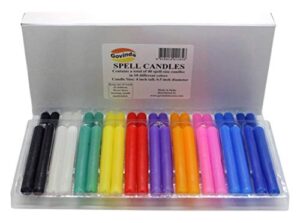
    Here are some of the most commonly used candle colours and their associated meanings: Govinda Spell Candles

    • White: Purity, truth, peace, and spiritual protection.
    • Red: Love, passion, courage, and strength.
    • Pink: Romantic love, affection, and self-love.
    • Orange: Creativity, enthusiasm, and confidence.
    • Yellow: Intellect, clarity, and success.
    • Green: Growth, fertility, abundance, and prosperity.
    • Blue: Healing, tranquilly, and communication.
    • Purple: Spirituality, intuition, and power.
    • Black: Banishing negative energies and protection.

    When working with candle magic, it’s important to remember that colours can be combined or layered to create more complex energies and intentions. For example, a green candle can be used in fertility spells, while a combination of red and pink candles can amplify the power of love and passion.

    step-by-step guide to performing candle magic rituals

    Performing candle magic rituals is a powerful way to connect with the universe’s energies and manifest your intentions. Here is a step-by-step guide to help you get started:

    Prep Work:

    1. Set your intention: Before beginning your ritual, take a moment to define your intention clearly. What do you wish to manifest or achieve? Please write it down or speak it aloud to solidify your focus.
    2. Create a sacred space: Designate a quiet, peaceful area for your ritual. Clear and cleanse the space by smudging with sage or other purification methods. You may also set up an altar with candles, crystals, or other meaningful objects.
    3. Choose your candles: Consider the appropriate candles for your intention, including colour, material, and shape. You may also want to anoint the candles with oils or herbs that align with your goal.
    4. Prepare yourself: Take a few deep breaths and ground yourself before beginning the ritual. You may meditate, recite affirmations, or perform any personal rituals that help you connect with your spiritual practice.

    Begin the Ritual!

    1. Light the candle(s): With focused intention, light the candle(s) you have chosen. As you do so, visualise your desire manifesting and the flame’s energy aligning with your purpose.
    2. Perform your ritual: This is the heart of your candle magic practice. You may recite incantations, perform visualisations, or engage in other rituals that resonate with your goals. Allow the energy of the candle flame to guide and empower your practice.
    3. Express gratitude: Once you have completed your ritual, take a moment to express gratitude for the energy and guidance you have received. You may burn the candle for a specified period or extinguish it mindfully.
    4. Release and let go: After your ritual, release your intention to the universe and trust that it will manifest perfectly. Avoid obsessing over the outcome, as this can hinder energy flow.

    Remember, these rituals are deeply personal and can be adapted to suit your unique needs and beliefs. Trust your intuition; don’t be afraid to experiment and find what works best for you.

    Enhancing the energy of your magic with herbs and oils

    While candles are the primary focus of candle magic, incorporating herbs and oils can amplify the energy and potency of your rituals. These natural elements carry their own vibrations and properties, making them powerful allies in your magical practice.

    Herbs: Herbs have been used in magical practices for centuries, each carrying unique energies and associations. Some popular herbs used in candle magic include:

    • Rosemary: For purification, protection, and healing.
    • Lavender: For peace, relaxation, and love.
    • Basil: For prosperity, success, and wealth.
    • Cinnamon: for passion, energy, and motivation.

    Herbs can be added to candle magic rituals by sprinkling them around the candle, creating sachets or bundles, or infusing them into oils or waters.

    Oils: Essential and fragrance oils can also be powerful allies in candle magic. Not only do they add a beautiful aroma to your rituals, but they also carry their energetic properties and associations. Some popular oils used in candle magic include:

    • Rose: For love, beauty, and self-love.
    • Frankincense: for spiritual connection and purification.
    • Patchouli: for grounding, manifestation, and prosperity.
    • Lemon: for clarity, purification, and uplifting energy.

    Oils can be used to anoint candles, added to candle wax, or diffused during your rituals to enhance energy and create a multi-sensory experience.

    When incorporating herbs and oils into your candle magic practice, research their properties and associations to ensure they align with your intentions. Additionally, be mindful of potential allergies or sensitivities and use these natural elements responsibly.

    Common misconceptions and myths about candle magic

    MagickVsMagicAs with any ancient practice, candle magic is often shrouded in misconceptions and myths. Separating fact from fiction is essential to ensuring a deeper understanding and respect for this powerful art form.

    One common misconception is that candle magic is a form of dark or evil magic. However, it is a neutral practice; the practitioner’s beliefs and energy shape its intentions. Like any tool, candle magic can be used for positive or negative purposes. However,t it is ultimately the practitioner’s responsibility to use it ethically and with good intentions.

    Another myth is that candle magic is only for those with specific religious or spiritual beliefs. While candle magic has roots in various cultural and spiritual traditions, it is a practice that can be adapted and incorporated into any belief system or personal training. The power lies in the practitioner’s intention and connection to the flame’s energy, not in any specific dogma or doctrine.

    Some individuals also believe that candle magic requires complex rituals or extensive training. While advanced techniques and knowledge can undoubtedly deepen one’s practice, the practice can be as straightforward or elaborate as the practitioner desires. Even a single candle lit with focused intention can be a powerful act of manifestation.

    It’s essential to approach candle magic with an open mind and a willingness to learn and explore. We can appreciate this ancient practice’s true beauty and potency by dispelling these common misconceptions and myths.

    Safety precautions and best practices in candle magic

    While candle magic is a powerful and transformative practice, it’s essential to prioritise safety and follow best practices to ensure a positive and responsible experience. While a sacred element, fire can also be dangerous if not handled with care and respect.

    Here are some essential safety precautions and best practices to keep in mind:

    1. Clear the area: Before lighting any candles, ensure that the area is clear of flammable materials, such as curtains, papers, or loose fabrics. Keep a safe distance from any combustible items.
    2. Use proper candleholders. Always use sturdy, heat-resistant candleholders. Avoid placing candles directly on heat-sensitive or flammable surfaces.
    3. Trim wicks: Regularly trim the wicks of your candles to prevent excessive smoke or dripping wax. A general rule is to keep the wick trimmed to about 1/4 inch.
    4. Never leave candles unattended. It’s crucial never to leave burning candles unattended or unsupervised. Extinguish candles before leaving the room or going to sleep.
    5. Keep water nearby. Have a container of water or a fire extinguisher readily available if you need to extinguish a candle or put out a small fire quickly.
    6. Respect the energy: As you work with the decisive element of fire, approach your practice with reverence and respect, and never use candles carelessly or recklessly.
    7. Dispose of candles properly. Once your candle has burned, allow it to cool completely before disposing. Never leave hot wax or candle remnants unattended.

    By following these safety precautions and best practices, you can enjoy the transformative power of candle magic while ensuring your well-being and that of your surroundings.

    Exploring advanced techniques

    As you deepen your understanding and practice of candle magic, you may wish to explore more advanced techniques to enhance your rituals and manifestations. These techniques can add complexity and potency to your practice, allowing you to work more profoundly with energy.

    One advanced technique is candle carving or inscribing. This involves carefully carving symbols, sigils, or words into the candle’s wax before lighting it. These carvings can represent your intentions, invoke specific energies, or visually represent your desires. It’s essential to approach this technique with focus and purpose, as carving becomes part of the ritual itself.

    Another advanced technique is candle layering or dressing. This involves applying various materials, such as herbs, oils, powders, or personal items, to the candle in specific patterns or layers. Each layer can represent a different aspect of your intention or amplify the candle’s energy. This technique requires careful preparation and an understanding of the materials’ properties.

    Candle magic can also be combined with other magical practices, such as crystal work or tarot readings. Incorporating crystals or tarot cards into your candle rituals can add additional layers of energy and symbolism, allowing you to work with multiple modalities simultaneously.

    As you explore these advanced techniques, it’s essential to approach them with respect, patience, and a willingness to learn. Seek guidance from experienced practitioners, study reputable sources, and trust your intuition as you navigate these more profound levels.

    Remember, the true power of candle magic lies not in the complexity of the techniques but in the clarity of your intentions and the depth of your connection to the flame’s energy.

    Candle Colors Meaning

    Resources and references for further exploration of candle magic

    If you’re eager to deepen your knowledge and practice of candle magic, numerous resources and references are available to guide you. Here are some recommended books, websites, and communities to explore:

    Books:

    1. “The Candle Magic Sourcebook” by Raven Digitalis
    2. “Candle Magic for Beginners” by Lisa Chamberlain
    3. “The Magic of Candle Burning” by Xenia Morana
    4. “The Candle and the Crossroads” by Orion Foxwood

    Websites:

    1. The Candle Magic Blog (https://candlemagicblog.com)
    2. Candle Magic Central (https://candlemagiccentral.com)
    3. The Candle Magic Academy (https://candlemagicacademy.com)

    Online Communities:

    1. Candle Magic Forum (https://candlemagicforum.com)
    2. Candle Magic Practitioners Group (Facebook)
    3. Candle Magic Meetup Groups (search for local groups in your area)

    Remember, as with any spiritual or magical practice, it’s important to approach candle magic with an open mind, respecting diverse traditions and a commitment to ethical and responsible practice. These resources can provide valuable guidance, but ultimately, your personal journey and connection to the energy of the flame will shape your unique experience with candle magic.

    Where do I go from here?

    In this comprehensive guide, we have explored the captivating world of candle magic. We delved into its rich history, symbolism, and practical applications. Through the gentle flicker of candles, we have discovered a powerful tool for manifesting our intentions, connecting with the spiritual realm, and creating positive change in our lives.

    As we have learned, this form of magic is not merely a practice but a sacred art form that cultures across the globe have embraced for centuries. From understanding the symbolic meanings of candle colours to performing step-by-step rituals, we have gained a deeper appreciation for the transformative power of this ancient tradition.

    Throughout our journey, we have explored what can be enhanced and amplified through advanced hand techniques. We have also emphasised the importance of safety and best practices, ensuring that our candle magic rituals are conducted with reverence and respect for the decisive element of fire.

    As you continue to explore and deepen your practice of candle magic, remember to approach it with an open heart, a clear mind, and a strong connection to your intentions. Trust in the energy of the flame. Allow it to guide you towards personal growth, spiritual fulfilment, and the manifestation of your deepest desires.

    Embrace the magic that resides within the flickering light of a candle. Let it illuminate your path towards a life filled with abundance, love, and positive transformation. May the wisdom and teachings shared in this guide serve as a beacon, empowering you to unleash the full potential of candle magic and harness the transformative power of the flame.

    The Article Candle Magic Power: Harnessing Energy Through Flames First Appeared ON
    : https://ad4sc.com

    The Article Candle Magic Power: Harnessing Energy Through Flames Was Found On https://limitsofstrategy.com

  • Growing up in Simi Valley, CA in the 90s

    Growing up in Simi Valley, CA in the 90s

    Life in Simi Valley (a suburb north of Los Angeles) during the 1990s was leisurely. There were plenty of open spaces for exploration and clear nights perfect for stargazing. This environment fostered a sense of independence and uniqueness.

    Growing up in Simi Valley, CA, in the 90s

    In the 90s, my buddies and I would spend our Saturdays at Simi Valley’s Skateboarding Hall of Fame and Museum. We were genuinely fascinated by how skateboarding culture had progressed, and we’d try to imitate the tricks of professional skaters. This was a time before the dominance of technology when our biggest worry was mastering a kickflip. Our experiences shaped our personalities, having a more profound impact than we knew then. Would you like to learn more about how growing up in this unique environment influenced our lives?

    • In the 90s, Simi Valley, CA, was a unique mix of traditional lifestyles and the emerging tech world.
    • This period was notable for emphasizing outdoor activities and self-exploration, mainly because smartphones and social media had yet to become ubiquitous.
    • Interesting spots like the Skateboarding Hall of Fame and Museum, Simi Valley Cultural Arts Center, and Strathearn Historical Park allowed locals to develop their creative passions and hobbies.
    • Certain major events, such as the Rodney King trial and the Northridge earthquake, significantly shaped the community’s sense of involvement, consciousness, and unity.

    Growing Up in Simi Valley, CA in the 1990s: A Nostalgic Journey

    Living in Simi Valley, CA, during the 1990s was more than ordinary life; it’s a piece of my past that remains crystal clear in my mind. The period was one of transition, balancing old-fashioned norms with the excitement of the forthcoming tech era. We were the youngsters teetering on the edge of technological advancements while still finding happiness in exploring the local hills, roads, and parks. That was a period of unspoiled joy and independence I hold dear to my heart.

    Reflecting on it, the 90s signified a time of liberty, self-discovery, and carving out our routes in life. We were the final generation to enjoy outdoor play until dusk, the last to live in a world without the Internet. Life was less complicated back then when we could let go of worries and let our creativity take flight. Without the distraction of smartphones or social media pressure, we had the freedom to be our true selves, err, learn, evolve, and shape our present identities.

    Living through the 90s in Simi Valley, CA, was a one-of-a-kind experience. It was an era of transformation, liberty, and boundless opportunities that profoundly impacted my personal growth.

    Fun Places To Go To In Simi Valley, CA

    Simi Valley, CA, has entertaining spots we frequented in the 90s. It was a place where freedom flourished. The Skateboarding Hall of Fame and Museum was a favorite for young skateboarders while emerging artists and actors loved the Simi Valley Cultural Arts Center.

    Place Experience
    Skateboarding Hall of Fame and Museum Great for skateboard lovers, offering a chance to understand the sport’s history and development.
    Simi Valley Cultural Arts Center A place to express creativity, providing venues for music, dance, theatre, and art exhibitions.
    Strathearn Historical Park and Museum A journey through Simi Valley’s ancestral past, providing insights into the city’s history.

    The Strathearn Historical Park and Museum was where we learned about our local history, fostering a sense of community and attachment to our heritage. These places played a crucial role in developing our dreams, interests, and appreciation for freedom.

    What Made Simi Valley, CA Different From The Rest Of Los Angeles in the 90s

    In the 90s, Simi Valley in California was quite different from the rest of Los Angeles. The town had a unique allure unseen in the city, providing a sense of calm and a slower lifestyle that wasn’t typical. It felt like time paused in Simi Valley, offering a chance to enjoy our youth without the constant hustle and bustle.

    Simi Valley offered vast open spaces, hills, and trails ready for exploration. Minimal traffic, a close-knit community, and star-filled nights were a regular part of life. Although the city was only a short drive away, Simi Valley felt like a different world. We weren’t cut off, but rather, we enjoyed the perfect balance—the peace of a small town and the thrill of the city within easy access.

    The 1990s in Simi Valley symbolized freedom—the liberty to grow, discover, play, and dream. It was a place where individuality thrived, taking risks was encouraged, and carving out one’s own path was celebrated. This sense of freedom and individuality distinguished Simi Valley from the rest of Los Angeles.

    Essential events in Simi Valley, CA, in the 90s

    In the 90s, Simi Valley, CA, was not just a quiet, serene place. It was also the backdrop for some impactful events that have left their mark on its history. The Rodney King trial in 1992 stands out as the most notable one. This trial wasn’t just significant to our town but had nationwide implications as it ignited discussions on race and justice.

    You might wonder why I’m discussing such a controversial trial when discussing life in Simi Valley. The reason is simple—it’s crucial to be aware of and understand the world we live in, which is a part of true freedom.

    The trial sparked a sense of community among us. We debated at school, talked at home, and participated in peaceful protests. This period of active involvement and increased awareness played a significant role in our growth, just like the safe, sunny neighbourhoods we lived in.

    Another impactful event was the 1994 Northridge earthquake. Despite the fear and destruction, everyone’s quick response in Simi Valley was inspiring. People helped each other, and collectively, we rebuilt our town. These experiences helped shape us as residents of Simi Valley and as individuals who value freedom.

    How Simi Valley, CA, has changed since the 90s

    Simi Valley, CA, has experienced significant changes since the 90s. What used to be a quaint, peaceful town has transformed into a lively economic centre. There’s an energetic vibe now that didn’t exist back then, but the small-town feel remains.

    The city’s infrastructure has seen significant upgrades. Roads are in better condition, and public transportation has become more dependable. Growth is visible everywhere, with new homes and businesses altering the city’s look. Technology companies have moved in, attracting a young, sophisticated workforce and giving the city a modern edge.

    The diversity of the population has grown, adding richness to the city’s culture. Now, you can find a wide range of food options, local art displayed in galleries, and music festivals featuring bands from all over the country.

    However, not all changes have been beneficial. Living costs have risen sharply, making it difficult for young people to put down roots. Heavy traffic is another downside.

    Yet, despite these issues, Simi Valley continues to be a wonderful place to live. The community spirit persists, and the city’s dedication to quality public services hasn’t wavered. It may be different from what it was in the 90s, but Simi Valley still feels like home. I’m too old and fragile to skateboard anymore, but my fire still burns bright here.   Support Simi Valley local business owners.

    The Article Growing up in Simi Valley, CA in the 90s Was Found On https://limitsofstrategy.com

  • Where to Find Supplies After SHTF

    Where to Find Supplies After SHTF

    Locations to Look for Supplies After the SHTF

    Where to Find Supplies After SHTF: Some may think, “I’m a prepper; I won’t need to hunt for supplies. “I already have everything I need.” Maybe. Maybe not.

    Even if you’ve been preparing for years, you may have overlooked a few details. Even if you don’t forget anything, you can find yourself in a circumstance where you need something you didn’t expect.

    What happens if your shelter or vehicle is damaged? You may need to look for parts.
    What happens if a critical piece of equipment is destroyed? You may need to look for a substitute.
    What happens if your mother’s prescription pills are lost? You may need to hunt for substitute medications.
    What if you had to admit a pregnant woman or a parent with a young child? You may need to look for infant formula.

    These are just a few ideas I have. Once you’ve seen them, you will consider dozens of situations.

    The concept is that if disaster strikes, you may have to forage for supplies. You won’t have a choice if someone’s life is in danger. But before I get into how to scavenge, I’d like to clear up any confusion about the difference between scavenging and looting.

    Where to Find Supplies

    Scavenging Is Not Looting

    Following Hurricane Katrina, we saw videos of people sprinting down the street with jewellery and devices. Were they scavenging or looting? That is clear. Looters are not looking for stuff they need to survive; they merely take advantage of the situation.

    Looters are aware that the stolen items will be missed. They know the owner will eventually return and realise what is missing. For these reasons, looters are much like other robbers.

    Scavengers are not the same. They only look for things after the world as we know it ends, and they only take items that have been discarded or are unlikely to be detected.

    Sometimes, you must miss meals or take medication, but it is okay if someone needs it to survive. Taking food or medicine directly from someone else’s hands is another matter.

    Some legalists feel that stealing is stealing regardless of the circumstances, but morality is more than a set of rules. Individuals who are terrified of ethically problematic circumstances will do poorly if the SHTF.

    Send A Scout.

    If you know the area you want to search, send a scout with binoculars, a radio, and a rifle.

    Scouts should scan the area with binoculars for a few hours to confirm that no one lives there and that no bandits are waiting. It may sound paranoid, but some people become incredibly dangerous when there are no police to keep them in check.

    You do not want to be robbed or killed when scavenging for supplies.

    The radio keeps your scout in touch. If the location is unsafe or not worth the effort, the group’s commander can instruct the scout to return or examine another area. If you lose contact with your scout, you’ll know what’s wrong and can dispatch reinforcements. The reinforcements must be cautious so they do not fall into traps.

    It should be obvious what the scout’s gun is for.

    When surveying the terrain, the scout should note any obstacles that could cause more trouble than they’re worth. Examples include barbed wire fences, high walls, ditches, and streams. All of these variables may make it difficult or unsafe to return supplies.

    The scout should look for signs that bombs or earthquakes have destroyed any structures. You don’t want the stairs to collapse or a ceiling falling on you when digging through the rubble.

    If you have local maps, thoroughly examine them to identify all the ways into and out of the area you want to search. Plan your journey carefully, and have alternate routes in case your principal route is closed down.

    Before looking for a place, you and your group should weigh the costs, benefits, risks, and rewards. Is what you’re looking for necessary to save someone’s life, or is it something to make you feel better?

    Make a plan.

    After determining where to go and what to look for, you must decide who to send. Never send someone alone. They may have twisted an ankle or something and need assistance returning to camp. In addition, considerable hurdles or supplies may necessitate the movement of at least two individuals.

    Remember that a single individual is far more likely to be robbed or killed than two or more. Ideally, you would send many personnel, but this is contingent on how many you have available. You don’t want to leave children unaccompanied at your campsite.

    Your group should include a toolset and a scavenging kit that contains bags, cordage, lock picks, cutting tools, a syphon, water jugs, and other items. I also recommend bringing respirators and goggles if the air is dusty or smokey.

    If you have several regions to search, you must choose the order. To save energy, start further out and work your way back to camp.

    If you know the heaviest objects will be at a particular spot, go there last. If scavenging your area will take several days or weeks, purchase a map and mark the locations you want to avoid accidentally visiting the same site twice.

    Post-Apocalyptic Supply Hunt

    Where to look?

    Pretty much everywhere! Here are some potential targets and what you might discover within them.

    Automotive Shops

    You’re more likely to find the part you need here than at a department shop. It is true now and will be confirmed after the SHTF.

    Cars

    Look for any food, tools, or other essentials under the trunk, seats, and glove box. Additionally, auto components could be helpful. Suppose any member of your crew is mechanically inclined. In that case, you can use the upholstery as insulation and a bed, the wiring as cordage, the mirrors as signalling equipment, and the batteries as power sources and engine parts for your car.

    Churches

    I realise that taking materials from a church is completely bad. However, it is not theft if you are in an end-of-the-world situation and the church has been utterly abandoned. Churches that provide meals to the needy may have ample canned goods in the kitchen and closets.

    Distribution Centres

    Most people will go to food stores first, so it will take longer to clean the warehouses. Even so, some details may have been overlooked. Also, look out for the semi-trailers. You might discover nonperishable foods and other goods.

    Fire stations

    You might find food, supplies, and clothing. Furthermore, the fire engine includes a tank containing hundreds of gallons of water, which must be filtered.

    Gas Stations

    These will likely be picked clean, but you never know. It is worth a look.

    Government Buildings

    Most federal installations use commercial-grade solar panels. You might also locate backup lighting and emergency supplies.

    Grocery stores

    These will likely be picked clean, but you may locate food in less prominent locations, such as behind shelves, displays, and cash registers. Also, the restrooms, offices, stock area, and loading dock must be inspected.

    Hospitals

    This should include enough food, clothing, and medical supplies. Check every single closet and drawer.

    Houses

    Check everything—rooms, garage, basement, attic, backyard, storage sheds, garden (if there is one), etc. The water heater holds up to 70 gallons of drinking water. Better still, look for homes with swimming pools. Look for metal mailboxes, which can be turned into wood stoves.

    Marinas

    Inspect abandoned boats. They usually have emergency meals, communication equipment, fishing gear, and firearms.

    Office Buildings

    Look for vending machines in break rooms, food, and small tools on workstations. Most rooms should have fire extinguishers, and the janitor’s closet should contain cleaning supplies.

    Pawn shops

    If you’re lucky, you’ll discover guns, ammunition, and other random items. You might even uncover functional devices, like walkie-talkies or a ham radio.

    Pet stores

    If your pets are still healthy, a pet store may allow you to continue feeding them without giving up any of your food. You could eat it yourself, but I would only advocate it if needed. There are no FDA rules for pet food; overeating can make you sick.

    Restaurants

    These are probably going to be empty, but check anyhow. A few cans or bags of food were overlooked. However, anything stored in the freezer will have gone wrong.

    Retail stores

    See “Grocery Stores” above. Consider bringing non-electric entertainment, such as books, cards, board games, or sports equipment.

    Schools

    Schools contain many items, including tools, fire extinguishers, first aid kits, cleaning materials, and possibly food in the cafeteria. If you have time, you can open the lockers and check them. Specific snacks may have a lengthy shelf life.

    Self Storage Facilities

    It may be worthwhile if you have the time to pry open all of them. You’re unlikely to locate any food or perishable stuff, but you might come across some clothes, essential gear, and equipment.

    The Article Where to Find Supplies After SHTF Appeared First On Survival Avenue.

    The Article Where to Find Supplies After SHTF Was Found On https://limitsofstrategy.com

  • Managing Life’s Challenges with Resilience

    Managing Life’s Challenges with Resilience

    Managing Life’s Challenges with Resilience

    Learn how to improve your ability to recover from suffering.

    The capacity to deal with and bounce back from hardship is what we mean when discussing resilience. People who remain calm amid calamity are resilient.

    A resilient person has good coping abilities and can mobilise available resources, seek help when necessary, and find solutions to the problem.

    People with psychological resilience can use their abilities and strengths to respond to life’s obstacles, which may include:

    A loved one has died.
    Divorce
    Financial concerns.
    Illness
    Job loss.
    Medical emergency.
    Natural calamities.

    Resilient people confront life’s challenges head-on instead of succumbing to despair or avoiding problems by employing unhealthy coping techniques.

    Resilient people feel no less distress, grief, or anxiety than others. Instead, they employ healthy coping strategies to deal with challenges, promoting strength and growth, frequently emerging more robust than before.

    This article looks at the indications, characteristics, and causes of resilience. It also discusses some practices that can help people become more resilient.

    managing life's challenges with resilience

    Signs of Resilience

    Resilient people frequently exhibit a variety of attributes that aid them in overcoming life’s hardships. Some of the signs of resilience are:

    A survivor’s mentality

    When someone is resilient, they see themselves as survivors.

    They understand that even when things become difficult, they can persevere until they succeed.

    Effective emotional management

    Resilience is characterised by the ability to manage emotions in the face of stress. This is not to say that resilient people do not feel powerful emotions like anger, grief, or fear.

    It signifies that they understand that those emotions are fleeting and can be managed till they pass.

    Feeling in control

    Resilient people have a strong internal locus of control and believe that their actions may influence the outcome of events.

    Problem-solving skills

    When issues develop, resilient people assess the situation rationally and attempt to devise solutions that will make a difference.

    Self-compassion

    Self-acceptance and self-compassion are additional indicators of resilience. Resilient people are kind to themselves, even during difficult times.

    Social support

    Having a solid support network is another evidence of resilience. Resilient people understand the value of support and know when to seek assistance.

    Resilience is characterised by the ability to manage emotions, a sense of confidence and control, practical coping abilities, and the ability to seek social assistance when necessary.

    Types of Resilience

    Resilience indicates the ability to deal with life’s setbacks and is a general indicator of adaptability. However, several varieties of resilience impact a person’s capacity to cope with stress.

    Physical Resilience

    Physical resilience relates to how the body adapts to change and rebounds from physical stresses, illnesses, and injuries.

    According to research, this form of resilience significantly impacts health. It affects both the rate of ageing and how the body deals with and recovers from physical strain and illness.

    People’s physical resilience can be improved by adopting a healthy lifestyle. A few ways to strengthen this resilience are to get adequate sleep, eat well, and exercise frequently.

    Mental Resilience

    The capacity to deal with adversity and maintain composure is known as mental resilience. People with this level of resilience are adaptable and calm during times of crisis.

    They employ mental power to overcome difficulties, move forward, and maintain hope despite setbacks.

    Emotional Resilience

    To be emotionally resilient is to control one’s emotions in the face of adversity. Resilient people know their emotional reactions and connect strongly to their inner lives.

    As a result, individuals can relax and manage their emotions when confronted with dire circumstances.

    This form of resilience also helps people maintain their optimism throughout difficult situations.

    Because they are emotionally resilient, they recognise that adversity and negative feelings do not continue forever.

    Social Resilience

    Social or community resilience refers to a group’s ability to rebound from harsh events.

    People interact with others and collaborate to solve challenges that affect them personally and collectively.

    Coming together after disasters, social support, becoming aware of the community’s hazards, and developing a feeling of community are all examples of social resilience.

    Such answers can be critical at difficult times, such as natural disasters that affect entire communities or large groups of individuals.

    mental health

    What are the four categories of resilience?

    Resilience can take various forms. There are four types of resilience: bodily resilience, mental resilience, emotional resilience, and social resilience.

    Causes of Resilience

    Some people are innately resilient, possessing personality attributes that enable them to remain calm in adversity.

    However, these behaviours are not simply inborn tendencies that affect only a few people. Resilience is the product of a complex interplay of internal and external factors, including genetics, physical fitness, mental health, and environment.

    Social support is another critical factor that contributes to resilience. Mentally strong people often have the support of family and friends to help them get through difficult situations.

    Resilient persons tend to have features such as:

    Being an effective communicator
    Having an internal locus of control.
    High emotional intelligence and good emotion management
    Possessing self-esteem and confidence in one’s talents.
    Having the ability to establish realistic plans and stick to them
    Seeing themselves as fighters, not victims of circumstance

    Impact of Resilience

    Resilience provides humans with the psychological strength to deal with stress and adversity.

    It is the mental reserve of strength that people can rely on to get through difficult situations.

    Psychologists believe resilient people can better deal with adversity and reconstruct their lives after setbacks.

    Dealing with change or loss is an unavoidable aspect of life.

    Everyone has setbacks at some point in their lives. Some of these problems may be trivial (not being accepted into a class or being denied a job promotion). In contrast, others may be catastrophic on a much grander scale (hurricanes and terrorist strikes).

    Those lacking resilience may be overwhelmed by such situations. They may focus on difficulties and employ ineffective coping techniques to deal with them.

    Disappointment or failure may lead individuals to engage in harmful, destructive, or dangerous behaviours. These people recover from setbacks more slowly, which can lead to increased psychological suffering.

    How people react to these issues can significantly impact the immediate outcome and long-term psychological effects.

    Resilience does not eradicate stress or life’s challenges.

    People with this trait do not view life through rose-coloured glasses. They recognise that setbacks are unavoidable and that life can be difficult and terrible.

    They still feel the terrible emotions that come with a catastrophe, but their mental approach enables them to work through them and recover.

    Resilience empowers people to face difficulties head-on, overcome hardship, and move on.

    Following large-scale catastrophes such as terrorist attacks, natural disasters, and the COVID-19 pandemic, many people exhibited resilience-related behaviours, and as a result, they suffered fewer symptoms of sadness.

    Despite seemingly inconceivable catastrophes, resilience enables people to summon the courage to survive and thrive.

    How to Be More Resilient

    Fortunately, people can develop resilience in themselves. Parents can also help their children build resilience. Developing more resilience is possible with the help of certain practices.

    Reframe negative thoughts.

    Resilient people can look at unpleasant situations rationally without blaming or worrying about what cannot be altered.

    Instead of viewing hardship as overwhelming, reframe your thinking to look for tiny methods to address the issue and make changes that will help.

    Focusing on the positive things you can accomplish is an excellent technique to overcome a negative mindset.

    This method can also teach children how to better deal with obstacles. Please encourage them to approach obstacles in a more optimistic, hopeful manner.

    Instead of becoming locked in a cycle of negative feelings, a youngster can learn to view these occurrences as opportunities to challenge themselves and gain new skills.

    Seek Support.

    Talking about life’s challenges does not make them go away, but talking with a caring friend or loved one can help people feel they have someone on their side. This can aid in the development of resilience. Discussing things with others can also help people acquire insight into the issues they are encountering and develop fresh ways to manage them.

    Adults can help a kid create a support network by modelling excellent social skills such as sharing feelings, being empathic, working with and helping others, expressing gratitude—and remembering to encourage a child’s good behaviour.

    Concentrate on what is under your control.

    When confronted with a crisis or difficulty, it is easy to become overwhelmed by circumstances beyond our control.

    Instead of wishing we could go back or change things, try concentrating on what we can directly influence.

    Adults can also help youngsters acquire this skill by discussing their predicament and assisting them in devising a response strategy.

    Even if the situation appears wrong, practical efforts can help improve it. These modest changes can help you feel more in control and resilient.

    Manage stress.

    Developing appropriate stress-management habits is an effective method to boost overall resilience.

    These habits could include behaviours that benefit overall health, such as obtaining adequate sleep and exercise, as well as specific measures to take during stressful times, such as:

    Cognitive Restructuring
    diaphragmatic breathing exercises
    Expressive writing.
    Biofeedback Techniques
    Effective communication.
    Problem-solving strategies.
    Progressive muscular relaxation.

    These abilities are teachable and, with practice, may be mastered by both children and adults.

    They eventually develop the confidence to tackle unpleasant situations and the resilience to recover rapidly.

    Those having difficulty controlling their stress levels may benefit from the services of a cognitive therapist.

    While some people are more naturally resilient, it is a skill that can be developed.

    Looking at situations more positively, seeking assistance from others, and focusing on what can be managed are all effective tactics. Good stress management abilities can also promote resilience.

    If you are having difficulty coping with issues, do not be reluctant to speak with your healthcare physician or a mental health expert.

    Resilient people require assistance; one aspect of resilience is knowing when to seek help.

    The Article Managing Life’s Challenges with Resilience Appeared First On Survival Avenue.

    The post Managing Life’s Challenges with Resilience appeared first on Survival Bite.

    The Article Managing Life’s Challenges with Resilience Was Found On https://limitsofstrategy.com

  • Best Water Finding Tips from a Survival Expert

    Best Water Finding Tips from a Survival Expert

    Best Water Finding Tips from a Survival Expert

    Water Myths

    On average, we can go three days without water, but this is not a hard and fast rule. Water scarcity can kill someone in as little as 24 hours, but it can also linger up to a week.

    It is widely considered that food is necessary for survival, yet I only eat when there is a water source nearby.

    Digestion takes a lot of water, and a person can go for weeks without eating. Eating without water leads to dehydration, which kills you sooner.

    The desire to feed isn’t the only survival myth around. Perhaps you’ve seen videos of dishevelled survivalists drinking urine to stay hydrated.

    Thirty years ago, in the military, we had this saying: “People survive despite drinking their urine, not because of it.” Urine has about half the salt content of ocean water and contains waste that your body seeks to eliminate.

    best water finding tips

    Drinking allows your body to draw more water from your tissues and excrete it again.

    There are enough lessons on cleaning water to fill several chapters, yet dirty water is preferable than no water.

    If there is no method to filter wild water and I ignore signs that it may kill me (such as animal carcasses or industrial contamination), I drink it nonetheless.

    In survival scenarios, more people have perished from dehydration than from disease.

    Deal with the consequences when you are rescued; it is preferable than death.

    There are different methods for obtaining water in diverse circumstances. When everything else fails, the methods outlined below can be useful.

    Eating snow or ice is like taking two steps forward and one back.

    It lowers your body temperature, raising the risk of hypothermia and pushing your body to heat itself up again, requiring even more water.

    Instead, melt it. Snow and ice obtained from precipitation sources do not need to be disinfected unless they are polluted. However, ice and snow from lakes and streams must be. If you don’t have a stove, use the following methods to melt snow or ice.

    Core temperature. Place snow or ice in a sealable container and use your body heat to melt them. Maintain a thin layer of clothes between your skin and the container to protect it from the cold outside air.

    Direct sunlight. Melt snow or ice in or on a waterproof container or surface (tarp, rain gear, etc.). If the ground is icy, add insulation beneath it.

    Fire. Use a metal container (melt a small amount first, bring it to a boil, and then gradually add more snow, or you will melt a hole in the container’s bottom).

    Alternatively, place a porous pouch, such as a T-shirt or bandana, near the fire (I normally use a solid stick tripod) and fill with snow or ice.

    Place a clean container below it to catch any water that drips through.

    Animal Indicators

    Animal paths may bring you to water. Look for a V where the trails intersect.

    Almost all animals require water, and once they leave a source, they naturally disperse across their environment to graze, hunt, forage, and so on. When they require water, they return to the source via necessary pathways.

    Birds often want to sleep near water at night. In a desert setting, observe the sky from a high point an hour or two before sunset.

    If you spot a bird or two flying high, follow them until they disappear. Please take note of the approximate direction and distance at which they landed.

    Seeing many birds arrive from different directions and disappear in the same general area is significantly more enjoyable.

    The next day, just before dawn, return to the same high point and keep a close eye on the same spot. If you witness birds rising and flying away from a specific location, water is most likely nearby.

    surface water

    Vegetation

    Deciduous trees in a mostly coniferous forest may indicate that water is nearby.

    Aspens, for example, require water but prefer well-drained soil. Thus, an inverted V of aspens on a hill may suggest a spring above the tip of the V.

    Cottonwood trees prefer water near the surface.

    Transpiration bags capture water from trees and plants. To capture the water produced by photosynthesis, wrap a clear, durable bag, such as a garbage bag, over a luxuriant branch in direct sunlight.

    To keep water vapour from escaping, patch any holes and tightly tie or knot the bag around the branch. (Only apply this procedure to non-toxic plants.) Under ideal circumstances, a large garbage bag can collect up to 300 mL of water in three hours.

    You can collect up to a litre of water per day by wrapping bags around multiple trees.

    Similarly, you can gather water from dispersed vegetation using huge plastic bags. Look for green flora in arid, treeless places, such as tall grasses.

    Gather the greenest plants and place them in a large bag. Plants lose water when they are heated by the sun. To eliminate debris, strain the collected water into a container using a cloth. Drink the water after it has cleared.

    Giant vines in rainforests can hold a lot of water. After cutting the vine a few feet above the ground, hold or tie the ends over a container. If you’re in a hurry, put your rain gear in a hollowed-out depression in the dirt.

    Not all plants generate drinkable water; if it’s hazy, salty, bitter, or soapy, discard it and try another vine.

    Potholes arise in dry washes in desert areas.

    Exposed bedrock, especially near the base of steeper slopes, can form vertical tunnels that trap water and debris during flash floods.

    Some can be deep (more than 20 feet) and narrow, keeping the confined water shaded and tranquil like a well.

    To collect the water, drop it into a jar with a fist-sized rock. If possible, care for it before consuming it.

    Seeps are another reliable water supply, occurring when precipitation falls on a level mesa and seeps into the sandstone. Look for a series of nooks along the cliff edges of mesas, with a dark line in the back containing plants and dark streaks.

    Digging

    Excavating in locations with water near the surface can be profitable, despite Hollywood’s representation of it as more difficult.

    Dig towards the water, on the lowest spot below the first barrier dune.

    Dig only until water seeps in or the soil appears damp, then cover and check for fresh water in an hour or so.

    If you dig too deep, you risk contaminating your supply by crossing through the narrow freshwater table and into the saltwater table below.

    In huge dry washes, the outside curve is usually deeper, more shaded, and the final point where water flows.

    Temperature variations, dirt, animal tracks, and clouds of small flying insects all increase the likelihood that water is near the surface.

    Solar stills can be tricky; learn more here.

    If I had the necessary abilities or tools, I would only use them to extract water from saltwater or a heavily polluted source. It can be labour and material intensive. As a result, it is rarely utilised in survival situations, although it is a viable alternative when others are unavailable.

    The Article Best Water Finding Tips from a Survival Expert Appeared First On Survival Avenue.

    The post Best Water Finding Tips from a Survival Expert appeared first on Survival Bite.

    The Article Best Water Finding Tips from a Survival Expert Was Found On https://limitsofstrategy.com

  • Prepare for a SHTF scenario

    Prepare for a SHTF scenario

    Prepare for a SHTF scenario

    Here are some pointers for preparing and defending your home during a SHTF.

    Home invasions are occurring. It hasn’t happened to you yet, but it has in thousands of households in the United States and worldwide. This is an indisputable fact of life.

    Invasions happen for various reasons, but there are several ways to prepare and protect your home against intruder aggressiveness and property destruction.

    A restricted budget is suitable in this situation. There are various inexpensive ways to fortify your property.

    When you’re rioting or “nestled” by individual crooks out to loot and steal, your home is one of the safest places.

    In such cases, aid from authorities may be unavailable or delayed at best, leaving your entire family’s safety in your own hands. Prepare for any potential risks right away!

    Home invasion is a serious crime. It happens in the very area where you should feel safe. Your castle is your home; you will feel unsafe anywhere if its purity is jeopardised.

    prepare for a SHTF situation

    Statistics for home burglaries

    Every 12 seconds, a home is broken into either the front or back doors.

    According to an FBI source, home burglars target ladies and the elderly who live alone in their homes.

    Home invasions account for 38% of all assaults.

    Sixty per cent of rapes occur during house invasions.

    Avoid regions where riots may erupt.

    When riots break out, your family’s safety depends on your location. Rural areas are the least affected, whereas urban residents are the most vulnerable.

    Following the riots, looters and intruders will likely target affluent suburbs, upscale residential areas, and financial districts near major cities.

    Residents of Beverly Hills in Los Angeles, Denver’s Highlands, and Brooklyn are most likely among the first victims in the United States.

    Identify possible riot epicentres. Large-scale riots can disrupt universities, college campuses, public libraries, historic structures, and government institutions.

    Keep in mind that rioters will target symbols of power and wealth. They will demolish costly cars, exquisite dining facilities, upscale hotels, and luxurious apartments.

    crook skeleton in suit

    Preparers must maintain a modest profile. Avoid creating the appearance that you are from the upper class. Avoid wearing expensive apparel, living in affluent neighbourhoods, dining in posh restaurants, and driving expensive cars.

    If you hear about riots in the news, evacuate the city and relocate your family. Consider barricading the door to your parent’s or relative’s isolated residence.

    Learn how to prepare for a home invasion.

    Knock or ring the doorbell.

    Someone knocks on your door, and you answer. You open the door, and the criminal or offenders enter the house. This type of burglary often takes place throughout the day or early evening.

    Deception:

    Someone knocks on your door, claiming to be a delivery person, utility worker, injured person, missing person, or other seemingly unthreatening individual, and you answer. When you open the door, either they try to shove their way in, or the perpetrator(s) smash their way in.

    Forced entrance happens when an intruder approaches a door and kicks or punches it. Most doors, including those with built-in deadbolts, may be pushed open with a powerful, well-placed kick immediately below or above the knob!

    Burglary:

    The assailant smashes a door or window lock with a crowbar, screwdriver, lockpick, hammer, or rock before sneaking into the home and surprising the owner in another room.

    The burglars take advantage of your compassion. They claim to be injured, have a sick child, or have been involved in an accident requiring medical attention. Inform them that you will be calling 911 to report the event.

    Please do not open the door; instead, speak through it. If they’re telling the truth, it doesn’t matter if you let them in. When you call 911, help will arrive, and your front door is an ideal place for them to wait.

    The Article Prepare for a SHTF scenario Appeared First On Survival Avenue.

    The post Prepare for a SHTF scenario appeared first on Survival Bite.

    The Article Prepare for a SHTF scenario was found on https://limitsofstrategy.com

  • Bug Out Bag Checklist

    Bug Out Bag Checklist

    Bug Out Bag Checklist

    We rarely have to plan for emergencies. It is something no one wants to think about. Nobody wants to be in a situation that puts their life at peril!

    What would happen if you were put in such a situation? A natural calamity is imminent, and your home is unsafe.

    You may have to leave your current location. A bug-out bag is essential in this case.

    An emergency kit like this can help you survive and move quickly if you’re in urgent danger.

    In this article, we created a bug-out bag checklist and highlighted the significance of this type of gear.

    What is a bug-out bag?

    A bug-out bag has several distinct names. It may also be known as:

    Prepare an emergency bag.

    72-hour bag.

    Go bag.

    Evacuation bag.

    Survival bag.

    It is a single emergency survival pack—a “jack of all trades” gear that may be used in various scenarios.

    Where did the term come from?

    The term “bug out” originated with the United States Military and the Korean War. Soldiers were instructed to leave if their defensive position was overrun.

    They would then run to safety and take a new position. Several military units have since adopted the word. Many military organisations use the phrase “bail-out” as an alternative.

    What is the use of a bug-out bag?

    The primary purpose of a bug-out bag is to allow you to depart your current location quickly in the event of an emergency or tragedy.

    You can flee as quickly as feasible with a bug-out pack checklist and an equipped backpack. As a result, your chances of becoming hurt or caught up in the approaching event are significantly lowered.

    But what type of calamities are we referring to? We’ve included a few examples below for your convenience:

    Hurricanes.

    Landslides.

    Earthquakes.

    Tsunamis.

    Flooding.

    Severe blizzards.

    War.

    Essentially, any natural tragedy and human-caused conflict. If you live in a location prone to storms or tornadoes, you may need a bug-out pack checklist.

    Alternatively, you could live in a region of open conflict with potential escalation.

    Whatever the reason, a bug-out bag enables you to respond quickly. You can save a significant amount of time when obtaining supplies. Your rucksack already contains everything you’ll need.

    You can easily pick it up, strap it on, and get it out safely. This is why creating a bug-out pack checklist and planning your supplies is vital.

    Bug Out Bag Checklist: Essentials

    So, what should you include on your bug-out kit checklist? We structured our checklist into categories to make it easier to digest:

    Hydration.

    Food supply.

    Clothing.

    Shelter.

    Heating.

    First aid.

    Hygiene.

    Tools.

    Lighting.

    Communications.

    Travel equipment.

    Hydration

    Water is the most essential thing in a bug-out bag. Humans cannot survive without water for longer than 72 hours. Your bug-out pack checklist should include at least 3 litres of drinking water (enough for 72 hours), a water bottle, and a water filter.

    We offer a guide to the best water filters available. When your primary water supply runs out, you can use these beautiful gadgets to filter stream and lake water for drinking.

    Food Supplies

    Next, we have food supplies. Although the human body can do without meals for three weeks, having a food supply can help you stay energised and active.

    The most important thing to remember here is to pack non-perishable food. If you pack your bug-out bag with perishable items, they may spoil rapidly, and you may run out of food entirely.

    Ideally, you’ll want enough food to last at least 72 hours. Energy bars are a great food to have.

    They are tiny, portable, and non-perishable, giving the nutrition you require to keep going. There are also some dehydrated foods available.

    Summit to Eat, for example, creates a queue of dried meals that only require water to prepare. These are wonderful if you have extra water on hand.

    Clothing

    Clothing is another major category. You will need a choice of clothing to suit the weather conditions. The best idea we can make is to work in layers. Layering your clothes allows you to adjust to shifting situations more quickly.

    Prepare appropriate attire for your location. For example, clothing requirements in Mexico would be vastly different from those in Northern Europe.

    Finally, it is recommended to pack two changes of clothing. This means you’ll always have a dry suit ready to go.

    Clothing essentials include:

    Pants.

    Socks.

    Waterproof trousers.

    Fleece.

    Long-sleeved shirt.

    Waterproof gloves and cap.

    Waterproof jacket.

    Ideally, you want a waterproof outer layer and comfortable but warm underlayers.

    compass

    Shelter

    You can construct a shelter out of several materials. You may require extra energy or focus to complete the task in an emergency.

    In addition, having a comfortable area to sleep and rest is critical in these circumstances.

    As a result, having enough shelter is an essential item on your bug-out bag checklist. This should consist of a tent, sleeping bag, and blanket.

    The tent and sleeping bag should be waterproof, lightweight, and easy to transport in your backpack.

    A tarp and ground pad may also be acceptable, depending on your location and temperature.

    These might provide extra protection if there is a significant chance of rain or bad weather.

    Keeping warm is essential when you’ve escaped the safety and comfort of your home. People can develop hypothermia and other diseases abruptly.

    As a result, some heating system is required. At the very least, you should be capable of starting a campfire.

    It is also critical to have a range of campfire-starting techniques. Even if one fails, you still have a backup. You cannot start a fire if you bring one ignition source and it breaks.

    As a result, your bug-out bag checklist should include:

    • Three ignition sources (lighters, for example).
    • There are three types of fuel.
    • Waterproof storage to keep them in.

    First Aid.

    Regardless of the situation, a first aid kit is always a good idea. For example, we recommend packing a first aid kit if you are going wild camping. Alternatively, having a first aid kit in your car is an excellent idea. As a result, including a first aid kit in your bug-out bag is equally important.

    You can buy many little kits online, like this Mini First Aid Kit. The kit contains 92 things, including scissors, plasters, an emergency blanket, tweezers, bandages, respirators, and tape.

    A first aid kit can help you quickly treat minor injuries such as cuts, which can get infections if not addressed.

    If you live in an area where mosquitoes and other insects are prevalent, bring a small container of insect-repellent spray.

    Hygiene

    It is not necessary to say immaculately clean during an emergency evacuation. However, having basic hygiene supplies can help you avoid infections and rapidly declining health.

    At a minimum, we recommend having:

    Hand sanitiser.

    A bar of soap.

    Small towel.

    A package of tissues.

    Travel toilet paper.

    Toothpaste and toothbrush.

    These critical products allow you to maintain basic personal hygiene while occupying minimal space in your bug-out kit.

    Tools

    A minimal set of tools can be helpful in an emergency. For example, what if you brought tinned food but cannot open it? Or what if you need to cut some firewood for a campfire? Tools are invaluable and can be applied in a variety of scenarios.

    The tools below are suitable for your bug-out bag checklist:

    Camp knife.

    Penknife or multitool.

    Camping hatchet.

    A little camping knife or penknife is handy for general survival purposes. Examples include opening tins, cutting bandages, and chopping smaller campfire fuel. 

    A hatchet can also gather firewood and clear a route through rugged terrain.

    Lighting

    Having multiple lighting options is just as important as having a heat source. Having a backup plan in place and double-checking essential items is recommended.

    Lighting is essential and can help you evacuate swiftly and safely. It will also be helpful if you’ve evacuated and are in the woods. It also allows you to evacuate at night safely.

    There are several types of illumination available. However, we recommend fitting an LED headlamp.

    This gives an excellent light source without using your hands. An LED torch is also helpful to have.

    In addition to these illumination products, we recommend having a supply of spare batteries. Check the light’s battery type and keep a few packs in your emergency bag.

    Communications

    Having a mechanism to communicate with the outside world is essential in an emergency. You can tell people where you are. You can also keep them updated or help others escape danger.

    First and foremost, owning a cell phone is essential. In most circumstances, you should be able to use your phone regardless of the situation.

    A mobile phone is usually the quickest approach to get assistance and assess your situation. For example, you can receive live news updates or call emergency services.

    However, we recommend having a second SIM card and a burner phone. Keeping a backup phone and SIM card in your purse can be helpful if your primary smartphone fails.

    Also, consider the power supply. We recommend bringing a solar power bank and a portable charger for your smartphone.

    Travel Equipment

    Finally, you can take some standard travel supplies that may be handy in an emergency. This includes:

    Cash stashed in little bills.

    Coin stash.

    A map of your local area.

    Compass.

    Pen/pencil.

    Notepad.

    Emergency whistle.

    Having a small amount of cash is essential since it allows you to buy supplies or transportation if you arrive in a safe location.

    If your smartphone lacks GPS or Google Maps, a map of your surroundings and a compass might help you navigate.

    Finally, writing equipment is frequently helpful in a variety of circumstances.

    Adapt your bug-out package to your specific area and circumstances.

    Remember to be adaptive, even though the above is a thorough bug-out bag checklist.

    Your bug-out bag should reflect your current location and situation. You may want to carry alternative clothing if you live in a more excellent region.

    Think about your surroundings. Is there a significant seasonal weather variation?

    What are the average temperatures throughout the year? Are any natural disasters more common in your area?

    Use this information to update your bug-out bag checklist.

    Prepare an emergency kit!

    Creating a bug-out bag checklist is a great idea. It can help you quickly prepare for an emergency and ensure you have all you need to live.

    A bug-out bag will not allow you to survive indefinitely, but it will help you in the near term until additional assistance arrives.

    If you enjoy wild camping and spend a lot of time in the woods, an emergency kit can come in helpful.

    The Article Bug Out Bag Checklist Appeared First On Survival Avenue.

    The post Bug Out Bag Checklist appeared first on Survival Bite.

    The Article Bug Out Bag Checklist was found on https://limitsofstrategy.com

  • Why Survival Is Not Selfish

    Why Survival Is Not Selfish

    Why Survival Is Not Selfish

    When you think about it, have you ever wondered why putting one’s survival first is not seen to be selfish?

    At first glance, this idea could appear to be contradictory; nevertheless, when you go deeper into it, you will find that survival encompasses more than just the act of preserving one’s own life. On the contrary, it lays the groundwork for empathy, compassion, and overall well-being, not only for oneself but also for other people.

    Now, let’s take a look at the reasons why survival is more than just a self-serving activity, as well as how it can be beneficial to the world around you.

    survival is not selfish

    The instinctive drive to survive

    The innate drive that we all possess kicks in when it comes to the issue of survival, prompting us to do whatever it takes to ensure our safety. This underlying drive for survival is deeply established in us, and it guides our behaviors and decisions when we are in a precarious situation. Our safety must take precedence over anything else because of this.

    The drive to survive compels us to seek shelter in adverse weather conditions, to get food and water when resources are in short supply, and to protect ourselves from potentially hazardous situations. The ability to adapt, be resourceful, and persevere in the face of adversity is intrinsically motivated by this instinct.

    There is no selfishness in our urge to survive; rather, it is an intrinsic part of our nature that ensures our survival in a world that is both uncertain and dangerous.

    Self-Preservation and Personal Responsibility

    If you want to continue existing, you have to acknowledge that you are responsible for your health and make self-preservation a top priority. If you find yourself in a precarious situation or emergency, you have to make choices that will protect you and save your life. No one else is capable of doing this for you.

    When you admit that your survival is ultimately in your hands, you are acknowledging an acceptance of personal responsibility. To be better prepared for potential dangers, it would be beneficial to take preventative measures, such as accumulating emergency supplies and strategizing.

    Along with this, it means making choices that put your health and well-being at the forefront, such as engaging in self-care practices, leading a healthy lifestyle, and seeking support when it is needed. Accepting responsibility for one’s own life and well-being is a fundamental component of self-preservation, which is not the same thing as being selfish. Self-preservation is an integral part of survival.

    Balancing self-care and altruism

    Take a look at the delicate balance that must be maintained in survival situations between caring for oneself and caring for others.

    It is essential to take care of oneself in times of crisis to keep your physical and mental health in good condition. Because of this, you will require a substantial amount of food, water, and rest to keep your strength.

    Having said that, it is of the utmost importance to acknowledge that trying to survive is not a singular undertaking. Offering assistance to others wherever it is feasible, sharing resources, and working together to increase everyone’s chances of survival are all examples of how to demonstrate consideration for other people.

    You need to make educated decisions that take into account both your requirements and the requirements of people around you to strike a balance between self-care and compassion. It is possible to negotiate survival circumstances with empathy and collaboration if you can find this balance, which increases the possibility that a favorable solution will occur for everyone involved.

    Survival: A Foundation for Empathy and Compassion

    To build empathy and compassion, survival is a crucial motive that should be given consideration. When you are constantly fighting for your survival, you come to understand the significance of having empathy and compassion for other people.

    When you are in a difficult situation, you realize that you cannot rely just on yourself; you also require the assistance of those who are close to you. This insight helps you develop empathy because it enables you to put yourself in the position of the difficulties and worries that other people are experiencing. Because you realize that you need to help others who are in need, it strengthens your compassion.

    against-someone-tackle

    The Ripple Effect of Prioritising Wellbeing

    If you make your health a priority, you will set off a chain reaction that will be beneficial to those in your immediate environment. You can make a greater contribution to the lives of others when you put your health first. To become more resilient and capable of overcoming the challenges that life throws at you, it is important to take care of yourself on all levels: physically, psychologically, and emotionally.

    As a consequence of this, you can offer support and strength to those who are dependent on you. If you make your health and happiness a top priority, you are demonstrating self-love and self-care, and you are also encouraging others to do the same. It is possible to transmit happiness through your connections and social networks by maintaining a positive attitude and energy.

    How do external circumstances influence survival instincts?

    Several external factors might affect survival instincts. These factors include the environment, societal norms, and cultural beliefs.

    These external pressures have the potential to alter your core instincts for survival, which in turn might influence your decisions and actions.

    What are some practical strategies to reconcile self-care with altruism in survival situations?

    In life-threatening circumstances, it is essential to strike a balance between self-care and giving.

    You will be in a better position to assist other people if you take care of yourself.

    While taking into account the requirements of the group, give the utmost importance to fundamental necessities such as food, water, and rest.

    How does prioritizing one’s well-being benefit others over time?

    Putting your health and happiness first has a positive and lasting effect on others around you. By taking care of yourself, you are better able to provide assistance and support to those who are in your immediate vicinity.

    Can surviving experiences foster empathy and compassion?

    It is beyond a doubt that experiences of survival can be of assistance in the development of empathy and compassion. Having been through adversity yourself, you are more able to empathize with the challenges that others face and are more likely to offer assistance to them.

    In a personal sense, conquering challenges may assist you in being more resilient and sensitive to the surrounding environment. When you have triumphed over challenges and become stronger, you may be able to empathize with those who are going through experiences that are comparable to your own. Having this experience together helps to cultivate a more profound understanding as well as a more substantial relationship.

    A further benefit of overcoming challenges is that it might broaden your perspective. Along the road, you come across various methods of living and are forced to question your established notions. This broader perspective has the potential to result in more compassion and understanding for individuals who come from a variety of backgrounds.

    When confronted with difficult circumstances, it is frequently necessary to seek the aid of other people. Whether it comes from friends and family or strangers, you hold kindness and empathy in high regard. Receiving assistance firsthand might motivate you to help others and make you more sensitive to the plight of those who are in need.

    Are there ethical difficulties when prioritizing self-preservation over personal responsibility in survival scenarios?

    There is the potential for ethical conundrums to arise in survival situations where factors such as self-preservation and personal responsibility take precedence. However, it is essential to understand that survival is not always a matter of self-interest.

    In these kinds of circumstances, it is assumed that one will put their health first.

    It is important to remember that you are not being selfish the next time you find yourself prioritizing your survival and well-being over other concerns. It is a natural tendency that enables you to take care of yourself while also making a positive contribution to the environment that you are surrounded by.

    You may unleash a wave of empathy and compassion that makes the world a better place for everyone if you strike a balance between protecting yourself and being kind.

    The post Why Survival Is Not Selfish appeared first on Survival Avenue.


    The Article Why Survival Is Not Selfish was found on https://limitsofstrategy.com

  • The Art of Surviving Underground

    The Art of Surviving Underground

    Investigating the Hidden World Beneath Our Feet

    In various situations, such as natural disasters, nuclear emergencies, or even as a strategic choice for particular lifestyles, the ability to survive underground can be a tough yet vital talent. When it comes to the art of surviving underground, there are a few crucial things that you should consider, regardless of whether you are building a shelter or adjusting to an existing underground environment.

    survival undergroundThere is a hidden world beneath our feet that is mainly undiscovered and enigmatic; this is the underground. The surface of the Earth may be busy with life, but the underground is much less studied. Many people have questioned how long it is possible to survive underground, whether it is for the purpose of surviving a terrible catastrophe or simply for the pure joy of adventure. This fascinating topic will be the focus of our discussion today, and we will learn the keys to surviving in the deepest parts of the earth.

    First and foremost, it is essential to recognize that the capacity to survive underground is contingent upon a number of different circumstances. The reasons for going underground, the readily available resources, the individual’s level of expertise and knowledge, and the underground general conditions are all factors that come into play.

    Location and Structure

    The success of an underground shelter is directly proportional to the site that is chosen for those shelters. It is of the utmost importance to have stable soil and adequate drainage to prevent problems like flooding, which might put the refuge’s safety and long-term viability at risk. Walls and ceilings should be reinforced during the construction of the shelter in order to improve the structure’s structural integrity and prevent collapses. In selecting or constructing the underground refuge, it is important to consider geological stability, proximity to water sources, and accessibility.

    If you decide to go with a purpose-built building, make sure that it complies with all of the safety criteria and is able to handle any potential pressures from the outside. Naturally occurring caves may have a certain degree of inherent stability; nonetheless, they may still require reinforcement to meet the safety criteria necessary for long-term living. The following is a checklist that can be used to find an appropriate location and ensure the reliability of the structure:

    • Conduct a geological survey of the area.
    • Assess soil stability and drainage conditions.
    • Reinforce walls and ceilings with appropriate materials.
    • Comply with safety standards and regulations for underground structures.

    Ventilation

    Keeping a steady supply of fresh air is vital for living in an underground environment. Install a dependable ventilation system fitted with filters to limit the amount of contaminants allowed to enter the space. To eliminate the possibility of a single point of failure, it is essential to have redundant ventilation sources. Natural ventilation options, such as strategically located vents and mechanical systems, should be considered. Adequate airflow maintains a constant supply of oxygen and contributes to regulating temperature and humidity within the underground space. The following is a checklist that can be used to achieve adequate ventilation:

      • Install a mechanical ventilation system with filters.
      • Incorporate redundancy in ventilation sources.
      • Implement natural ventilation methods, such as vents or ducts.
      • Regularly inspect and maintain ventilation systems.

    Water Supply

    The establishment of a dependable water supply is of the utmost importance for the maintenance of life underground. The excavation of wells, the installation of water storage tanks, or the implementation of a filtration system may be required in this regard, depending on the location. When storing water for an extended period, storing it in airtight containers is essential to avoid contamination and guarantee a clean and safe water source. In order to guarantee a reliable water supply underground, you should take into consideration the following checklist:

      • Dig wells or implement water storage systems.
      • Install a water filtration system to ensure purity.
      • Store water in airtight containers to prevent contamination.
      • Regularly test and treat stored water for safety.

    Food Storage

    When staying underground for an extended period of time, it is necessary to have adequate and strategic food storage. Stockpiling non-perishable, nutrient-rich foods with an extended shelf life is important to meet the residents’ nutritional requirements. When it comes to growing fresh vegetables, you should also investigate environmentally friendly methods such as hydroponics and indoor gardening. For the purpose of preserving one’s health during extended periods underground, it is essential to have a food supply that is both comprehensive and varied. To ensure efficient food storage and long-term sustainability, the following is a checklist:

    • Stockpile non-perishable foods with long shelf lives.
    • Consider nutrient-rich options to meet dietary needs.
    • Explore indoor farming or hydroponics for sustainable food production.
    • Rotate and monitor food supplies to prevent spoilage.

    Energy Sources

    Access to dependable and environmentally friendly energy sources is necessary to operate vital equipment and keep the living environment underground comfortable. Power can be generated from renewable sources such as solar panels, wind turbines, or generators, and using energy-efficient technologies contributes to the conservation of resources. For the purpose of building a sustainable energy source, the following checklist should be considered:

    • Install alternative energy sources such as solar panels or wind turbines.
    • Use generators as backup power sources.
    • Implement energy-efficient technologies for power conservation.
    • Regularly maintain and monitor energy systems.

    Waste Management

    The establishment of a waste disposal system that is both efficient and effective is essential for the maintenance of hygiene and the prevention of the spread of diseases underground. A clean and habitable living environment is also contributed to by using appropriate waste management procedures. When it comes to efficient waste management underground, take into consideration the following checklist:

    • Implement a waste disposal system with designated areas for different types of waste.
    • Compost organic waste to reduce the environmental impact.
    • Recycle materials to minimize waste generation.
    • Regularly dispose of waste in a safe and controlled manner.

    Security

    For those who wish to survive underground, security is of the utmost importance, and it is essential that the entry be designed with defense in mind. Ensuring the safety of the people who live there requires that the entrance be easily defendable against any potential dangers that may arise. Installing security measures such as cameras, alarms, and reinforced doors is important to establish a secure living environment and discourage people from breaking in. Listed below is a checklist that can be used to improve the safety of an underground shelter:

    • Design the entrance with defensibility in mind.
    • Install surveillance cameras for monitoring key areas.
    • Implement an alarm system to alert inhabitants to potential threats.
    • Use reinforced doors to enhance security.

    Communication

    It is necessary to have a reliable connection with the outside world in order to stay informed and to have the ability to coordinate reactions to changing conditions. In order to maintain connectivity even in difficult circumstances, it is necessary to implement various communication technologies, including radios, satellite phones, and other long-range devices. For the purpose of developing efficient communication systems, the following is a checklist:

    • Install a variety of communication devices for redundancy.
    • Test communication systems regularly to ensure functionality.
    • Have a designated communication protocol for emergencies.
    • Stay informed about external developments through reliable channels.

    Medical Supplies

    When it comes to managing health concerns underground, having adequate medical supplies is really necessary. A full first aid bag should be assembled, and important prescriptions should be stocked up so that you can deal with typical medical problems. Because of the potential health hazards linked with confinement, it is important to adopt preventative steps to ensure that all occupants continue to enjoy good health. For those who are underground, here is a checklist for medical preparedness:

    • Stock essential medications for common health issues.
    • Create a comprehensive first aid kit with the necessary supplies.
    • Train inhabitants in basic first aid and emergency medical procedures.
    • Establish protocols for addressing medical emergencies.

    Psychological Well-Being

    Establishing a living environment that is both comfortable and well-lit is necessary to preserve one’s mental health while living underground. Through the creation of an environment that is conducive to mental health, you can combat feelings of isolation and claustrophobia. In order to offer a sense of normalcy and ease tension, it is important to make plans for recreational activities such as reading, playing games, or using entertainment devices. An underground setting has a number of challenges that must be addressed in order to ensure psychological well-being:

    • Design living spaces to maximize natural light and ventilation.
    • Create communal areas for social interaction.
    • Provide recreational activities to alleviate stress and boredom.
    • Establish a support system for mental health needs.

    Training and Drills

    To ensure that all residents are aware of the procedures to follow in the event of an emergency, it is vital to conduct regular training and drills. Simulations should be carried out to prepare for various scenarios, including evacuation plans and responses to potential dangers. Training helps foster self-assurance and readiness, which ultimately contributes to an increase in the underground community’s overall level of safety. A checklist for efficient training and preparedness in the event of an emergency is as follows:

    • Conduct regular drills for evacuation and emergency response.
    • Train inhabitants in the proper use of safety equipment.
    • Review and update emergency procedures based on lessons learned.
    • Foster a culture of preparedness through continuous education.

    Community and Cooperation

    When it comes to long-term survival underground, cultivating a feeling of community is absolutely necessary. To ensure that order and collaboration are maintained, it is necessary to establish rules, responsibilities, and clear communication routes. When individuals are provided with a supportive community, it assists them in coping with the difficulties that come with living underground and enhances the overall resilience of the group. In order to construct a society that is cohesive and cooperative, the following is a checklist:

    • Establish clear rules and guidelines for communal living.
    • Assign responsibilities to different members for various tasks.
    • Foster open communication and address conflicts promptly.
    • Encourage collaborative activities to strengthen the sense of community.

    The incorporation of these checklists and many considerations into your underground survival plan has the potential to improve the occupants’ overall well-being, as well as their safety and sustainability. Make adjustments to these suggestions per the particular conditions, and regularly evaluate and enhance your underground living arrangements to achieve the highest possible level of preparedness.

    The post The Art of Surviving Underground appeared first on Survivalbite.

    The post The Art of Surviving Underground appeared first on https://gqcentral.co.uk


    The Article The Art of Surviving Underground First Appeared ON
    : https://ad4sc.com